


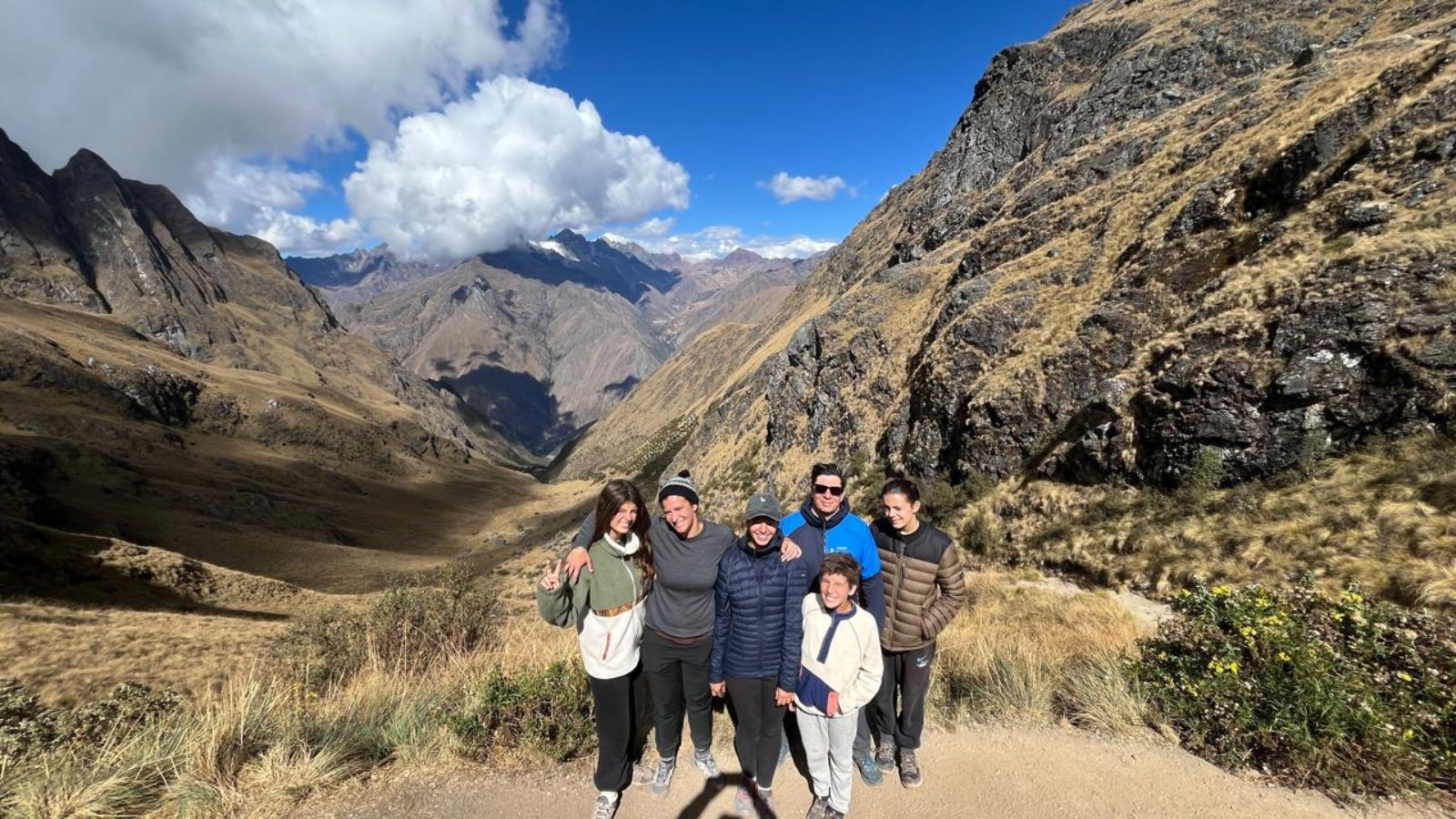
The trail is the same. The permit is too. What changes is who you hike with and who cooks for you at six in the morning.
On a group trek, you join a departure the agency has already opened. On a private trek, the team sets out just for your party. Neither option reserves an empty campsite for you or lets you skip the line at Inti Punku. The Inca Trail is a protected area: 500 entries per day, including guides, cooks and porters. Private service does not buy you a separate trail.
What each option is
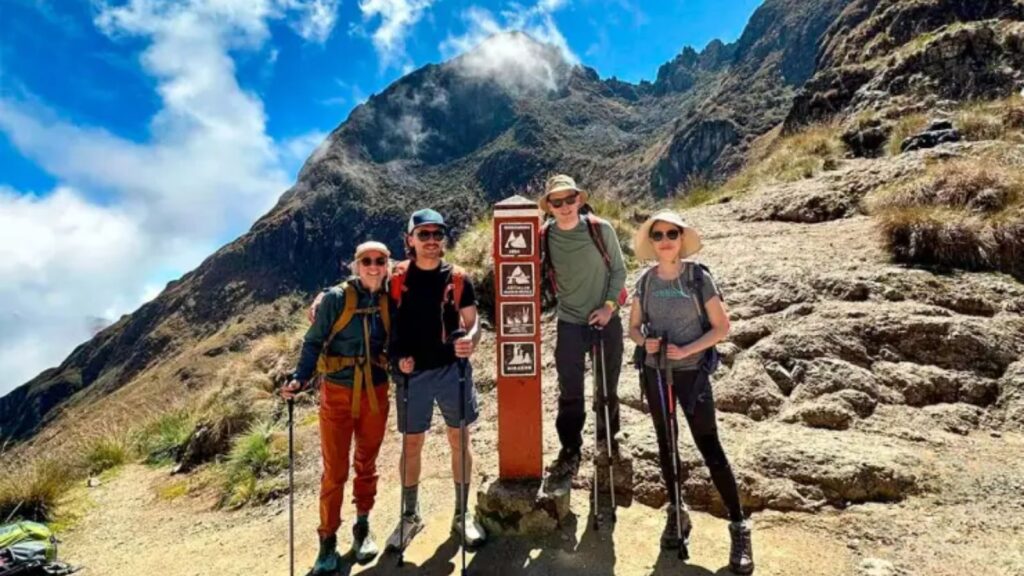
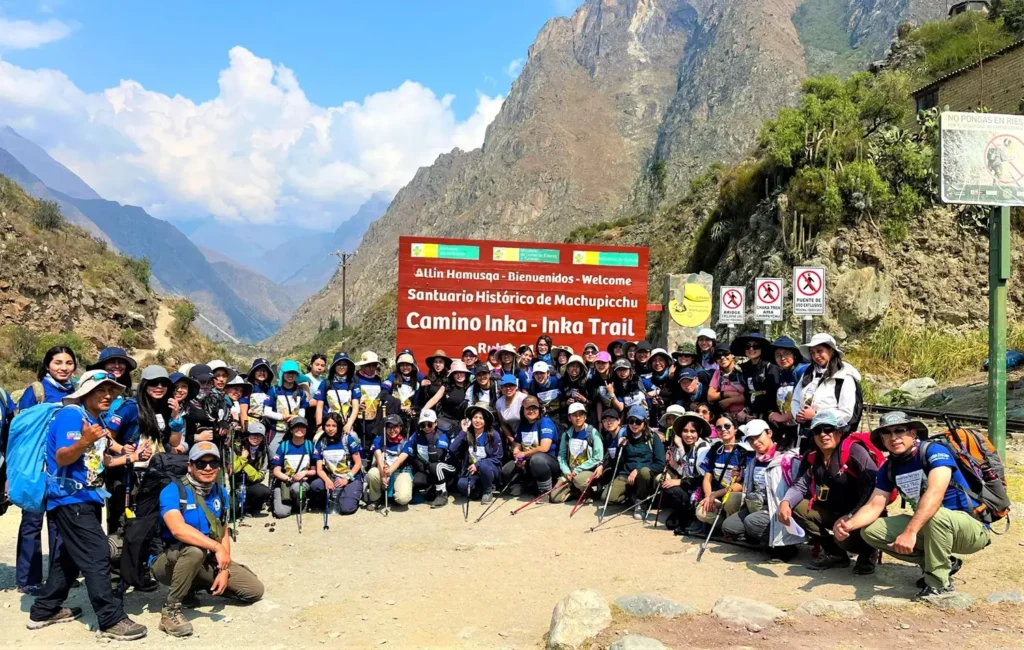
Group. The agency sets the dates and brings travelers together until the group is full. It is usually between 8 and 16 people, sometimes fewer if the operator sets a cap. Guide, cooking and tents are shared. The pace is set by a mixed group: some fly up the steps, while others stop every twenty minutes.
Private. You travel with your partner, family or friends. The guide and cooking team work solely for your party. The core itinerary is not reinvented: kilometer 82, Warmiwañusca, Wiñay Wayna, Inti Punku. What can change is the time you leave camp, the length of breaks and the menu, if you requested it when booking.
There is a third product that causes confusion: the “small group” or “luxury private” trek. The first is still a group trek, just with fewer spaces. The second adds a better tent, private toilet and inflatable mattress. Ask what is truly exclusive: the guide, the bathroom, the outbound van. “Private” in the brochure sometimes only means that strangers will not share your tent.
What the day-to-day experience is like
A group trek divides the guide’s attention. At a site like Sayacmarca, with a ten-minute stop, the explanation is for everyone. If someone falls behind on the descent from Phuyupatamarca, the rest wait or the group splits if there is an assistant guide.
A private trek lets you walk at the pace of the slowest person without having to account for twelve strangers. It works well if you are traveling with children, with someone who has only just acclimatized, or with a language that is not spoken by the mixed group. It is also good if you want quiet. The trail does not empty out: other groups travel along the same ridge. What becomes private is your table.
At camp, group trekkers eat in the dining tent with whoever is in their group. A private trek sets up its own. The sanctuary’s toilets remain the sanctuary’s toilets. A private portable toilet, if included in the package, is the extra you will appreciate most at three in the morning.
Dietary requirements can be accommodated in both options if you mention them when booking. On a private trek, the cook does not have to work out how to prepare a vegan meal, a gluten-free meal and a standard menu in the same pot. It can be done on a group trek. It just takes more coordination.
Benefits, without the fluff
A group trek costs less. You meet people. If you travel solo, you will not spend four nights dining in silence. There are more departure dates. A reputable operator fills the group and goes. For one solo traveler or two people in low season, a private trek can sometimes become so expensive that it makes sense to wait until you have a group of four.
A private trek is worthwhile when pace is the issue, not the photo. A family with different fitness levels. A celebration. Someone who needs more breaks. A language that the group departure on that date does not offer. It is not worthwhile if what you want is “Machu Picchu all to yourself”: that is not for sale.
Neither option exempts you from the named permit or from booking months ahead. Availability sells out either way.
Prices (classic 4-day trek, per person)
Indicative 2026 market figures. The final price depends on the operator, what the train includes and how many people are in your private group.
| Service | Typical range | What you are paying for |
|---|---|---|
| Standard group trek | USD 760 to 900 | Shared guide, camping, meals, return train in most cases |
| Higher-end group trek | USD 900 to 1.300 | Smaller group, better equipment, sometimes a portable toilet |
| Standard private trek (2 or more) | USD 1.000 to 1.500 | Guide and cooking team for your group. Lower if there are more of you |
| Premium private trek | USD 1.500 to 2.500 | More comfortable equipment, more elaborate menu |
| 2-day group Short Inca Trail | USD 475 to 650 | Hotel in Aguas Calientes, fewer days of camping |
A private trek for one person becomes very expensive: the guide, cook and van cost the same. With 6 or 8 people, the per-person price gets close to a good group trek. Ask for a table by number of passengers, not just a “from” price.
What is almost never included: tips, the downhill bus from Machu Picchu, lunch in Aguas Calientes, sleeping bag, Huayna Picchu. These add up in both formats.
A group trek below 600 dollars for the classic route usually cuts back on porters, food or the train. Compare the breakdown, not the headline figure.
How to choose
Traveling solo and want conversation: group trek, with a written group-size cap.
A couple who hikes at the same pace and watches the budget: group trek with an operator that does not combine 16 people.
Family, different paces, a strict diet or a reason you do not want to share with strangers: private trek, with the price dropping once you are four or more.
An unusual date or low season: ask whether that “group” departure will actually be a private trek for two. It happens sometimes. Have them confirm it in writing.
Frequently asked questions
Does a private trek avoid the 5:30 line at Wiñay Wayna?
No. The checkpoint opens at the same time for everyone. A private trek decides what time to join that line, not whether the line exists.
Can I book a private trek for just one person?
Yes. It is expensive because the minimum team cannot be split. If the budget hurts, a group trek is the honest calculation.
Do we sleep at a different campsite on a private trek?
No. The sanctuary campsites are those on the route. The tent changes and, if you paid for it, the portable toilet. Not the grounds.
Can I switch from a group trek to a private trek after paying the deposit?
Sometimes, if there is availability and a team. The permit is already in your name; the additional service is quoted separately. Do not assume it can be done the week of departure.
Do you also tip on a private trek?
Yes. The team is smaller, and the gesture carries more weight per person. Ask the agency for the suggested range before leaving Cusco.
Is the 2-day Short Inca Trail also available as a private trek?
Yes. The logic is the same: the same trail from kilometer 104, a different group size. The hotel in Aguas Calientes does not become a suite just because the trek is private.