


Km 82, also known as Piscacucho, is the official starting point of the four-day Classic Inca Trail to Machu Picchu. Its name comes from the railway distance that separates it from the city of Cusco, calculated along the train line that crosses the Sacred Valley and continues toward Machu Picchu Pueblo.
This site is located on the banks of the Urubamba River, surrounded by mountains, farmland, and small rural settlements. One of Peru’s most important hiking routes begins here: a journey along ancient stone-paved paths, stairways, mountain passes, forests, and archaeological sites built during the Inca era.
Although Km 82 is mainly a checkpoint and departure point, it marks the beginning of an experience that combines nature, history, and adventure. For this reason, it is important to arrive prepared, carry the necessary documents, and follow the guide’s instructions before starting the hike.
How to Get to Km 82
Transportation to Km 82 usually begins very early from the city of Cusco. The journey is made by tourist transport and crosses part of the Sacred Valley before continuing to Ollantaytambo and the community of Piscacucho.
Many agencies make a brief stop in Ollantaytambo so passengers can have breakfast, buy water, use the restrooms, or purchase any last-minute items. Afterwards, transportation continues along a local road to the starting point of the hike.
From Cusco, the journey can take approximately three to three and a half hours, depending on traffic, road conditions, and the duration of stops. Km 82 is located at an approximate altitude of 2,720 meters above sea level, so the weather can be cool during the early morning and warmer as the day progresses.
It is recommended to travel wearing your hiking clothes and keep your passport, entry ticket, water, and personal items needed for the first section within easy reach.
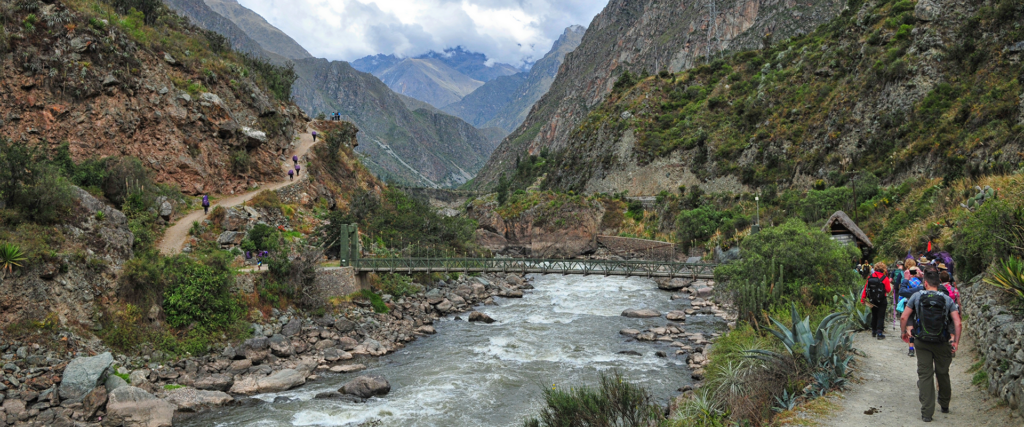
What You Will Find Upon Arrival
When you arrive at Km 82, you will see a small gathering area where travelers, guides, cooks, and porters from different groups meet. At this point, luggage is organized, loads are distributed, and final instructions are given before setting off.
It is also the right time to adjust your backpack straps, apply sunscreen, use the restrooms, and check that you have not forgotten anything important. Depending on the time and the group’s organization, there may be a few minutes of waiting before approaching the official checkpoint.
There are small stalls nearby where you may occasionally buy drinks, water, snacks, and other basic items. However, availability may be limited, so it is best not to rely entirely on these establishments.
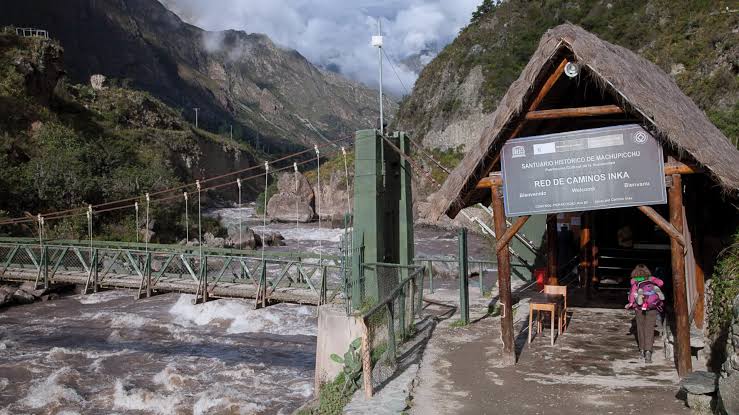
What Happens at the Checkpoint
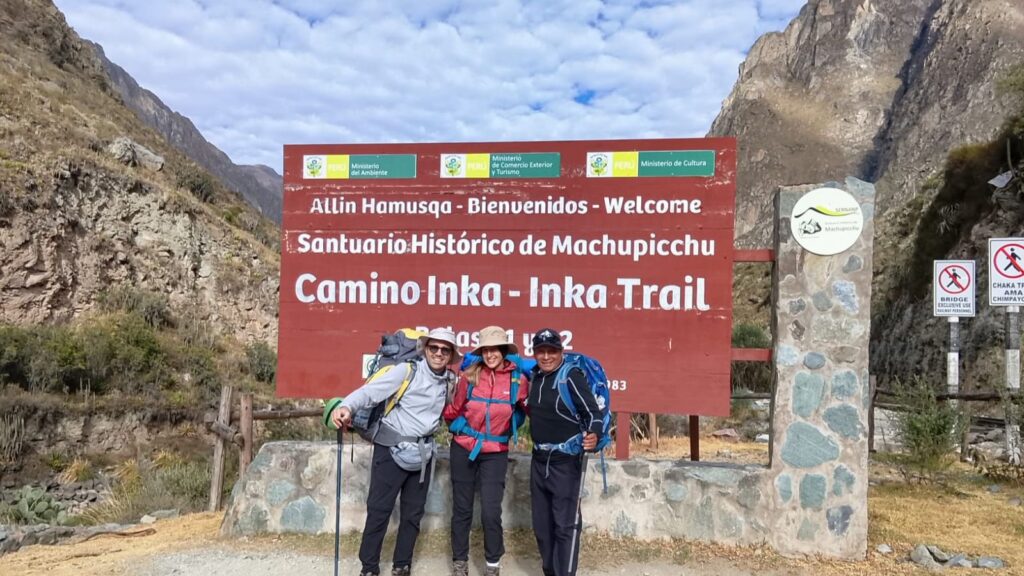
Before crossing the bridge over the Urubamba River, all travelers must pass through the Inca Trail checkpoint. Staff verify the entry permit, identification document or passport, and the official list of group members.
The document presented must match the information used during the reservation. For this reason, it is essential to carry the original passport or the document used to purchase the permit. A photograph or digital copy may not be enough to complete registration.
Access to the Inca Trail is regulated through a daily quota system. Permits are issued in advance and linked to a specific date and each traveler’s personal information. It is not possible to buy a permit directly at Km 82 or enter independently without being part of an authorized service.
During the busiest months, spaces can sell out well in advance. Therefore, it is advisable to book the trek several months ahead, especially when traveling during the peak season.
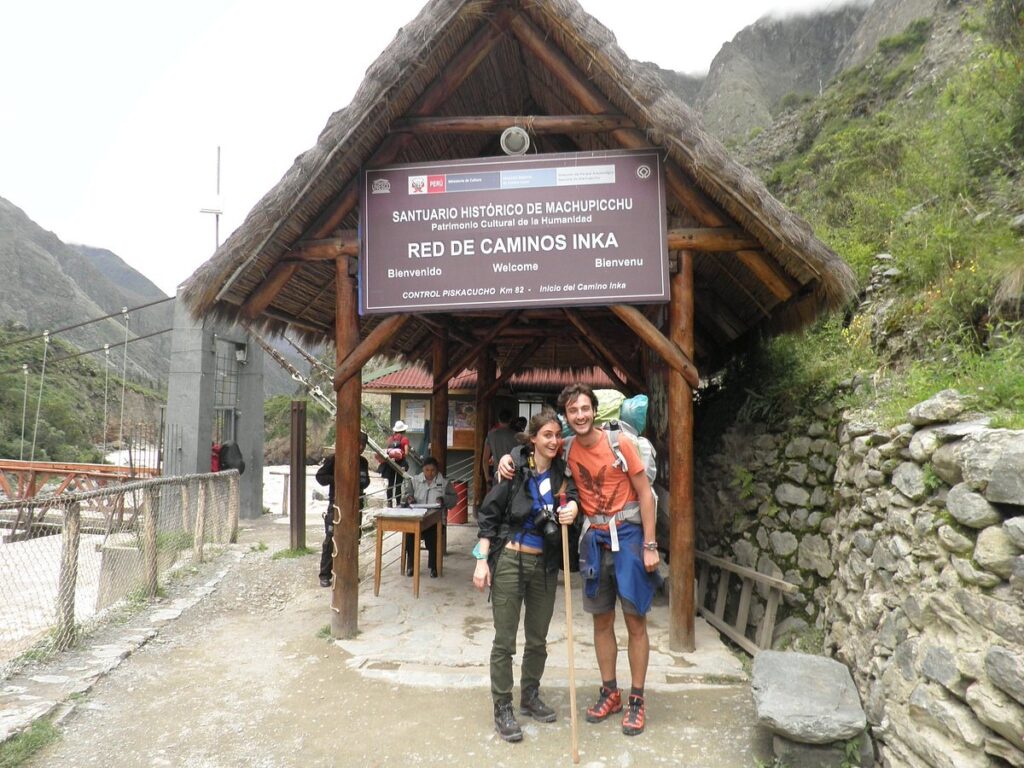
Start of the Hike
After completing the check, the group crosses the bridge over the Urubamba River. This moment marks the official start of the Classic Inca Trail hike.
During the first few minutes, the guide usually explains the hiking pace, how the group will be organized, and some recommendations for walking safely. They may also share information about the surroundings, nearby communities, and the route’s historical significance.
The first day has an easy to moderate difficulty level. The trail combines flat sections with gradual ascents, allowing travelers to adapt little by little to the physical effort. Although this day is less demanding than those that follow, it is recommended to walk calmly, breathe steadily, and avoid moving too quickly.
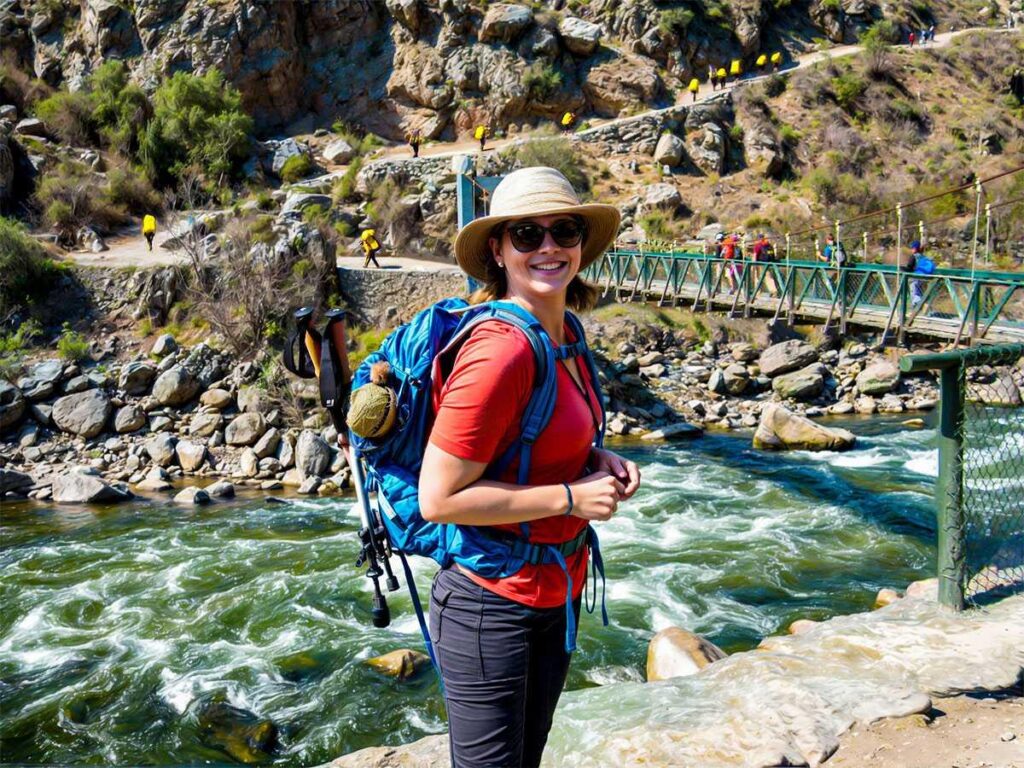
The First Section of the Route
The initial hike partly follows the river and crosses landscapes of mountains, Andean vegetation, farmland, and small communities. In several sections, the railway can still be seen on the other side of the valley.
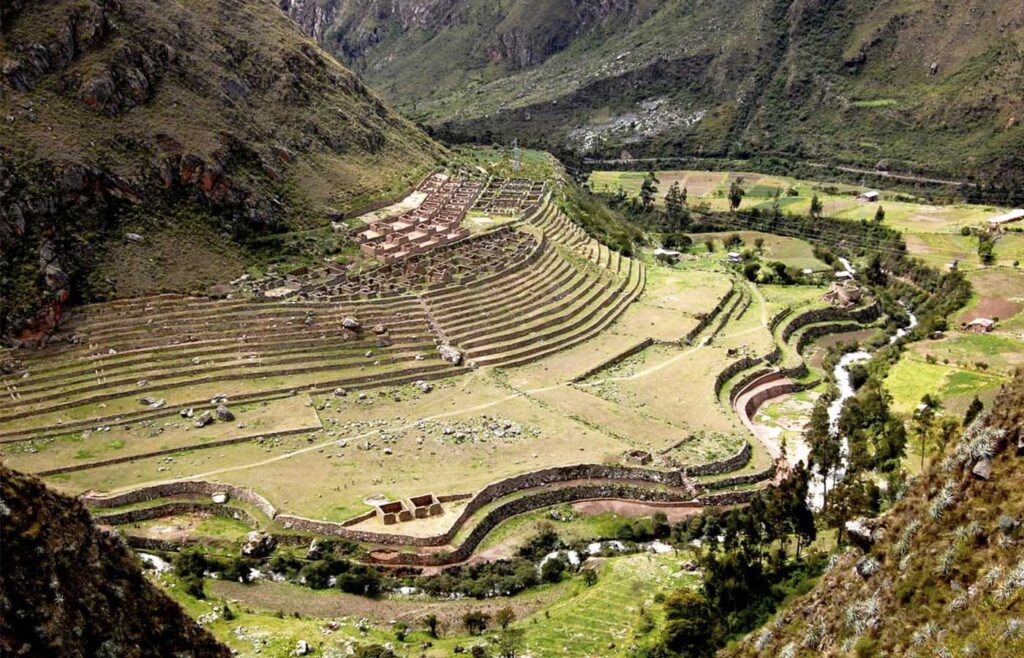
One of the first highlights along the route is Llactapata, also known as Patallacta. It is an archaeological complex made up of agricultural terraces, structures, and spaces arranged above the valley. Groups usually observe this site from an elevated area while the guide explains its possible function and relationship with the Inca road network.
This first section allows you to get familiar with the group and adjust to the weight of your backpack, the use of trekking poles, and trail conditions. It also serves as preparation for the more challenging ascents that appear during the following days.
Required Documents
To enter through Km 82, you must carry the original document registered during your reservation. In most cases, this will be your passport, although some domestic travelers may use their national ID document.
Before leaving Cusco, make sure the document is in your daypack and not in the luggage that will be handed over to the porters. It is also advisable to carry a physical or digital copy as a backup, although this does not replace the original document at the checkpoint.
If you renewed your passport after making the reservation, notify the organizing agency in advance. You may need to present both your old and new passports to prove that you are the same person listed on the permit.
What to Carry in Your Daypack
Your main luggage may be carried by porters, according to the conditions of the service booked. However, each traveler must carry a small backpack with the items needed during the hiking hours.
To begin the route, it is recommended to bring:
- Original passport or identification document.
- Water to stay hydrated.
- Sunscreen and lip balm.
- Hat or cap.
- Sunglasses.
- Rain poncho or waterproof jacket.
- A lightweight warm layer.
- Personal snacks.
- Personal medications.
- Insect repellent.
- Toilet paper and hand sanitizer.
- Camera or phone protected from the rain.
- Cash for small expenses before entering.
The weather can change quickly, so it is best to dress in layers. This way, you can remove or add clothing depending on the temperature, wind, or rain.
Services Available at the Starting Point
Km 82 has basic services for groups beginning the Inca Trail. You can find restrooms and small areas where travelers can get organized before entering.
It is not a tourist center with a wide range of shops, restaurants, or ATMs. Therefore, any important purchases should be made in Cusco or Ollantaytambo. It is also advisable to carry enough cash, as there is not always an internet signal or the option to pay by card.
Once you have crossed the checkpoint, opportunities to buy products decrease considerably. Travelers must rely mainly on the food, drinks, and services included in their program.
Recommendations Before You Begin
Try to rest well the night before and avoid eating overly heavy meals. A balanced breakfast will give you energy for the first hours of hiking.
Arrive with enough time at the meeting point indicated by the agency. Transportation usually leaves early, and a delay can affect the organization of the entire group.
During the journey to Km 82, keep your documents and valuables with you. Do not place them in the bags or backpacks that will be handed over to the porters.
Listen carefully to the guide’s initial briefing. It covers important aspects of the route, schedules, campsite use, environmental care, and the rules that must be followed on the Inca Trail.
It is also important to start hydrating from the early hours. Do not wait until you are very thirsty to drink water, and avoid walking at a pace that leaves you out of breath.
The Importance of Protecting the Area
Km 82 is the gateway to a historic route and a protected natural environment. Every visitor should help preserve it by avoiding littering, damaging vegetation, or leaving marked trails.
Personal waste should remain in your backpack until you reach an appropriate place to dispose of it. You should also not remove stones, plants, or other elements from the trail.
Following the guide’s instructions and respecting entry rules helps protect the route for future visitors and ensures the experience unfolds in an orderly and safe manner.
One Final Check Before Crossing the Bridge
Before passing through the checkpoint, check once again that you have your original document, water, sunscreen, rain gear, and personal medications. Adjust your backpack properly and make sure your belongings are protected.
After crossing the bridge over the Urubamba River, your journey along the Inca Trail officially begins. From that moment on, you will leave the road behind and follow a historic route that for centuries connected communities, agricultural centers, and ceremonial spaces in the Andes.