


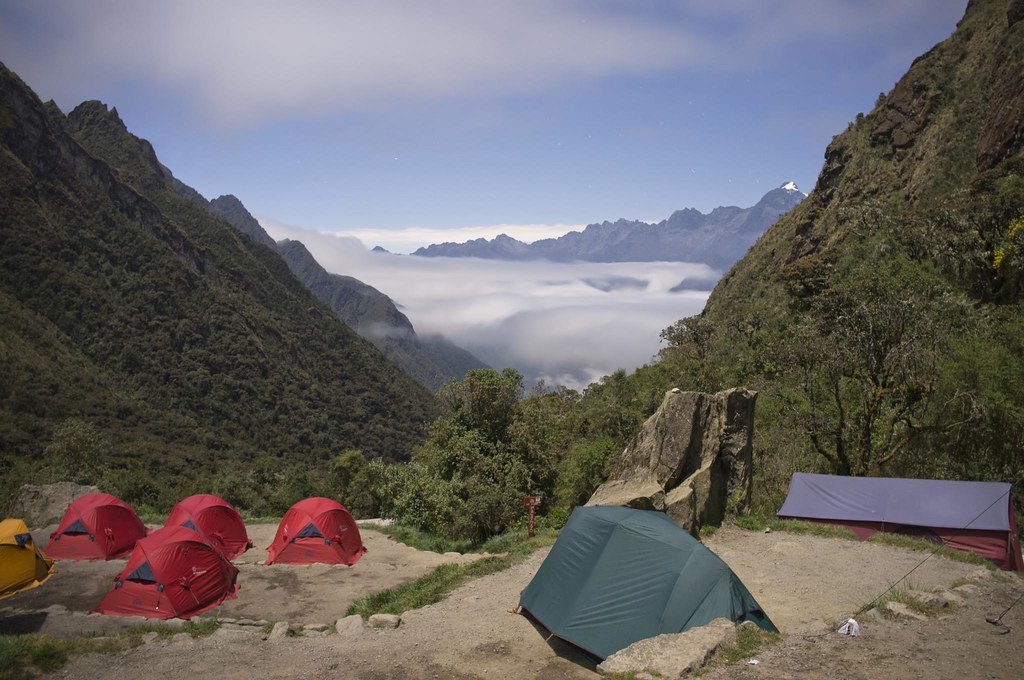
Before hiking the Inca Trail, almost everyone wonders about the cold: how warm it gets during the day, how low temperatures drop at night, and what changes over four days. The route does not stay within a single climate. It goes from mild valleys to a pass above 4,200 m a.s.l. That difference in altitude matters more than the month of the year.
What Is the Weather Like on the Inca Trail?
The weather depends mainly on altitude and the section of the trail. During the day, temperatures are usually between 18 °C and 23 °C. At night, they drop considerably, reaching 0 °C at the highest campsites. That contrast between hiking and being in your tent is one of the trail’s most noticeable features.
The Two Main Seasons on the Inca Trail
In Cusco, the year is divided into the dry season and the rainy season. Both change the trail. Neither one completely eliminates the cold at night at high altitude.
Dry Season (April to October)
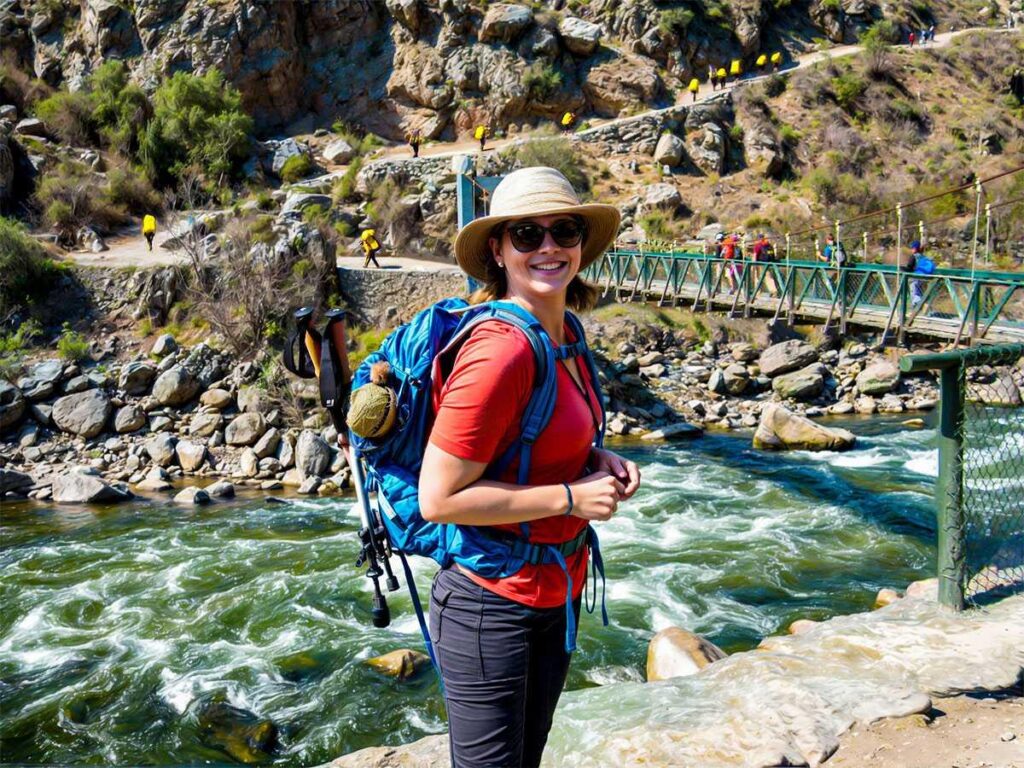
This is the season most people choose. There is more sunshine, clearer skies, and little rain. Hiking is easier and visibility is better. It is also when nights are coldest: at high campsites, the thermometer gets close to 0 °C. June and July are the harshest months. At the passes, the wind makes it feel even colder.
Rainy Season (November to March)
It rains more, and there are more clouds. Visibility is more limited, while the landscape becomes greener. Nights are usually slightly less harsh than in the dry season, with lows around 5 °C at the first campsites. The main challenge becomes mud and moisture inside the tent. The Classic Inca Trail closes in February for maintenance.
Inca Trail Temperatures During the Day
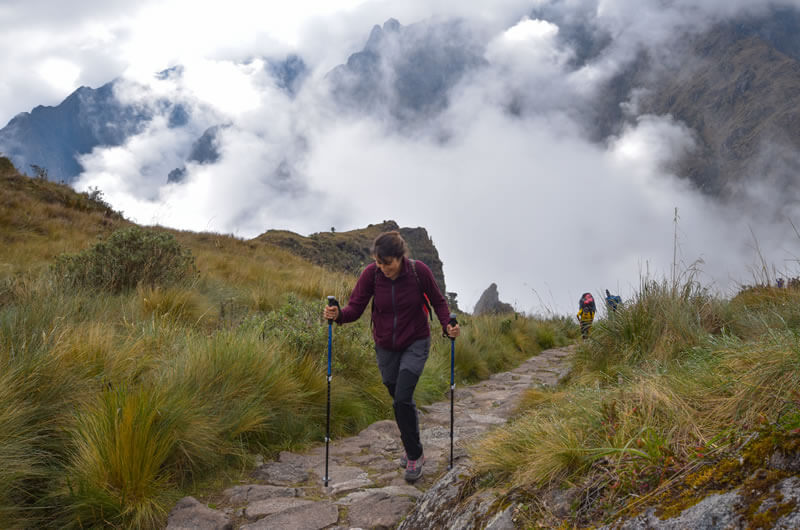
During the day, hiking is comfortable most of the time, with some variation depending on the hour and altitude. The Andean sun is intense, and UV radiation is high. Even when the air feels cool, sunscreen and water are essential.
Weather During Morning Hikes
When leaving camp, temperatures are usually between 5 °C and 10 °C. Once the sun rises, your body warms up and the trail quickly becomes warmer. That is why layering is important: you start bundled up and remove clothing when you no longer need it.
Temperatures in High-Altitude Areas and Mountain Passes
The higher you go, the colder it gets. On high sections, the wind matters as much as the thermometer reading. Even during the day, temperatures at the passes can range from 5 °C to 7 °C.
Warmiwañusca (Dead Woman’s Pass)
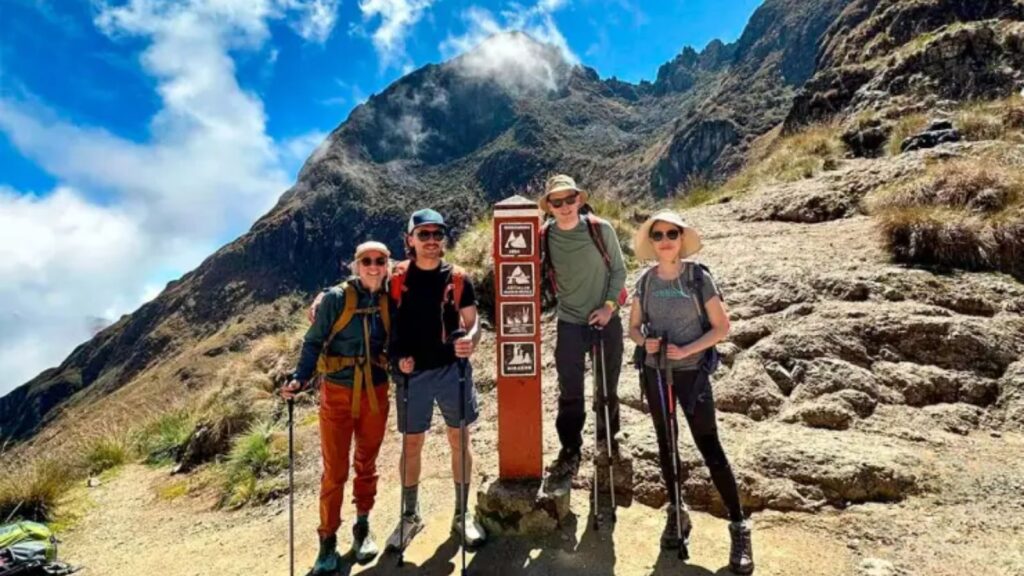
Warmiwañusca is the highest point on the trail, at around 4,215 m a.s.l. During the day, temperatures range from 5 °C to 7 °C. At night, they can drop to 0 °C. Wind at the pass makes it feel even colder. Crossing this pass is the most demanding section: altitude, steep climbs, and cold all at once.
Inca Trail Temperatures at Night
When the sun drops behind the mountains, the temperature falls quickly. Sleeping warm matters just as much as having the right footwear during the day.
How Low Does the Temperature Drop While Camping?
It depends on the campsite and the season. At the first campsites, such as Wayllabamba, lows are usually between 5 °C and 12 °C in the dry season and between 8 °C and 15 °C in the rainy season. This is usually the mildest of the three nights. At higher campsites, temperatures can reach 0 °C, especially in June and July.
The Coldest Nights on the Trail
The second night is usually the coldest. You camp at high altitude after Warmiwañusca, and the thermometer can reach 0 °C or slightly below. This is more noticeable in June and July. A proper sleeping bag and genuinely dry clothes are essential here.
The Highest-Altitude Campsite
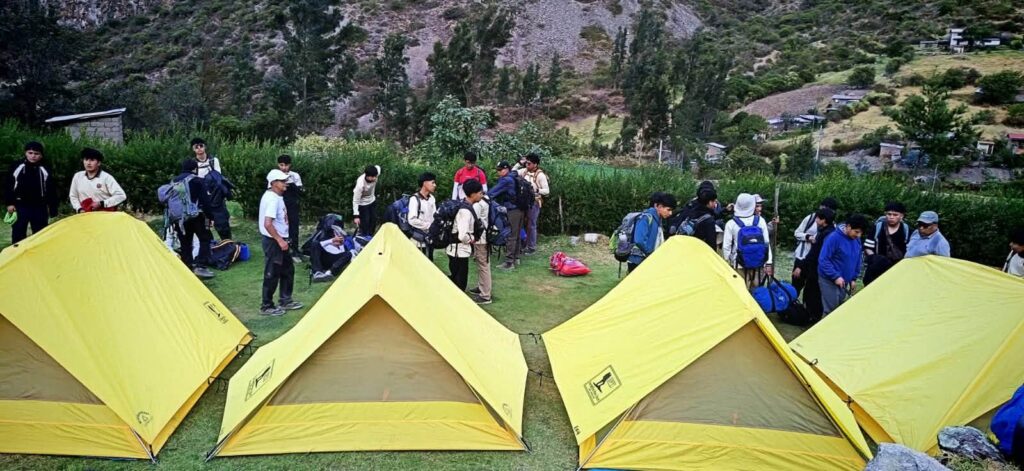
Pacaymayo sits at around 3,600 m, just after the pass. It is in a cloud forest area and is one of the places where nighttime temperatures drop the most: lows around 4 °C, and even lower during the dry season.
Temperatures by Trail Section and Hiking Day
Each day changes because you move up and down through different ecological zones.
Day 1: Start of the Trail
The first day is milder. Daytime temperatures hover around 16 °C. The night at Wayllabamba can drop to 4 °C or 5 °C. It helps your body adjust before the long day ahead.
Day 2: The Highest and Most Demanding Section
This is the coldest and toughest day. You climb Warmiwañusca. During the day, temperatures can be around 8 °C; at night, close to 0 °C. Altitude, uphill hiking, and wind all come together on the same section.
Day 3: Descent Toward the Mountain Forest
You descend toward the edge of the jungle. The landscape becomes greener and more humid. During the day, temperatures can reach 18 °C. At night, they are around 10 °C. This is usually the mildest campsite of the three.
Day 4: Arrival at Machu Picchu
Machu Picchu is at a lower altitude and feels warmer. Highs can reach 22 °C. In the early morning, temperatures are around 8 °C.
How Does Altitude Affect Temperature?
On this route, altitude has a greater effect on the cold than the calendar.
The Relationship Between Altitude and Cold in the Andes
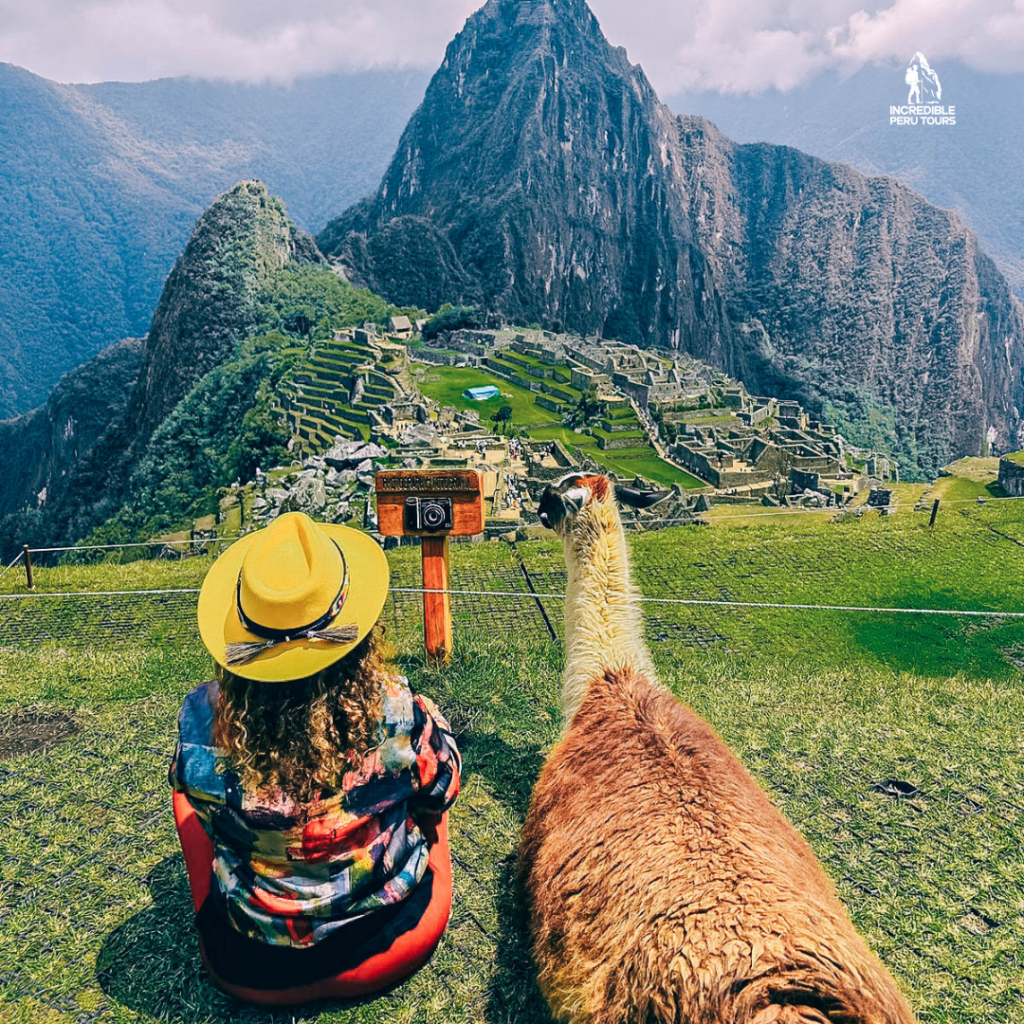
In the Andes, the higher the elevation, the lower the temperature. That is why high campsites and passes are the coldest, while lower sections near the mountain forest feel milder. In a single day, you can go from wind at a mountain pass to the warmth of a valley. That is why you need layers instead of just one jacket.
What Clothing Should You Bring for Inca Trail Temperatures?
The key is layering and a sleeping bag that can handle cold high-altitude nights.
Clothing for the Day
Wear lightweight, breathable clothing, plus a jacket for the morning and mountain passes. Bring a base layer, fleece, and a windproof or waterproof outer layer. Sunscreen, sunglasses, and a hat are essential: high-altitude UV radiation is unforgiving even when the air feels cool.
Warm Clothing for the Night
Once the sun goes down, you need thermal layers and warm clothing. A hat, gloves, and dry socks make a huge difference at night. At high campsites, temperatures can be close to 0 °C.
Essential Sleeping Gear
If you do not sleep well, the next day becomes much harder.
Recommended Sleeping Bag
A sleeping bag with a comfort rating of around -5 °C to -10 °C is recommended, especially in June and July.
Thermal Clothing and Accessories
Thermal top and bottoms for sleeping. Bring a hat, gloves, thick socks, and a sleeping pad that keeps your body separated from the cold ground.
Tips for Dealing With the Cold on the Inca Trail
Daytime Recommendations
Start with layers, remove clothing as your body warms up, drink water even when you are not thirsty, and do not skip sunscreen. Keeping a steady pace helps more than starting too fast and sweating through your first layer.
Nighttime Recommendations
When you arrive at camp, change out of damp clothes and put on dry ones. Use tea time to warm up. Set up your sleeping bag and thermal layers before the temperature drops completely. A hat and dry socks help more than you might think.
Frequently Asked Questions About Inca Trail Temperatures
Does the Inca Trail get very cold?
At night and on the mountain passes, yes. During the day, temperatures are usually between 16 °C and 23 °C. After sunset, temperatures at high campsites can reach 0 °C. With a sleeping bag and dry clothing, it is manageable.
What is the coldest night on the trail?
The second night, after Warmiwañusca, when camping at high altitude. It can reach 0 °C or slightly below.
Can it snow on the Inca Trail?
Snow on the trail is not common. At Warmiwañusca, there can occasionally be hail or frost, especially during the dry season. From the trail, you can see snow-capped peaks such as La Verónica.
What is the coldest month to hike the Inca Trail?
July. High-altitude nights can drop to 0 °C or lower. June comes next. During these months, a sub-zero sleeping bag and warm clothing are not luxuries.