


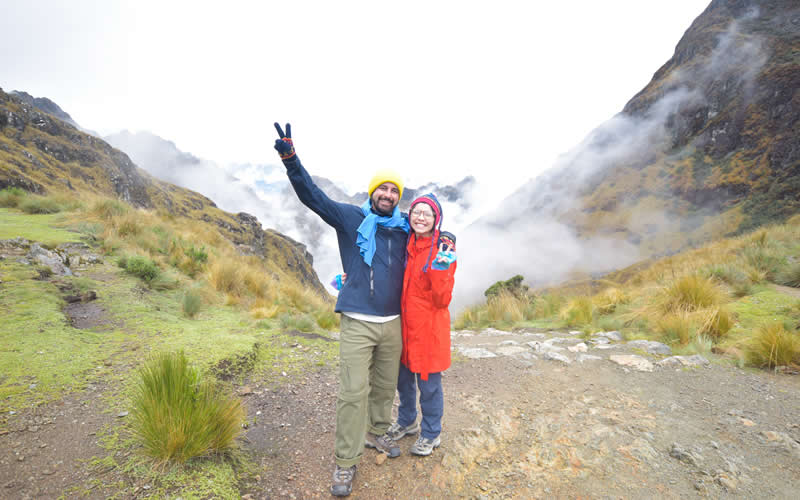
Hiking the Inca Trail during the rainy season is a different experience from the rest of the year. The landscapes turn an intense green, the route becomes quieter, and the sense of adventure grows stronger. However, it also means dealing with wet trails, frequent rain, and a few extra challenges. In this guide, we’ll tell you what to really expect during the trek at this time of year, so you can decide whether it is the right season for you and how to prepare in the best way.
When is the rainy season on the Inca Trail?
The rainy season on the Inca Trail runs from November to March. During these months, the Cusco region receives the highest rainfall of the year, with showers that can occur at any time of day. It is important to keep in mind that, although it rains more often, it does not mean it rains nonstop: sunny days are common between cloudy or rainy days.
Rainiest months
The rainiest months of the season are January and March, when rainfall becomes more persistent and the trails reach their wettest point. November and December, on the other hand, mark the beginning of the season, with more moderate rain and a greater chance of clear days.
The Inca Trail closure in February
Every year, the Classic Inca Trail remains closed throughout February for maintenance work. This measure coincides with the peak of the rainy season and aims to protect both the trail and hikers’ safety. If your trip is planned for February, you will need to choose an alternative route, as the classic route is not available that month.
What is the Inca Trail weather like during the rainy season?
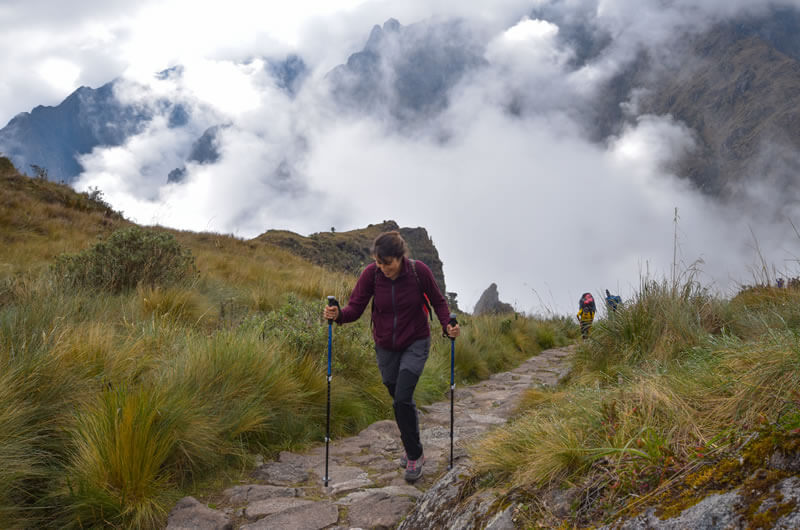
The weather at this time of year is characterized by humidity, frequent rain, and more changeable conditions. Even so, temperatures are usually quite manageable, and nights tend to be slightly less cold than during the peak dry season.
Daytime and nighttime temperatures
During the day, temperatures are usually pleasant, ranging from 19 °C to 22 °C, while at night they drop more moderately than in the dry season, reaching around 5 °C at the first campsites. This smaller temperature range is one of the lesser-known advantages of hiking during the rainy season.
Rainfall frequency and intensity
Rain can come as brief showers or prolonged rainfall lasting several hours. During the wettest months, it is often accompanied by mist and occasionally thunder and lightning. A common pattern is for mornings to begin clearer, with rain concentrated in the afternoon and evening, although it is always wise to be prepared for sudden changes.
How weather varies by altitude
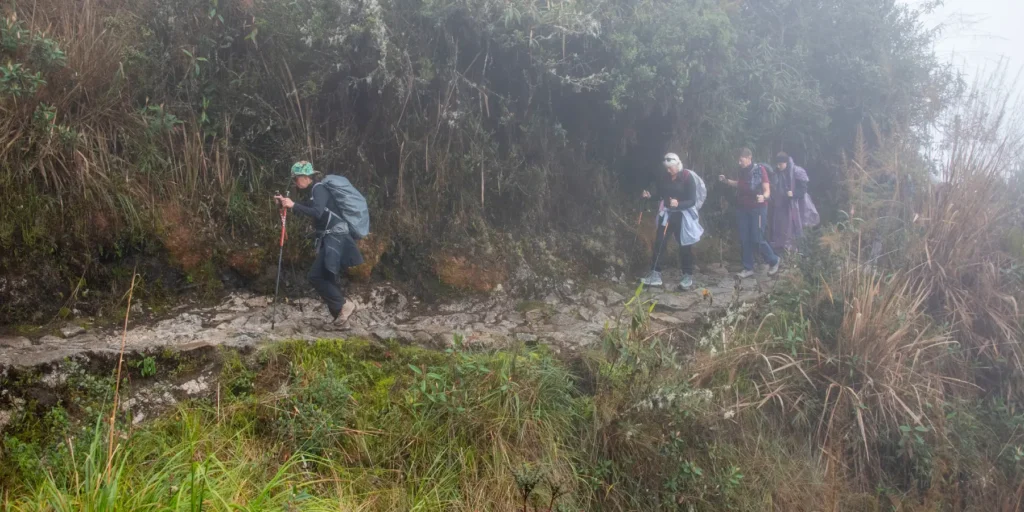
As during the rest of the year, the weather changes noticeably depending on the section of the route. At higher elevations and mountain passes, conditions are colder and windier, while lower sections near the cloud forest are warmer and more humid. These mountain jungle sections are also the slipperiest during the rainy season.
What to expect during the trek in the rainy season
Beyond weather figures, hiking at this time of year has practical implications worth knowing in advance.
Trail conditions
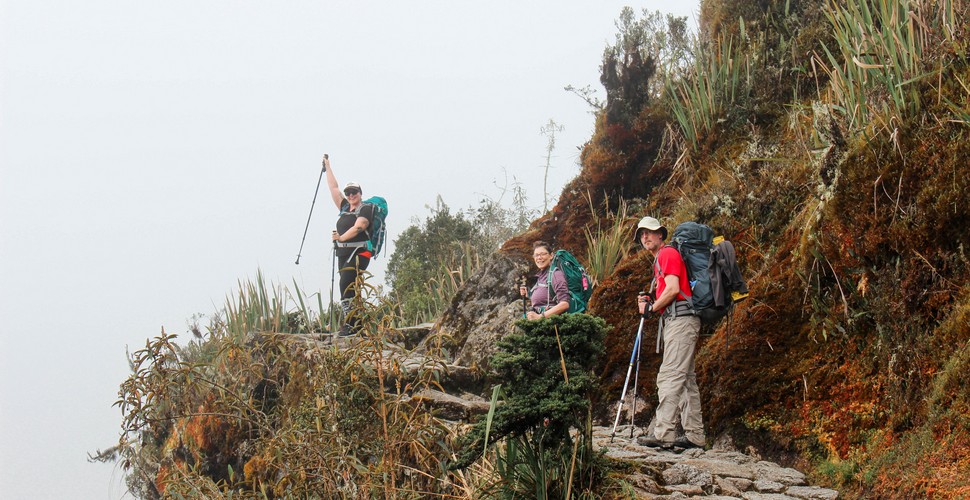
The trails become wet, muddy, and slippery, especially on stone stair sections and in cloud forest areas. Walking carefully and at a steady pace is key to avoiding falls.
Visibility and landscapes
Mist can reduce visibility at mountain passes and make it harder to take panoramic photos. On the other hand, the scenery looks lush, with intensely green vegetation, fuller waterfalls, and blooming orchids.
Conditions at the campsites
Campsites tend to be wetter, and setting up and packing down tents in the rain can be uncomfortable. Having quality waterproof gear and a change of dry clothes makes a big difference when it comes to resting.
Advantages of hiking the Inca Trail during the rainy season
Although it is often considered the less ideal time of year, the rainy season offers benefits that are highly valued by certain types of travelers:
- Fewer hikers: the route is much less crowded, allowing for a quieter, more intimate, and peaceful experience.
- Greener, more vibrant landscapes: the rain revives the surroundings and brings vegetation into bloom, offering some of the most beautiful scenery of the year.
- Greater permit availability: unlike the dry season, it is easier to secure spots during these months, sometimes even on short notice.
Disadvantages and challenges of the rainy season
Likewise, it is important to understand the challenges of hiking in the rain:
- Muddy and slippery trails: wet terrain increases the effort required and demands extra caution on descents and stone steps.
- Wet campsites: humidity can affect sleeping comfort if you do not have the right gear.
- Reduced visibility at mountain passes: mist can partially hide the route’s most spectacular views.
The Inca Trail month by month during the rainy season
Each month of the season has its own character.
- November: the beginning of the season. Days are mostly sunny, although it can rain at any time. Rainfall is still moderate, and there are fewer hikers, making it a good transition month.
- December: rain becomes more consistent and the ground starts getting more slippery, especially in cloud forest sections. You can still enjoy green landscapes and fewer crowds.
- January: one of the rainiest months. Rainfall is frequent and persistent, with cloudy days and wet trails. Recommended only for hikers prepared for demanding conditions.
- March: rain gradually begins to decrease toward the end of the month, giving way to more sunny periods. The landscape remains green and signals the arrival of the dry season.
Note: February does not appear on this list because the Classic Inca Trail remains closed for maintenance throughout the month.
What to pack for the Inca Trail during the rainy season
The right gear makes all the difference between an uncomfortable hike and an enjoyable experience despite the rain. These are the essential items:
Essential waterproof clothing
- Waterproof jacket with a hood, preferably breathable.
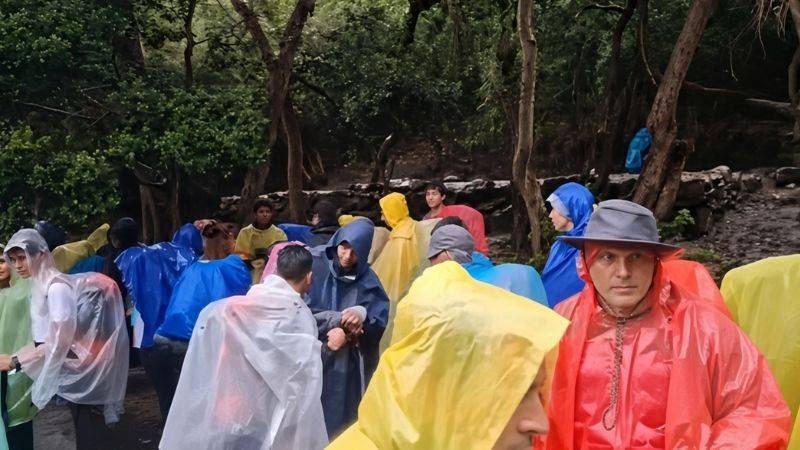
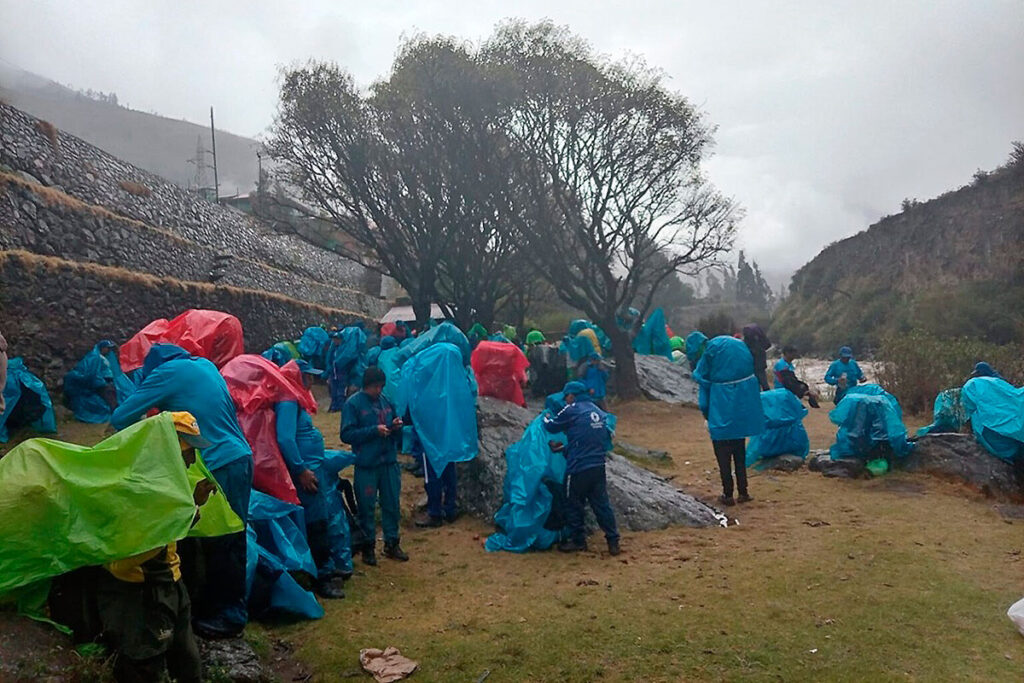
- A roomy rain poncho that also covers your backpack.
- Waterproof pants for periods of heavy rain.
- Layered warm clothing and thermal garments for the night.
- A change of dry clothes reserved exclusively for sleeping.
Protection for luggage and gear
Keeping your gear dry is just as important as keeping yourself dry. Moisture can ruin sleeping clothes, electronic devices, and food if precautions are not taken.
Backpack cover and dry bags
- A waterproof cover for your backpack.
- Dry bags or plastic bags to organize and protect clothing inside your backpack.
- Waterproof cases or pouches for your phone, camera, and documents.
Suitable footwear for wet terrain
Waterproof trekking boots with a good non-slip sole and ankle support are recommended. Footwear with firm grip is essential for moving safely over wet stone steps and muddy trails.
Tips for enjoying the trek in the rain
Before starting the hike
Check the forecast, waterproof your footwear in advance, and organize your backpack by separating dry clothes into dry bags. Make sure your poncho and jacket are within easy reach, not at the bottom of your pack.
During the trek
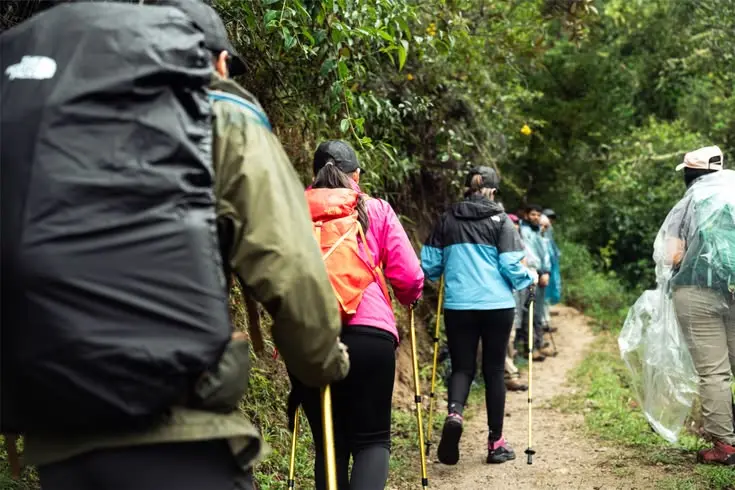
Walk at a steady pace and take firm steps on slippery sections. Use trekking poles for extra stability, stay hydrated, and do not let the sun fool you: UV radiation at high altitude remains intense even on cloudy days.
At the campsites
When you arrive, immediately change out of wet clothing and into dry, warm layers. Take advantage of hot drinks to warm up, air out your tent whenever possible, and keep wet footwear protected so it does not get even wetter overnight.
Is the Inca Trail worth doing during the rainy season?
The answer depends on your priorities and hiking experience. If you are looking for peace and quiet, green landscapes, and do not mind getting wet or walking through mud, the rainy season can offer an authentic, intimate experience with fewer crowds. On the other hand, if it is your first time, you prefer more predictable conditions, or photo visibility matters a lot to you, you may want to consider another season. With the right preparation and equipment, the Inca Trail is worth it at any time of year.
Alternatives if you prefer to avoid the rain
The Inca Trail during the dry season
The dry season, from May to September, offers sunny days, firmer trails, and better visibility. It is the most recommended time of year, although it is also the busiest, so it is best to book several months in advance.
Covered or shorter alternative routes
During February, when the Classic Inca Trail is closed, or for those seeking less exposure to rain, there are alternative routes such as the Salkantay trek or Inca Jungle, which combine hiking sections with transportation and offer greater flexibility. There is also the option of the two-day Short Inca Trail, which reduces exposure to wet campsites.
Frequently asked questions about the Inca Trail during the rainy season
Can you hike the Inca Trail during the rainy season?
Yes, the Inca Trail is open during the rainy season from November to March, with the sole exception of February, when it closes for maintenance. With the right equipment, it is entirely possible to complete the route at this time of year.
Does it rain all day during the trek?
Not necessarily. Rain often alternates with clear periods, and mornings are often sunnier while rainfall is concentrated in the afternoon or evening. Even so, it is always best to be prepared for rain at any time.
Why does the Inca Trail close in February?
The Classic Inca Trail closes every February for trail maintenance and conservation work. This measure coincides with the rainiest month of the year and aims to protect the route and ensure visitor safety.
Is it dangerous to hike the route in the rain?
It is not dangerous if the right precautions are taken. The main risk is slippery trails, so good non-slip footwear, trekking poles, and a cautious pace significantly reduce any risk of falling.