


Knee problems are one of the most valid concerns when considering the Inca Trail, and for good reason: the route includes long stretches of descending stone steps that place considerable strain on the joints. This does not mean it is impossible to do with sensitive knees, but it is important to take precautions and carefully assess the option. Here are practical recommendations for protecting your knees on the trail. This guide is for informational purposes and does not replace an evaluation by a healthcare professional.
Why the Inca Trail is demanding on the knees
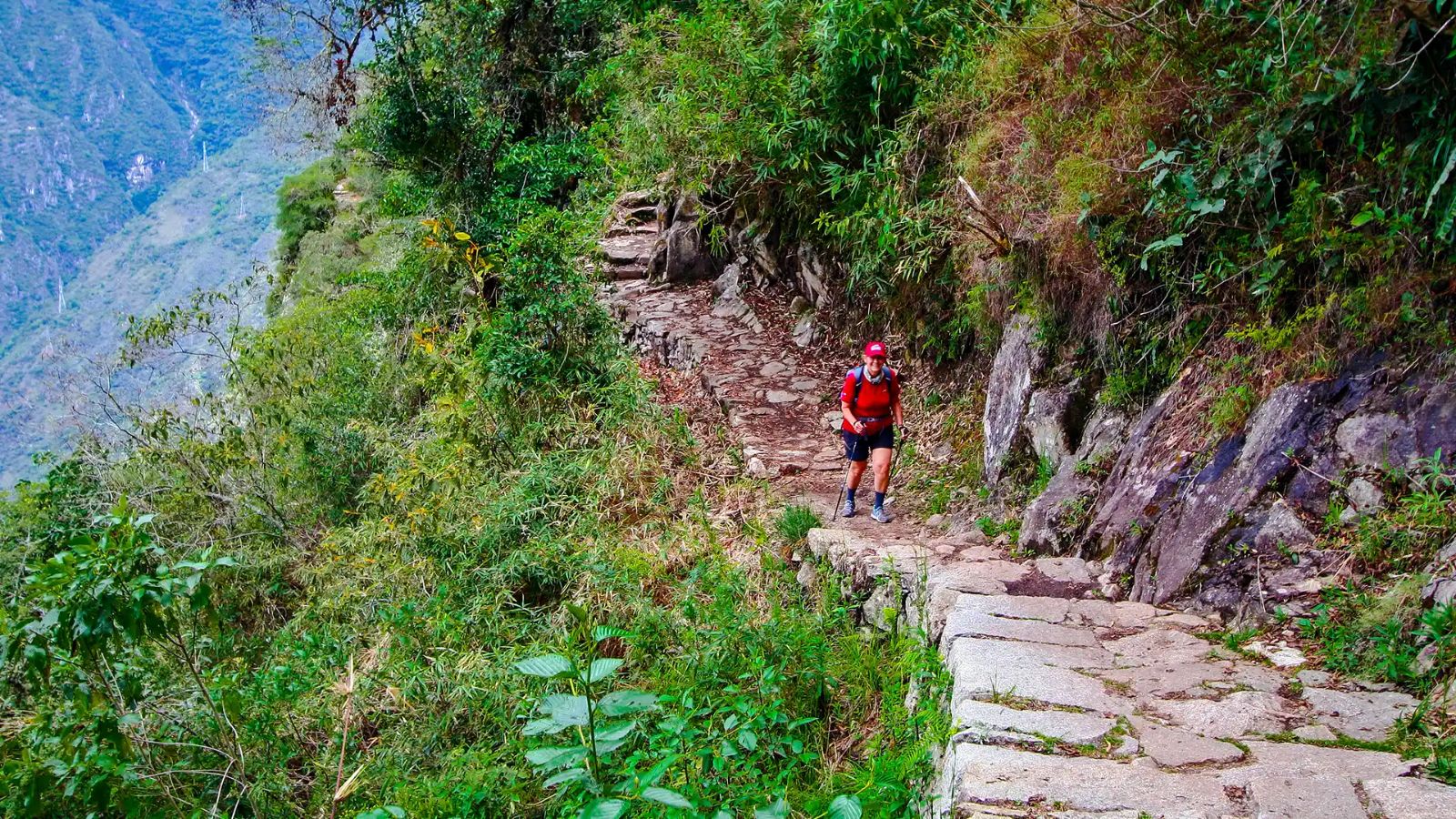
The challenge for the knees on the Inca Trail is not so much the ascents as the descents. The classic route has long downhill stretches over uneven stone steps, and each step creates an impact that builds up over hours of hiking, especially on the second and third days.
That repeated impact is what can cause discomfort for people who already have sensitive knees. Descending requires the joints to absorb body weight again and again, and on steep, uneven terrain, that effort is greater than on a flat hike. Understanding this helps you prepare the right precautions.
Consult a professional before deciding
The most important recommendation, if you have a pre-existing knee problem, is to discuss it with your doctor or physiotherapist before booking. Only a professional who knows your case can assess whether your knee is ready for the demands of the route and give you guidance specific to your situation.
This consultation is not meant to discourage you, but rather to help you make the decision with accurate information about your condition. Depending on what the professional advises, you can confidently choose between the full trek, a shorter version, or preparing your knee in advance.
Using trekking poles is essential
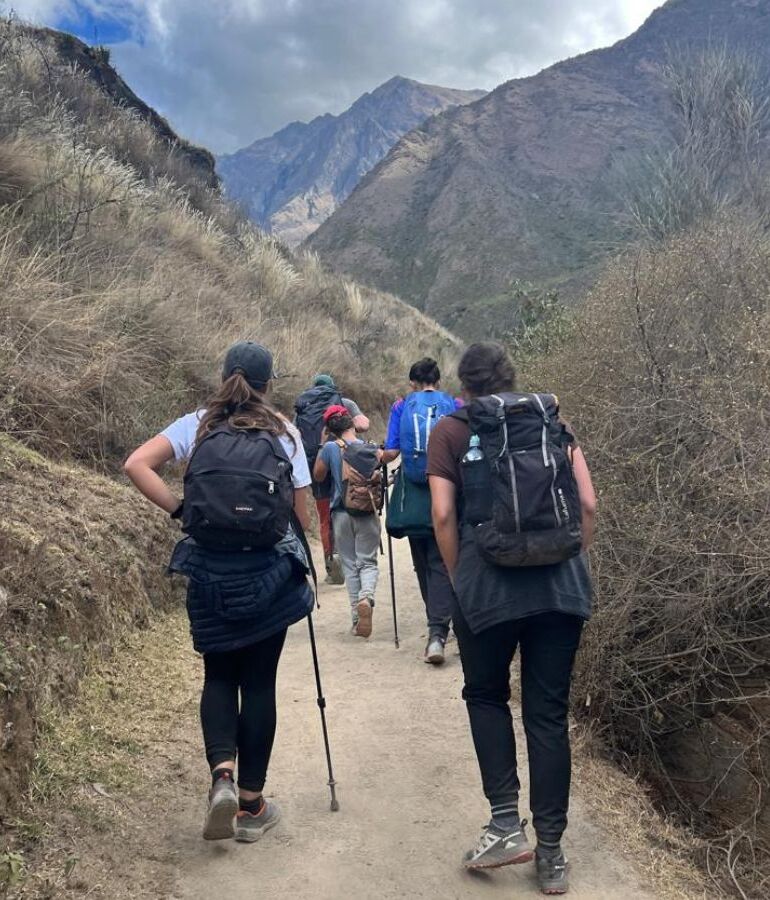
If there is one essential precaution for anyone with sensitive knees, it is using trekking poles. By leaning on them during descents, you transfer part of your weight to your arms and significantly reduce the impact your knees receive with every step.
It is a good idea to learn how to use them properly before your trip and not save them only for uphill sections, since they offer the most protection on descents. Remember that they must have rubber tips to comply with trail regulations. Many agencies offer them for rent, so there is no need to bring them from home.
Other helpful precautions
In addition to trekking poles, several measures can reduce the strain on your knees. Strengthening your leg muscles in the weeks before the trip helps the muscles absorb some of the effort that would otherwise fall on the joint. Descending slowly and placing your foot carefully on each step also reduces impact.
Footwear with good cushioning and ankle support provides stability on uneven terrain, and some people use supportive knee braces if recommended by their healthcare professional. Carrying little weight in your daypack also eases pressure on your knees during descents.
Listen to your body on the trail
During the hike, pay attention to signals from your knee and tell your guide about them. If you notice discomfort, slowing down and taking breaks is wiser than pushing through. Your guide has experience accompanying hikers with different conditions and can help you manage difficult sections more effectively.
The short version as a gentler option
For those with delicate knees, the short version may be a more suitable alternative. The Short Inca Trail 2 days concentrates the hike into a single day, with fewer accumulated hours of descent than the four days of the classic route, reducing the total strain on the joints.
Even so, this version also includes downhill stretches over stone steps, so precautions with trekking poles and pacing remain important. If your healthcare professional approves it and you prefer the full challenge, the Classic Inca Trail 4 days is feasible with the right precautions to protect your knees.
Frequently asked questions
Can I hike the Inca Trail if I have knee problems?
It is possible in many cases with the right precautions, but it depends on your specific situation. The most important thing is to consult your doctor or physiotherapist before booking, as only a professional can assess the actual condition of your knee.
Which part of the route affects the knees the most?
The descents, more than the ascents. The route has long downhill stretches over stone steps that create repeated impact on the joints, especially during the second and third days of the classic route.
Do trekking poles really help with knee problems?
Yes, a lot. By leaning on them during descents, you transfer part of your weight to your arms and reduce the impact on your knees with every step. They are one of the most important precautions for people with sensitive knees.
Is the short version better if I have delicate knees?
It can be gentler, as it concentrates the hike into one day with less accumulated descent than the four-day trek. Even so, it includes downhill sections, so precautions with trekking poles and pacing are still necessary.
What else can I do to protect my knees?
Strengthen your legs before the trip, descend slowly with careful footing, wear good cushioned footwear, and carry little weight in your daypack. Some people use supportive knee braces if recommended by their healthcare professional.