


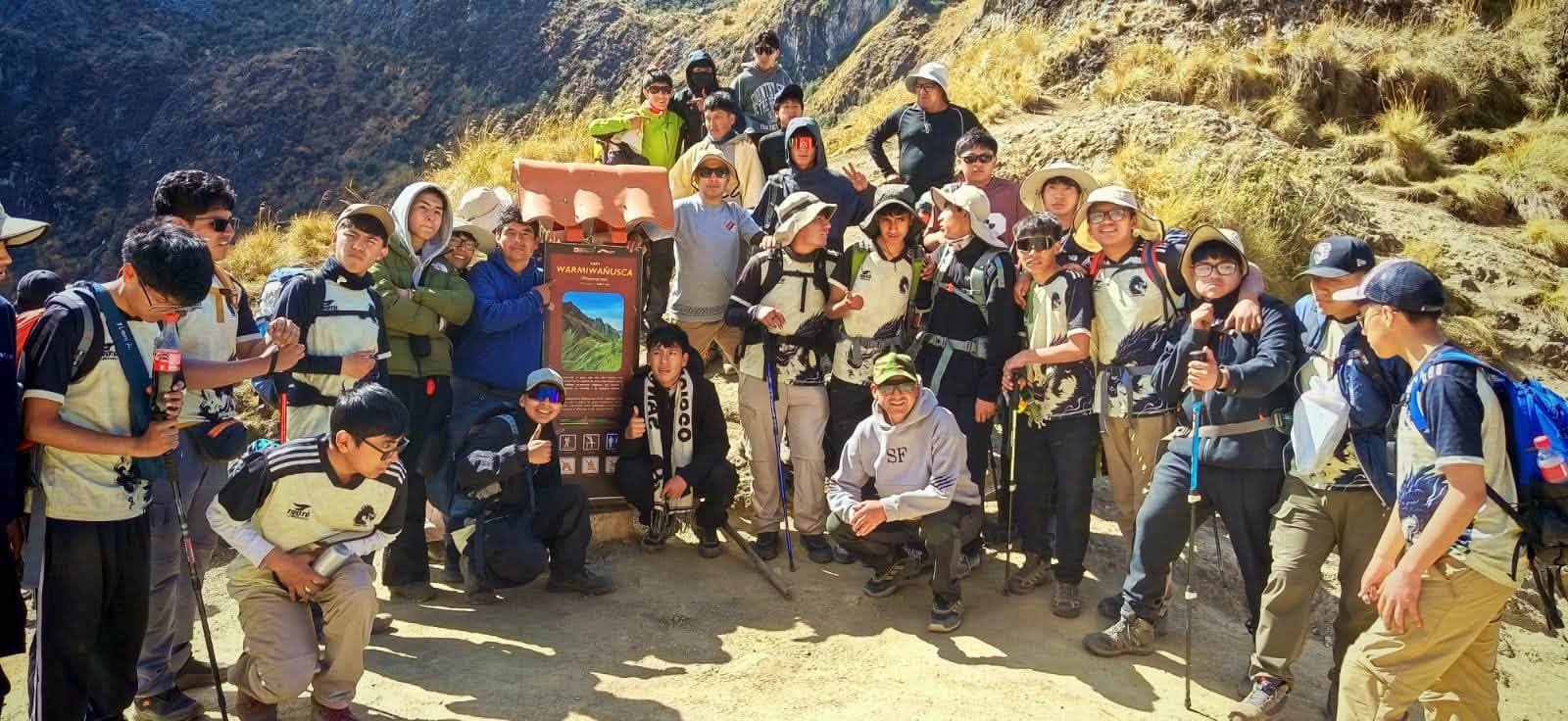
Warmiwañusca, also spelled Warmi Wañusqa, is the highest point on the Classic Inca Trail to Machu Picchu. It is located at approximately 4 200 meters above sea level and is usually reached on the second day of the trek, considered the most demanding day of the route. Reaching this pass is one of the greatest physical challenges of the trek, but also one of its most exciting moments.
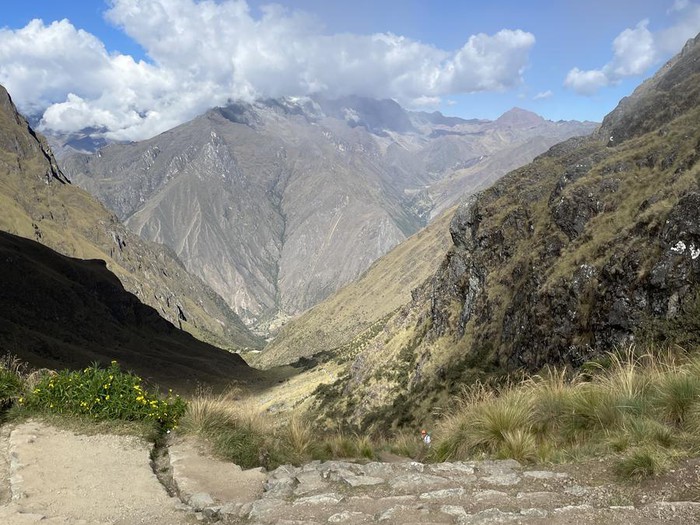
From the top, you can see mountains, deep ravines, and vast slopes covered with Andean vegetation. The open landscape reveals the scale of the Andes and allows you to take in the route covered during the ascent. For many travelers, reaching Warmiwañusca is a personal goal and an experience that remains among their most memorable moments on the Inca Trail.
What does Warmiwañusca mean?
The name Warmiwañusca comes from Quechua and is commonly translated as “dead woman,” which is why it is also known as Dead Woman’s Pass. The most widely shared explanation is that the mountains surrounding the pass form, when viewed from certain angles, the silhouette of a reclining woman.
Although the name may seem unusual to some visitors, it does not refer to a tragic event that occurred there. It is mainly related to the shape of the mountain landscape and the way Andean communities have traditionally identified elements of their surroundings.
When do you reach the pass?
Warmiwañusca is normally crossed during the second day of the four-day Classic Inca Trail. The day usually begins early, when temperatures are still low and the air feels fresher.
The time needed to reach the pass depends on the campsite used the previous night, each traveler’s fitness level, and the group’s overall pace. Some hikers can complete the ascent in a few hours, while others need to move slowly and take several breaks.
It is not advisable to compare your pace with that of other hikers. Every body responds differently to altitude and exertion. The most important thing is to conserve energy, breathe calmly, and follow your guide’s instructions.
What the ascent to Warmiwañusca is like
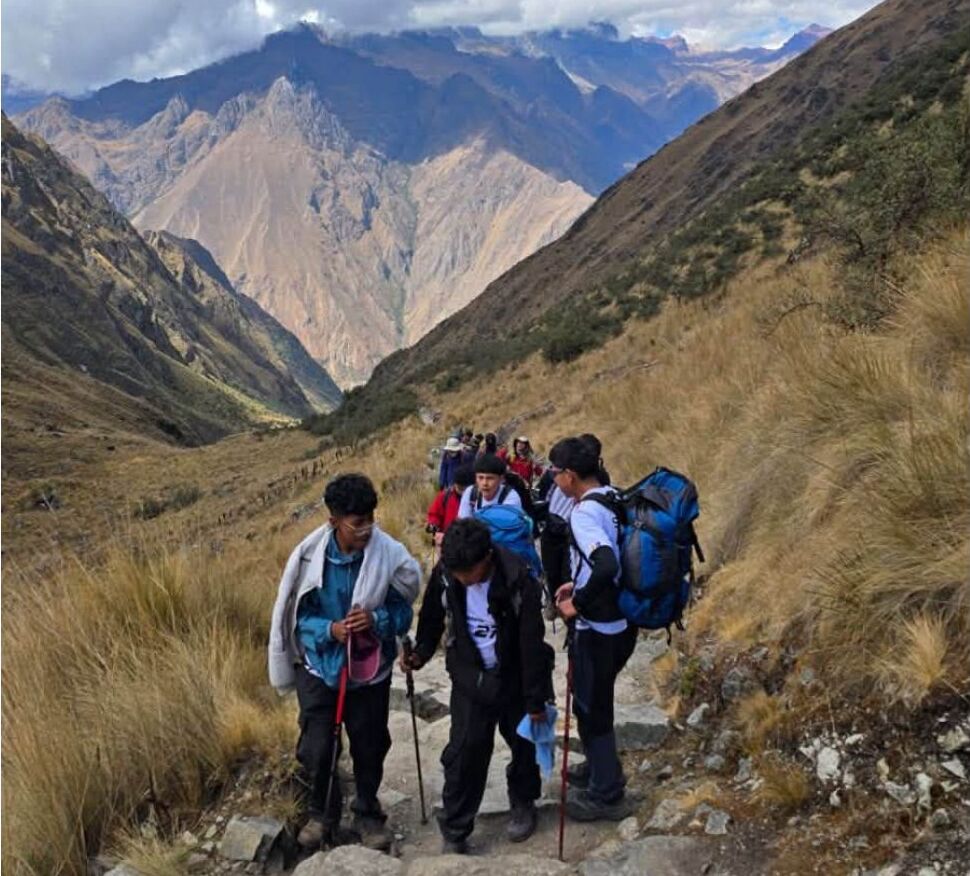
The trail climbs steadily over stone steps, uneven paths, and mountain slopes. During this part of the route, the elevation gain becomes more noticeable, and every section requires greater effort.
In the lower areas, you can still find more abundant vegetation and sections sheltered by the terrain. As you gain altitude, the landscape opens up and ichu, the characteristic grass of the high Andes, begins to dominate.
The final section is usually the slowest. The steps feel more demanding, breathing becomes faster, and you may need to stop more often. These breaks do not mean you are hiking poorly; they are part of climbing at more than four thousand meters above sea level.
The best strategy is to maintain short, steady steps. Moving too quickly at the beginning can leave you tired before reaching the steepest section. It is better to save your energy and climb gradually.

The difficulty of Dead Woman’s Pass
The difficulty of Warmiwañusca is not due to technical climbing. The trail is well defined, and there is no need to use ropes or mountaineering equipment. The real challenge lies in the combination of altitude, continuous ascent, stone steps, and changing weather conditions.
At this altitude, the body has less oxygen available than at sea level. As a result, even travelers in good physical condition may feel more tired than usual. A person’s speed and endurance at lower elevations do not always remain the same in the Andes.
The body needs time to adapt. The acclimatization process is especially important during the first days spent at altitude, and a gradual ascent helps reduce the risk of discomfort.
What you may feel during the ascent
You may experience shortness of breath, fatigue, a slower walking pace, or the need to rest frequently. Some people may also have headaches, loss of appetite, nausea, or dizziness, symptoms that may be related to altitude sickness.
Do not hide any discomfort out of fear of delaying the group. Inform your guide immediately so they can assess your condition and decide what action to take. Trying to continue quickly while symptoms are getting worse can increase the risk.
More serious signs, such as confusion, loss of coordination, or difficulty breathing even while resting, require immediate attention and should not be considered a normal reaction to exertion.
Reaching the summit
When you reach the pass, you will find an open area marking the highest point of the trek. Many groups take a short break here to catch their breath, take photographs, and listen to an explanation from the guide.
Arriving at the pass often brings a great sense of satisfaction. After several hours of climbing, seeing the trail from above allows you to recognize the distance covered and appreciate the depth of the valleys.
However, it is not advisable to stay too long if there are strong winds, rain, or low temperatures. Your body can cool down quickly after you stop walking. It is best to put on a warm layer and follow the guide’s instructions regarding how long to stay.
It is also important to avoid blocking the trail or making it difficult for other groups to pass. Warmiwañusca is a transit point, and the available space can be limited.
Weather at Warmiwañusca
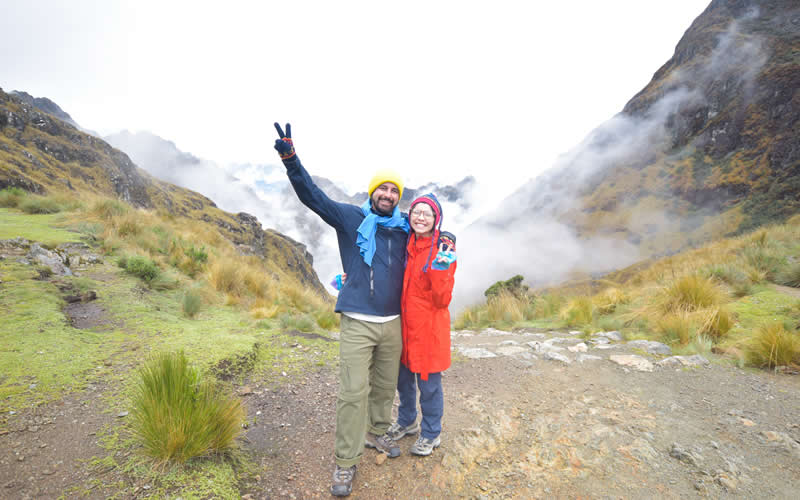
The weather at the pass can change quickly. A clear morning can turn into a day with mist, wind, or rain. Due to the altitude and the exposed terrain, the wind chill can be considerably lower than at the campsites.
During the ascent, you may feel warm because of the physical effort, but when you stop at the summit, your body temperature begins to drop. For this reason, your clothing should be organized in layers that can be easily removed or put on.
A breathable shirt, a warm mid-layer, and a waterproof jacket will help you respond better to temperature changes. It is also advisable to protect your hands, neck, and head, especially during the early morning hours.
How to prepare before the Inca Trail
Preparation for Warmiwañusca should begin before arriving in Peru. You do not need to be a professional athlete, but it is advisable to have experience walking for several hours.
You can prepare with uphill hikes, stair workouts, and exercises that strengthen your legs and knees. Training should increase gradually to avoid injuries. It is also helpful to walk with a light backpack similar to the one you will carry during the trek.
Acclimatization is as important as physical fitness. Spending a few days at a moderate altitude before starting the Inca Trail allows your body to begin adapting. The CDC states that spending approximately two to three nights between 2 450 and 2 750 meters can help reduce the risk of altitude sickness before continuing to higher elevations.
Travelers with heart or respiratory conditions, or other medical conditions, should consult a healthcare professional beforehand and inform the agency and guide about their situation.
What to bring during the ascent
For this day, you should keep only the items you will use during the hike within easy reach. Avoid filling your backpack with unnecessary items, as every extra kilogram feels heavier during the climb.
It is advisable to bring:
- Enough water for the section indicated by the guide.
- Light snacks that provide energy.
- Sunscreen and lip balm.
- A hat or cap.
- Sunglasses.
- A waterproof jacket or rain poncho.
- A warm layer.
- Light gloves.
- Trekking poles with rubber tips.
- Personal medications.
- A camera or phone protected from the rain.
- A backpack with a rain cover.
The items you will need during the day must remain in your personal backpack and not inside the luggage carried by the porters.
How to walk on the steepest section
During the climb, take short steps and avoid stopping after every step. A slow but continuous pace usually requires less effort than moving quickly and taking long breaks.
Breathe deeply and regularly. On the most difficult sections, you can coordinate your breathing with your steps, slowing down whenever you feel short of breath.
Trekking poles help distribute some of the effort and provide stability, but they must be used correctly. Their tips need rubber protectors to prevent damage to the stones on the trail.
Drink small amounts of water throughout the hike. There is no need to wait until you feel very thirsty. You can also eat a small portion of dried fruit, crackers, or another snack included in your service.
Services available at the pass
At the summit of Warmiwañusca, you should not expect to find shops, restaurants, shelters, restrooms, or permanent vendors. You should not rely on cell phone reception either. Available services are mainly located at the established campsites along the route.
Before starting the ascent, use the campsite restrooms and make sure you have water, rain protection, and warm clothing. Any needs during the hike should be communicated to the guide.
The descent after Warmiwañusca
After crossing the pass, a long descent over stone steps begins. Although breathing usually feels easier as you lose altitude, this section can be demanding on your knees and leg muscles.
Do not run downhill. Some stones may be wet, loose, or worn down by the constant passage of hikers. Keep a safe distance from the person in front of you and place your foot fully before continuing.
Trekking poles can provide stability during the descent. It is also important to keep them close to your body so you do not accidentally hit other hikers.
The satisfaction of reaching the summit may cause some travelers to speed up too much. However, an important part of the day still remains, so it is necessary to conserve energy and stay focused.
Photography and care for the environment
Warmiwañusca offers excellent scenery for photographs, but safety must remain the priority. Avoid getting close to unstable edges, climbing onto walls, or leaving the trail to find a better angle.
Do not leave wrappers, food scraps, or tissues behind. All waste must be kept in your backpack until you reach an authorized disposal point.
You should also avoid pulling plants, moving stones, or building cairns. Although some people leave objects as a reminder of their visit, this practice alters the landscape and is not responsible behavior.
A personal achievement on the Inca Trail
Reaching Warmiwañusca means overcoming the highest point and one of the most demanding sections of the Classic Inca Trail. It does not matter whether you arrive before or after other members of the group. The true achievement is having moved forward while respecting your own pace and the mountain’s conditions.
From the summit, you can look down toward the valley you climbed through, rest for a few minutes, and recognize the effort you have made. Then it will be time to put on warm clothing, adjust your backpack once again, and begin the descent with the same calm used during the ascent.