


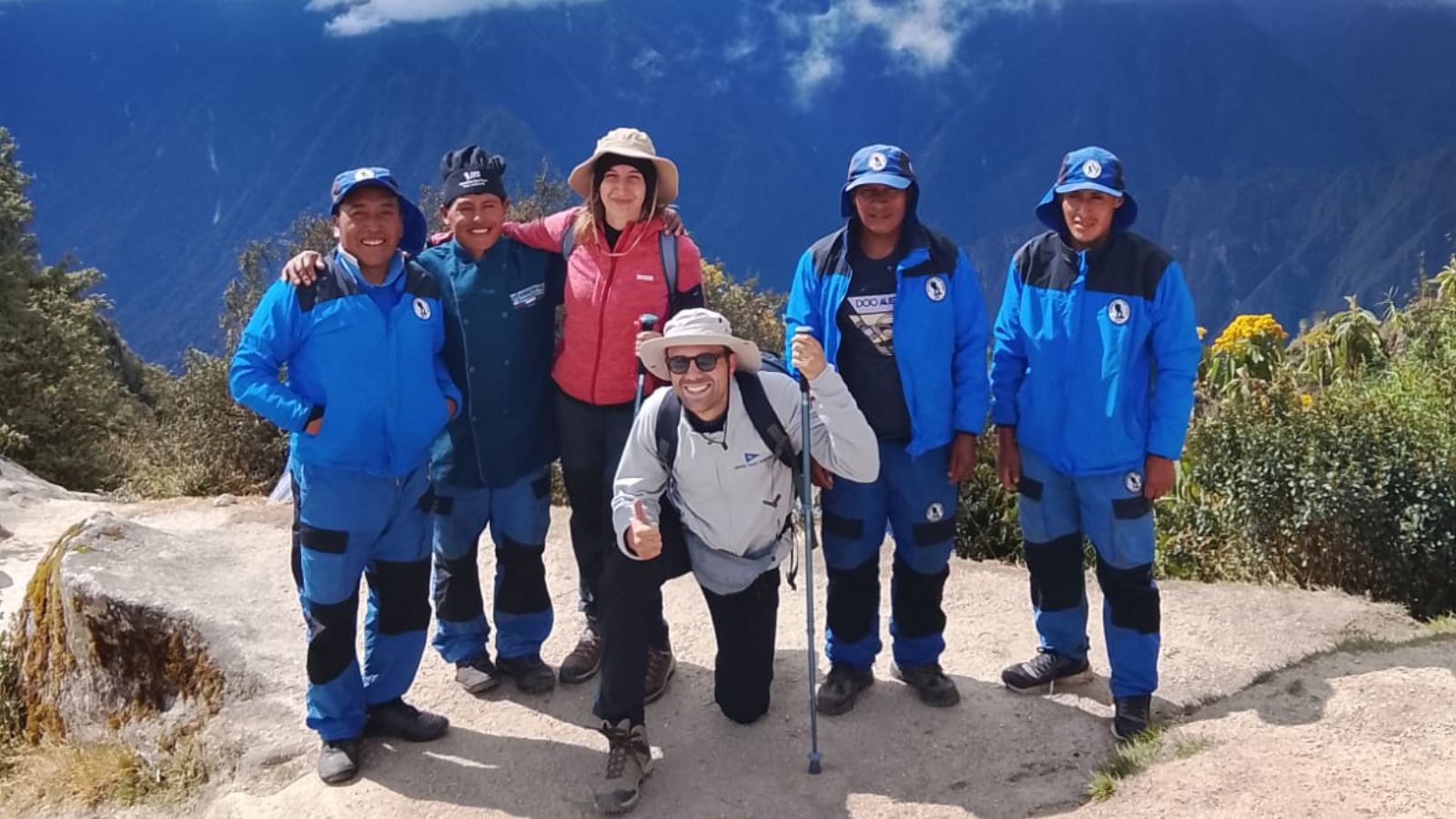
Tipping on the Inca Trail is one of the topics that raises the most questions among travelers. Tips are not included in the tour price, are voluntary, and are entirely up to each person, but they are part of the trail’s custom and represent an important acknowledgment for the team that makes the trek possible. Here you will learn how tipping works, how much is usually given, and how to hand it over.
Tips are voluntary but part of trekking culture
First of all, it is worth clarifying that no tip is mandatory. Tips are not included in the package price, and no one will require you to give them, as they depend entirely on your own judgment and level of satisfaction with the service received.
That said, tipping on the Inca Trail is a common and expected practice as a gesture of appreciation. The team of porters, cooks, and guides does physically demanding work to make your experience comfortable, and tips are how travelers recognize that effort at the end of the trail.
Why tips matter so much on this trail
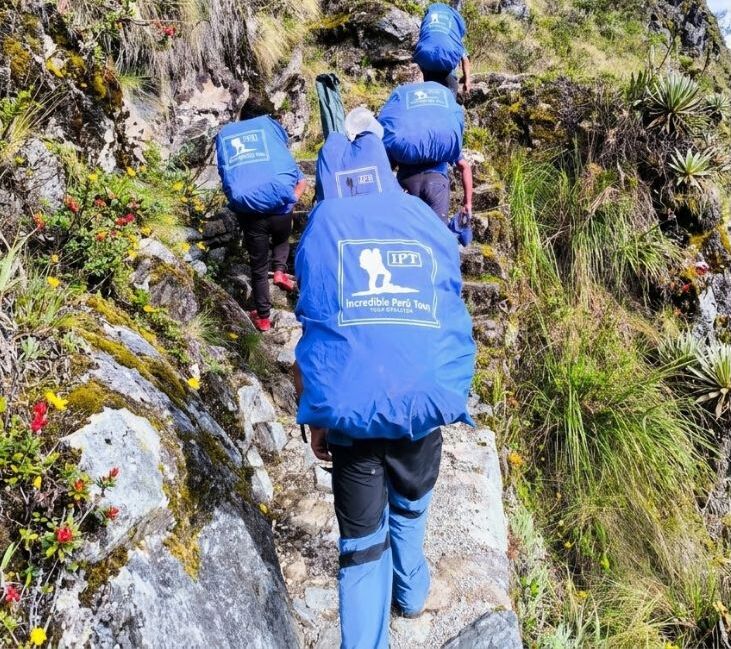
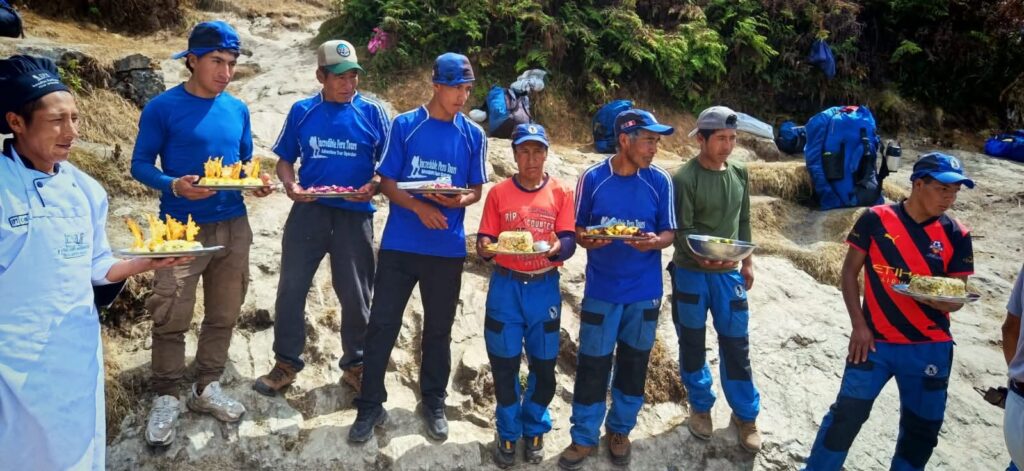
The work of the support team on the Inca Trail is especially challenging. Porters carry camping equipment along steep trails at high altitude, cooks prepare full meals in basic conditions, and guides accompany you each day while taking responsibility for the group.
Tips supplement their income and directly recognize that dedication. Beyond custom, many travelers see them as a fair way to value those who literally carry the weight of the experience, especially the porters, who are often the least visible members of the team.
How tipping is organized
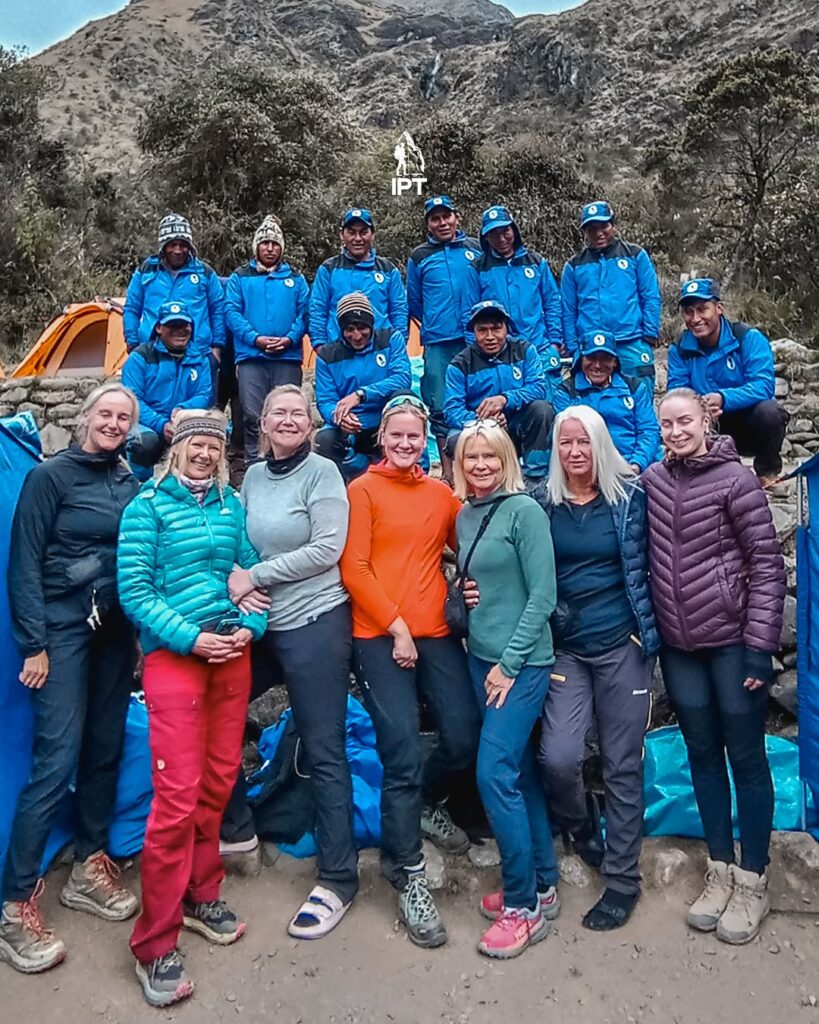
The most common approach is to distinguish between the camp team (porters and cook) and the guide, as they usually receive tips separately. The tip for the camp team is normally collected from all group members into a shared fund, while the guide’s tip is given individually.
Tips are usually handed over during a special moment near the end of the trek, typically on the final night at camp, when the porters and cooks say goodbye before returning. The guide, who continues on to Machu Picchu, receives their tip later. Coordinating this with the group in advance makes the moment more organized and meaningful.
The group tip fund
For the camp team, the most practical option is for the entire group to contribute to a shared fund that is then divided among them. This simplifies logistics and ensures a fair distribution among all porters. It is a good idea to agree on the contribution per person at the start of the trek, so everyone is prepared with the necessary cash.
How to calculate how much to give
There is no official amount or fixed rule for how much to give, as everything depends on your budget, the group size, and your level of satisfaction. A useful reference is to consider a contribution per traveler for the camp team’s shared fund, plus a separate amount for the guide based on the personal service received.
As a general guideline, many travelers calculate tips based on the length of the trek and the number of support staff, which can be substantial on the classic route. What matters most is that the amount sincerely reflects your experience and is within what you can afford, without feeling pressured to match what others give.
Factors that influence the amount
Several factors can help determine how much to give: the length of the route, since a four-day trek involves more service days than a short one; the size of the support team, which is larger on the classic route; and the quality of service received. A larger group also allows the contribution to be shared among more people, reducing the individual cost.
Practical tipping advice
The most important advice is to bring cash in small bills, as there are no ATMs or ways to exchange money on the trail. It is best to prepare your tip before leaving Cusco, in soles or dollars, and in denominations that make it easy to divide among the team.
It also helps to coordinate with your group from the first day to agree on the shared contribution and avoid last-minute decisions. Remember that tips should always reflect your own judgment: if the service was excellent, you can give more, and if your budget is tight, any sincere gesture is appreciated by a team that works hard for your comfort.
Frequently asked questions
Are tips included in the Inca Trail price?
No. Tips are not included in the tour price; they are voluntary and up to each traveler. Even so, they are a common and expected practice as a way to thank the support team.
Who should you tip on the Inca Trail?
Mainly the porters, the cook, and the guide. The usual practice is to collect a shared tip for the camp team (porters and cook) and give a separate one to the guide, based on the service received.
How much is customary to tip?
There is no fixed amount: it depends on your budget, the size of the group, and your satisfaction with the service. Travelers usually calculate a contribution per person for the camp team’s shared fund and a separate amount for the guide.
When are tips given?
The camp team’s tip is usually given on the final night at camp, when the porters and cooks say goodbye. The guide’s tip is given later, as they continue accompanying the group to Machu Picchu.
What currency is best for tipping?
You can tip in soles or dollars, preferably in small bills to make distribution easier. It is best to have the cash ready before leaving Cusco, as there are no ATMs or ways to exchange money on the trail.