


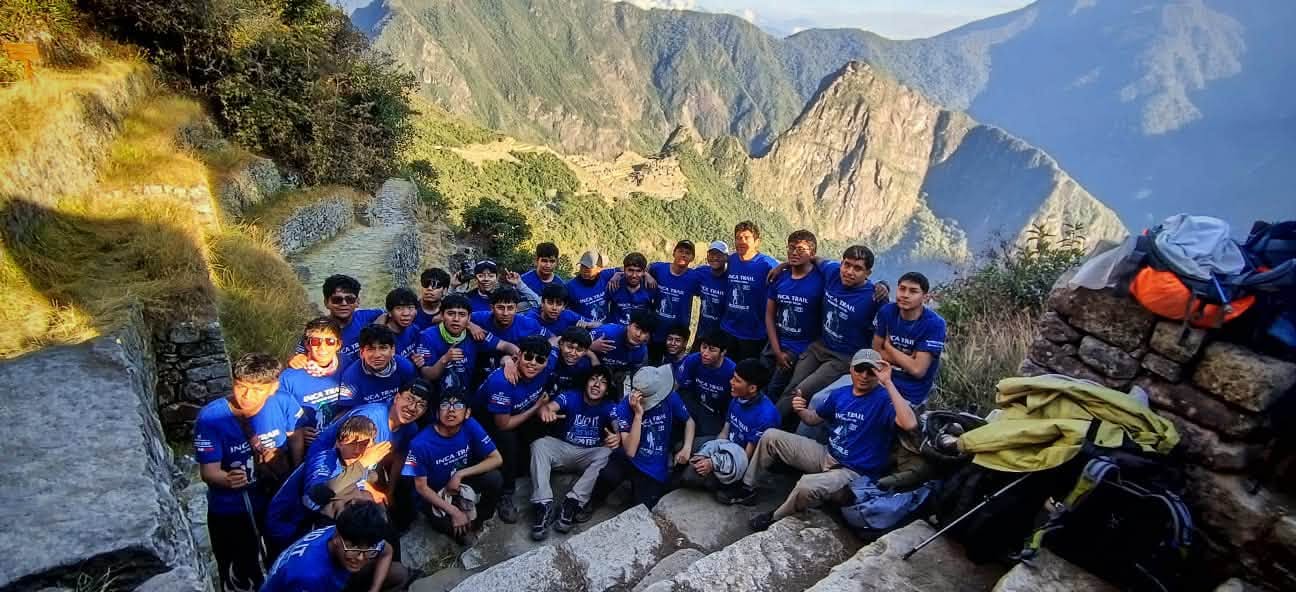
Inti Punku, known as the Sun Gate, is one of the most anticipated places for those hiking the Inca Trail. This stone structure marks the traditional entrance to Machu Picchu and offers the first view of the Inca city from an elevated position. After several days of trekking, reaching this point is the moment when the final destination appears among the mountains.
The view from Inti Punku brings together many of the elements that make this experience special: the terraces of Machu Picchu, Huayna Picchu mountain, the stone path, and the slopes covered by mountain forest. However, weather conditions can change quickly, so the city may appear completely clear, partially covered by clouds, or hidden behind mist for several minutes.
What does Inti Punku mean?
The name comes from two Quechua words: “inti”, meaning sun, and “Punku”, meaning gate. For this reason, Inti Punku is often translated as the Sun Gate.
This name is related to its elevated location and the importance of the Sun in Inca culture. The structure serves as a gateway formed by walls, steps, rectangular enclosures, and a platform with a commanding view of the entrance to Machu Picchu.
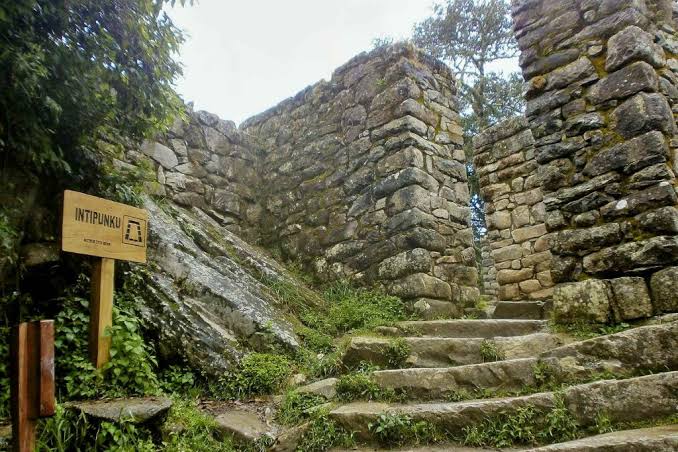
Inti Punku on the Inca Trail
For hikers on the Classic Inca Trail, Inti Punku is part of the final section before entering Machu Picchu. The heritage routes that cross the Historic Sanctuary continue to this area and then descend toward the Inca city.
Arrival usually takes place on the morning of the final day. Although that day’s route is shorter than on previous days, it still includes stairways, stone paths, and uphill sections. For this reason, it is important to stay alert and not consider the trek finished before reaching the gateway.
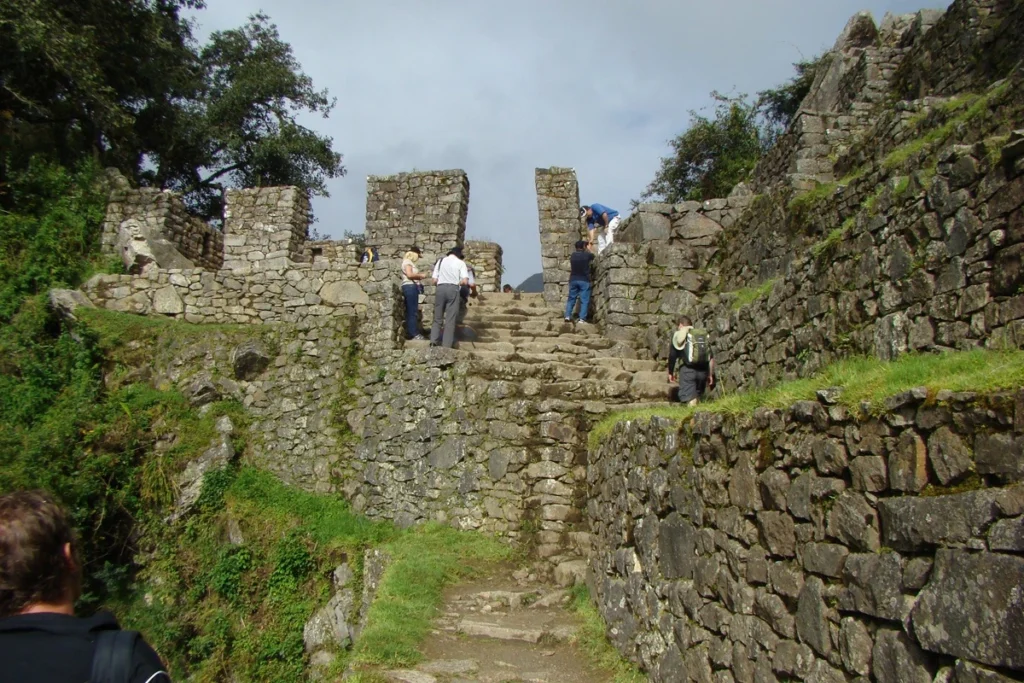
On the final stretch, there is a fairly steep staircase that requires careful footing and slow progress. Once past it, the trail continues to Inti Punku. The effort of this last climb adds to the emotion of the moment when the view of Machu Picchu opens up.
The first view of Machu Picchu
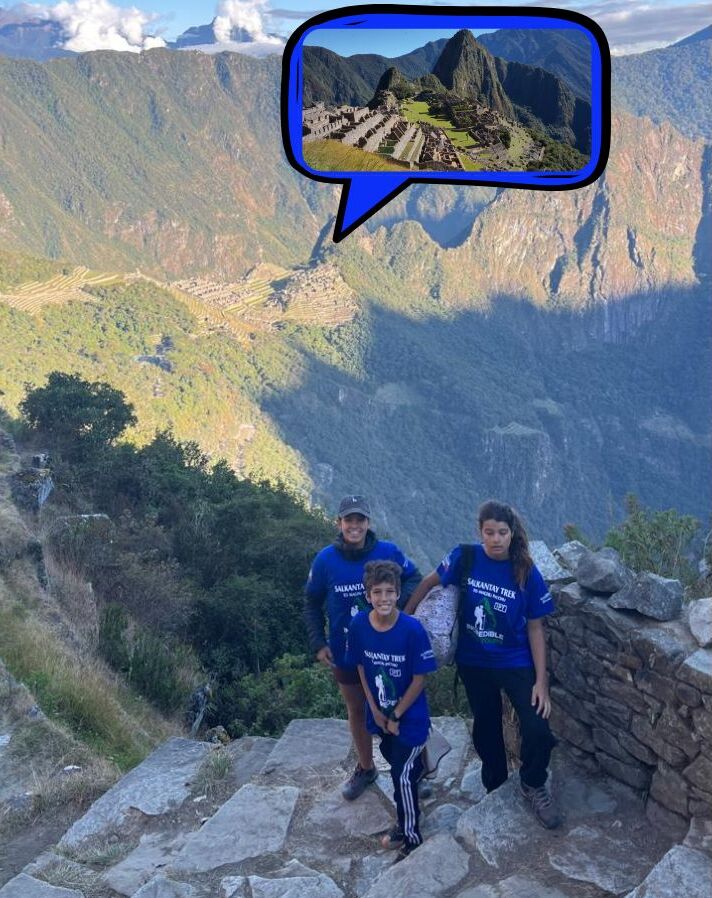
As you pass through or approach the gateway, you can see Machu Picchu from a panoramic perspective. The city lies below, nestled among green mountains and surrounded by the curves of the Andean landscape. From this position, you can make out the terraces, some urban sectors, and the path that continues toward the entrance.
This view differs from the one experienced by travelers who arrive directly by bus. Those who complete the Inca Trail first see Machu Picchu from the same historic route that connected the site with other areas of the Inca territory.
The Ministry of Culture describes Inti Punku as an area from which the route of the traditional Inca Trail can be seen. In the upper section, there are rectangular enclosures and a platform that may have served as a reference point and checkpoint before entering the Inca city.
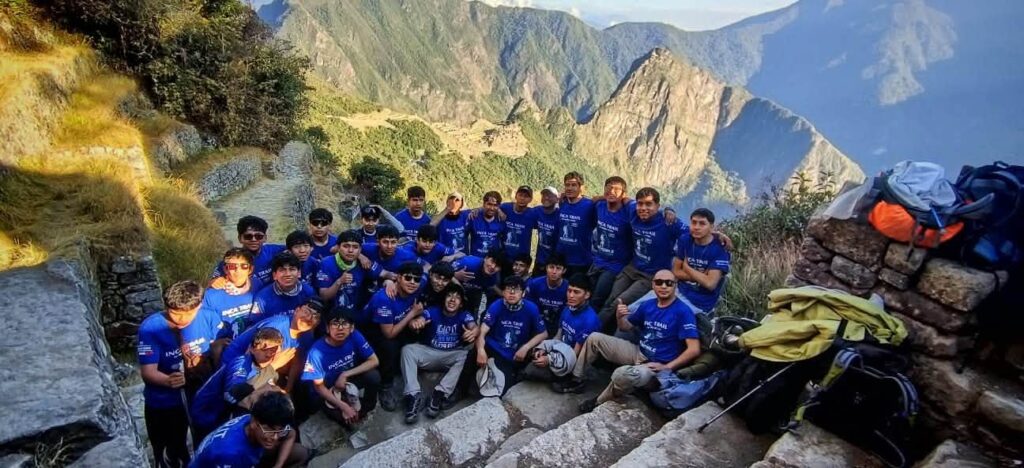
Is Machu Picchu always clearly visible?
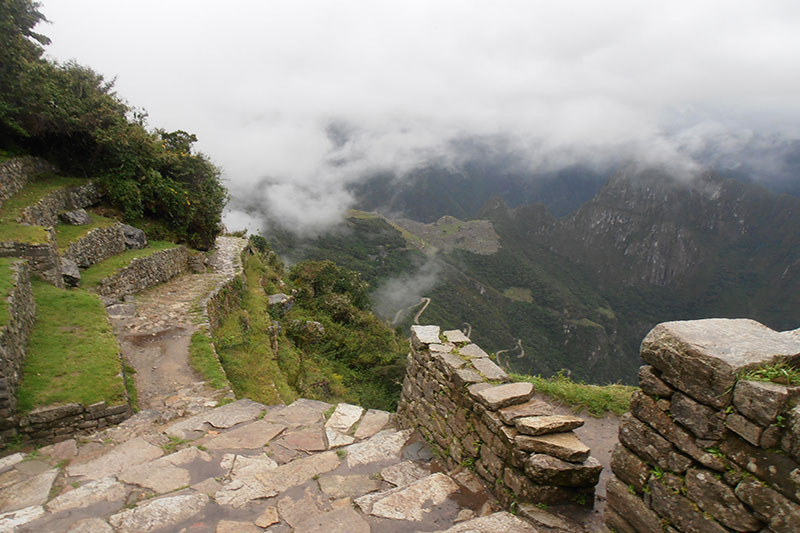
The first view is not always completely clear. Mist and clouds are common in the mountainous surroundings of Machu Picchu, especially during the early morning and the rainy season.
In some cases, the city may remain covered when the group reaches Inti Punku and gradually appear as the mist moves away. Clouds may also allow visitors to see only part of the terraces or mountains.
For this reason, it is best to enjoy the moment without depending on a perfect photograph. The cloudy atmosphere is also part of the mountain forest landscape and can offer a different image of Machu Picchu. Exact visibility depends on the day’s natural conditions and cannot be guaranteed.
Can you see the sunrise from Inti Punku?
Although the name Sun Gate may create the expectation of watching the sunrise over Machu Picchu, this depends on the group’s departure time, hiking pace, operational arrangements, and weather conditions.
Not all travelers arrive while the Sun is rising. Some groups reach the area when there is already enough light to view the landscape, while others encounter mist or overcast skies.
It is best to think of Inti Punku as the point of the first panoramic view of Machu Picchu, rather than a place where sunrise is guaranteed.
The possible function of Inti Punku
Because of its location above the trail, Inti Punku is believed to have served as a checkpoint before entering Machu Picchu. From this location, it was possible to observe those approaching along the route and control access to the city.
The presence of enclosures and platforms indicates that it was not simply an isolated gate. The complex was integrated into the trail and made it possible to organize access from a position with broad visibility. The Ministry of Culture identifies these structures as spaces related to pre-entry control at Machu Picchu.
It is also believed to have had possible ceremonial value because of its visual relationship with the Sun and the landscape. However, many interpretations of its exact function remain archaeological hypotheses, so they should not be presented as definitive conclusions.
What to do when you arrive
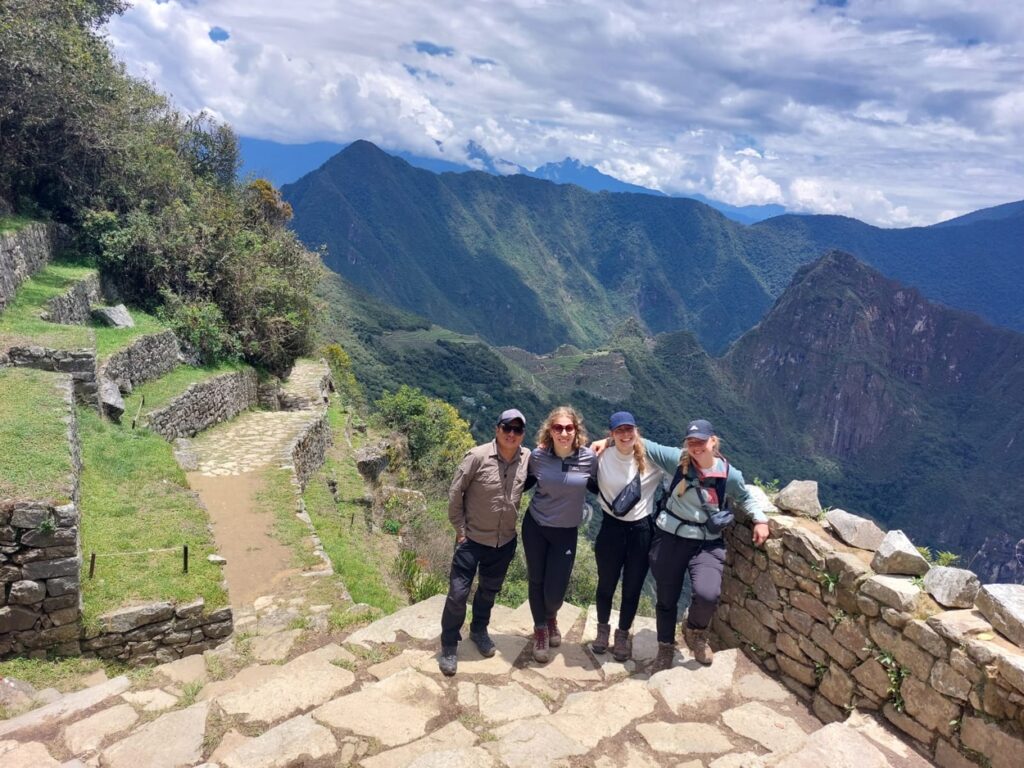
Most groups stop to rest, take photographs, and listen to the guide’s explanation. It is a good time to look back at the route you have covered, recognize Machu Picchu from a distance, and regain energy before beginning the descent.
Although the excitement may be overwhelming, you should be careful when moving along the stairways and platforms. The stones may be wet due to rain or mist. It is also important not to climb on the walls or leave the trail in search of a different photograph.
The space must be shared with other groups. Try not to block the gateway, stairs, or trail for too long, and follow the instructions of your guide and the staff responsible for protecting the site.
The descent from Inti Punku
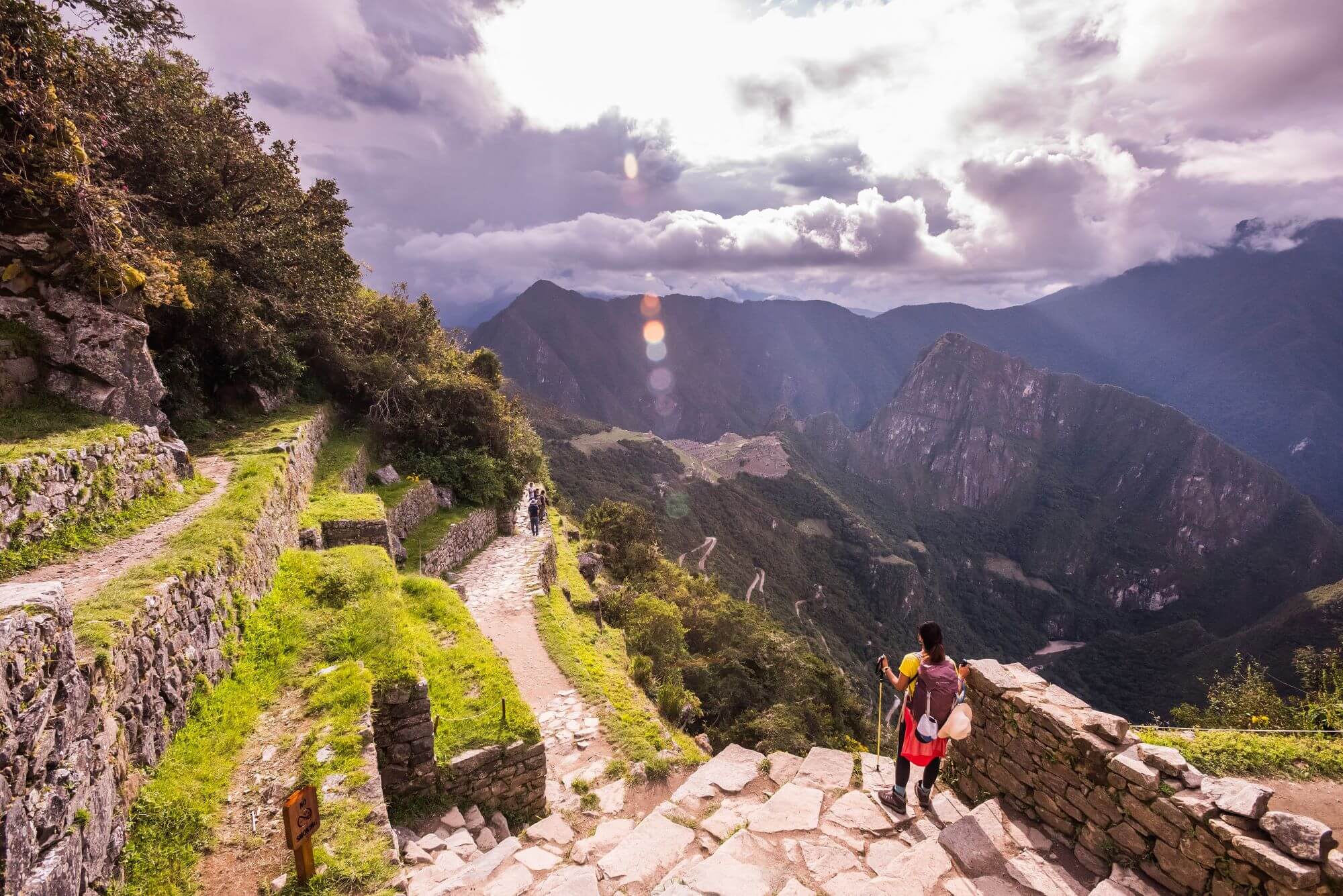
After the break, the descent to Machu Picchu begins. The trail continues along stairways and cobbled sections from which the city appears ever closer.
The approximate distance between Inti Punku and the llaqta of Machu Picchu is 1,5 kilometers, and the walk can take around 45 minutes, although the time depends on the group’s pace, breaks, and trail conditions.
Although it is a descent, it is necessary to walk carefully. After several days on the trail, your legs may be tired and the steps can be demanding on your knees. Trekking poles help maintain balance, as long as they have rubber tips to avoid damaging the stones.
During this part of the route, different angles of Machu Picchu come into view. The city stops looking like a distant complex and begins to reveal its terraces, enclosures, and paths more clearly.
Weather and recommended clothing
Inti Punku is located in a transition zone where humidity, mist, and sudden temperature changes are common. During the hike, you may feel warm from the effort, but when you stop, the wind or humidity can make the temperature feel cooler.
For this section, it is advisable to keep the following within easy reach:
- Waterproof jacket or rain poncho.
- A lightweight warm layer.
- Hat or cap.
- Sunscreen.
- Sunglasses.
- Water.
- Insect repellent.
- Waterproof cover for your backpack.
- Camera or phone protected from moisture.
Do not pack these items in the luggage carried by the porters, as you need to be able to use them during the hike.
Tips for taking great photographs
Before taking photographs, spend a few minutes observing the landscape. Then, look for a safe spot from which Inti Punku, the trail, and Machu Picchu can all be part of the same composition.
Avoid walking toward edges, climbing on structures, or leaning on walls. In addition to posing a risk, these actions can affect a protected archaeological site.
When there is mist, wait a few minutes before leaving the area. Clouds can move quickly and reveal Machu Picchu for brief intervals. Keep your camera ready, but do not delay the group without the guide’s permission.
Caring for the heritage
Inti Punku is part of the protected archaeological and natural heritage of the Historic Sanctuary of Machu Picchu. Visitors must stay on authorized trails, respect the structures, and take all their waste with them.
Stones must not be touched, moved, or removed. It is also inappropriate to make inscriptions, place objects on the walls, or pull out plants. Food wrappers, bottles, and tissues should remain in your backpack until you find an authorized disposal point.
These measures help preserve the gateway and keep the trail open for future visitors.
A different arrival at Machu Picchu
Inti Punku is not just a viewpoint. For those who complete the Inca Trail, it represents the transition between the journey through the mountains and the final entrance to Machu Picchu.
After days of hiking, climbs, stairways, and changing weather, seeing the city from the Sun Gate helps explain why this entrance is one of the most memorable moments of the route. Arrival does not happen suddenly: Machu Picchu first appears in the distance and gradually draws closer as you descend along the ancient trail.
For this reason, the experience at Inti Punku combines effort, history, and scenery. It is the point where hikers confirm that they are just steps away from completing the Inca Trail and beginning their visit to the city that has been their destination since the start of the journey.