


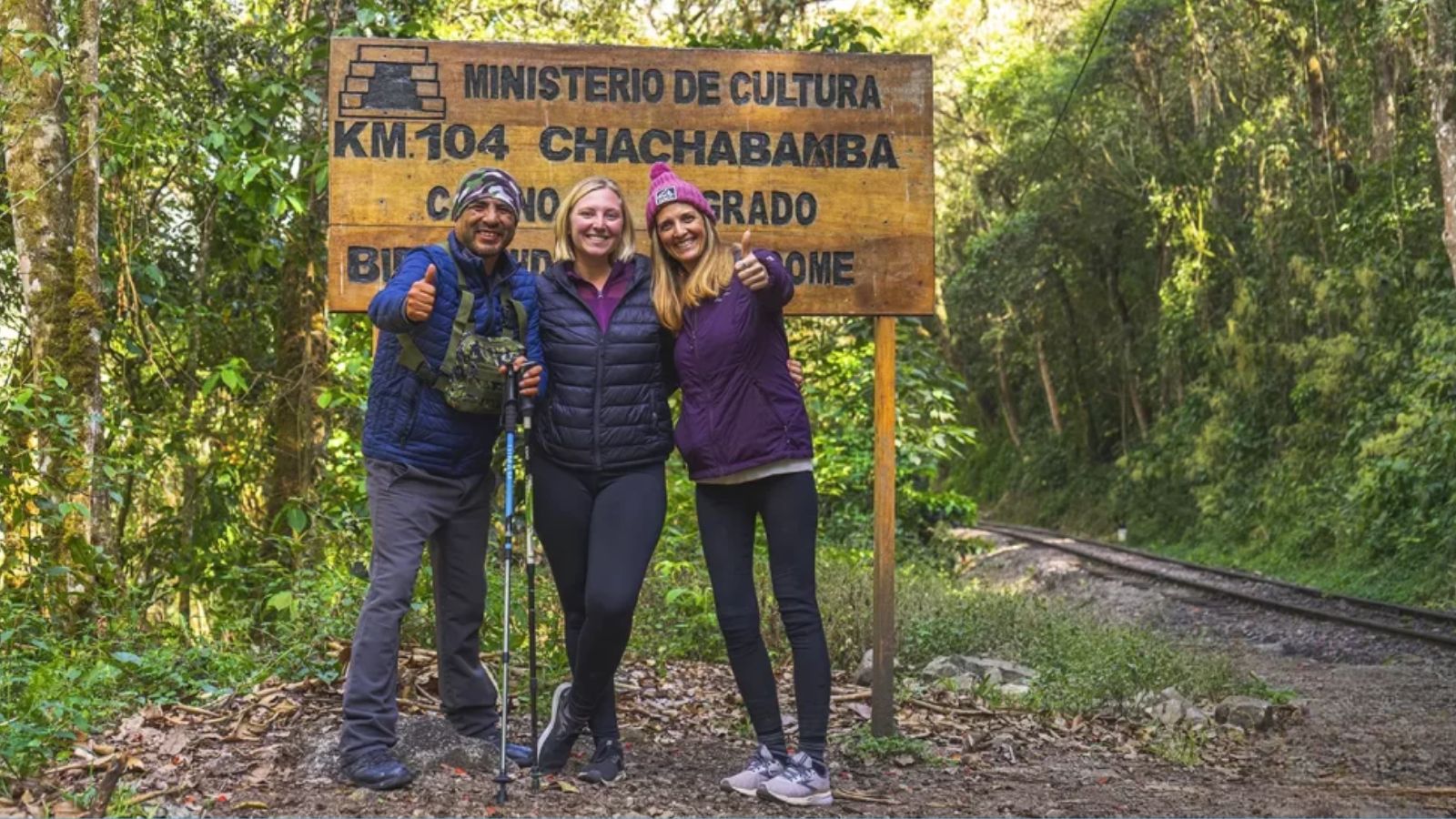
Km 104, also known as Chachabamba, is the traditional starting point of the Short Inca Trail to Machu Picchu. This alternative allows you to hike part of the ancient Inca road network, visit archaeological structures, and reach Machu Picchu via Intipunku, or the Sun Gate, without completing the four days of the classic route.
The starting point is located beside the railway line connecting Ollantaytambo with Machu Picchu Pueblo, on the left bank of the Urubamba River and approximately 2 150 meters above sea level. From here, an uphill hike begins along stone-paved trails, stairways, and cloud forest sections. The official route to Intipunku is around 10 kilometers long and usually requires several hours of hiking.
Important update, August 4, 2026: the Ministry of Culture announced the temporary closure of access through Km 104 due to a geological event that affected the pedestrian infrastructure at Chachabamba. While this measure remains in effect, visitors must disembark at the Km 106, Choquesuysuy sector, and follow the authorized route toward Wiñay Wayna, Intipunku, and Machu Picchu. This situation may change, so it should be confirmed with the operating agency before traveling.
Why is it called Km 104?
The name comes from the location of the access point at kilometer 104 of the railway line that continues toward Machu Picchu Pueblo. Unlike Km 82, where the Classic Inca Trail begins, this point allows hikers to join a shorter section of the route.
Officially, this trek corresponds to Route 5 of the Inka Road Network. Its traditional route connects Chachabamba with Wiñay Wayna, Intipunku, and the llaqta of Machu Picchu. The distance indicated by SERNANP is approximately 10,5 kilometers, although the total distance walked may vary depending on the authorized access point, the end point of the day, and operational provisions.
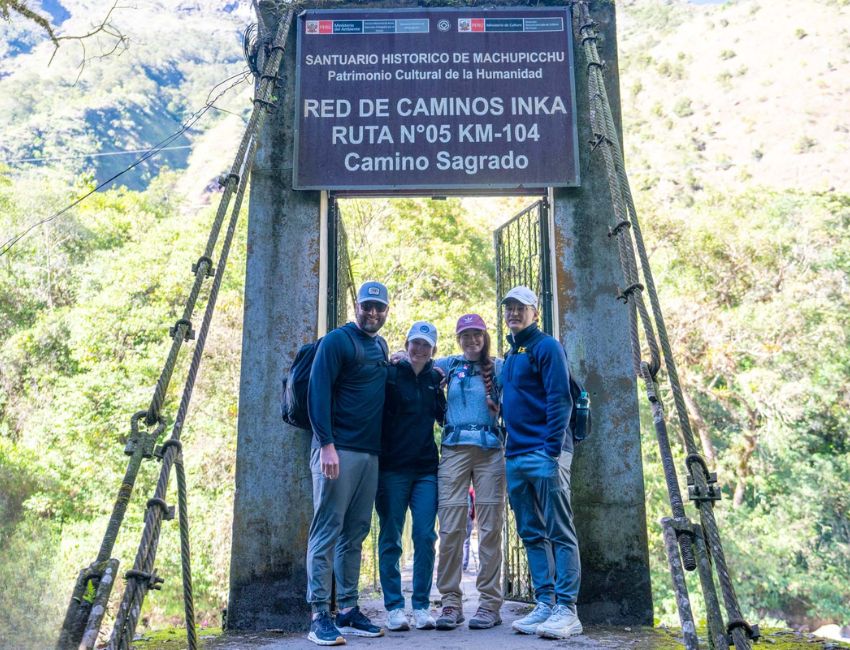
How to get to Km 104
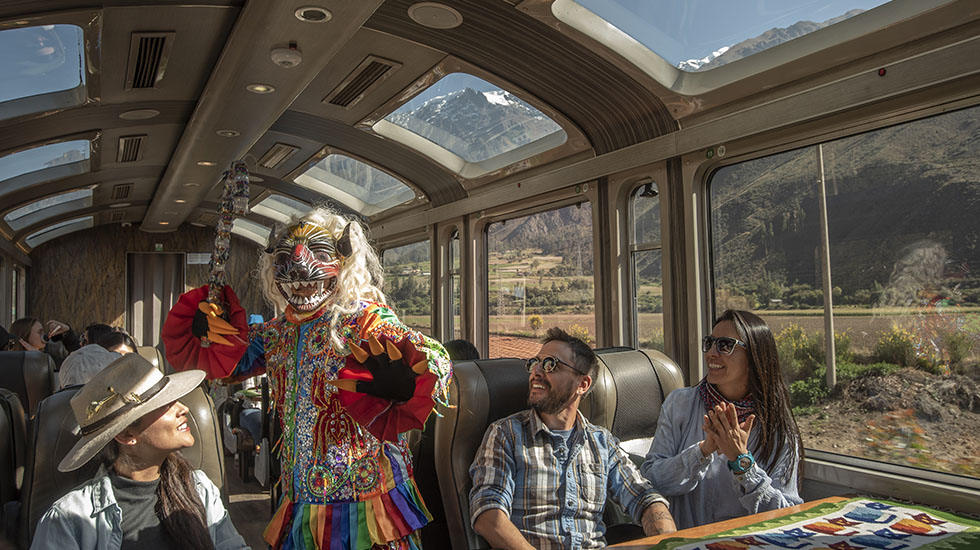
Access is usually by train. Travelers generally depart early from Ollantaytambo on a rail service authorized to stop in this area. Not all trains allow passengers to disembark at the starting point, so the service must be arranged in advance by the agency responsible for the Inca Trail.
The journey from Ollantaytambo to the Chachabamba sector takes approximately one hour and forty minutes, although schedules may vary according to train frequency and operating conditions. PeruRail identifies Km 104 as the usual rail access point for starting the short route.
Upon arrival, you must get off the train with your daypack and immediately follow the guide’s instructions. Km 104 does not operate as a conventional tourist station, but rather as a special disembarkation point for groups holding the appropriate permit.
When alternative access points are enabled, such as Km 106, the railway company and the agency change the disembarkation point. For this reason, passengers should not attempt to get off on their own or rely solely on outdated information about the route.
What happens at the checkpoint
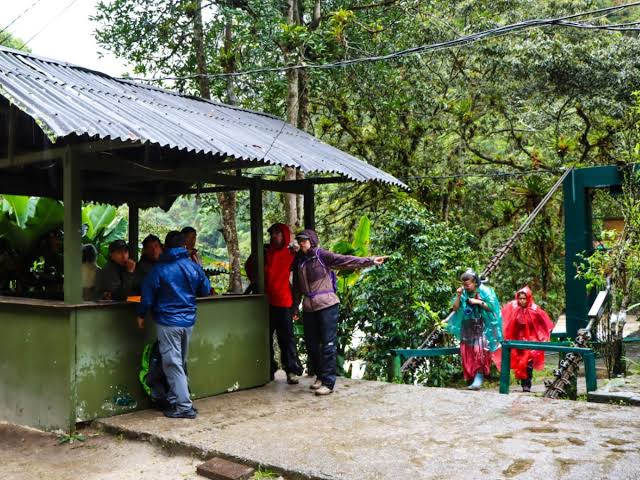
Before starting the hike, group members must register at the checkpoint. Staff verify the entry permit, the official traveler list, and the document used during the booking process.
You must carry your original passport or identity document in your daypack. The details must match those registered on the permit. A photo saved on your phone or a printed copy does not always replace the original document.
The Short Inca Trail cannot be done independently or without a reservation. Entry requires an official permit, a guide, and an authorized agency. Current regulations establish a maximum capacity of 250 daily users for Route 5, a figure that includes the conditions defined by authorities for the conservation and management of the route.
Permits are linked to a specific date and to each passenger’s details. They cannot be purchased upon arrival at Km 104, and availability may sell out, especially during the busiest months.
Start of the hike
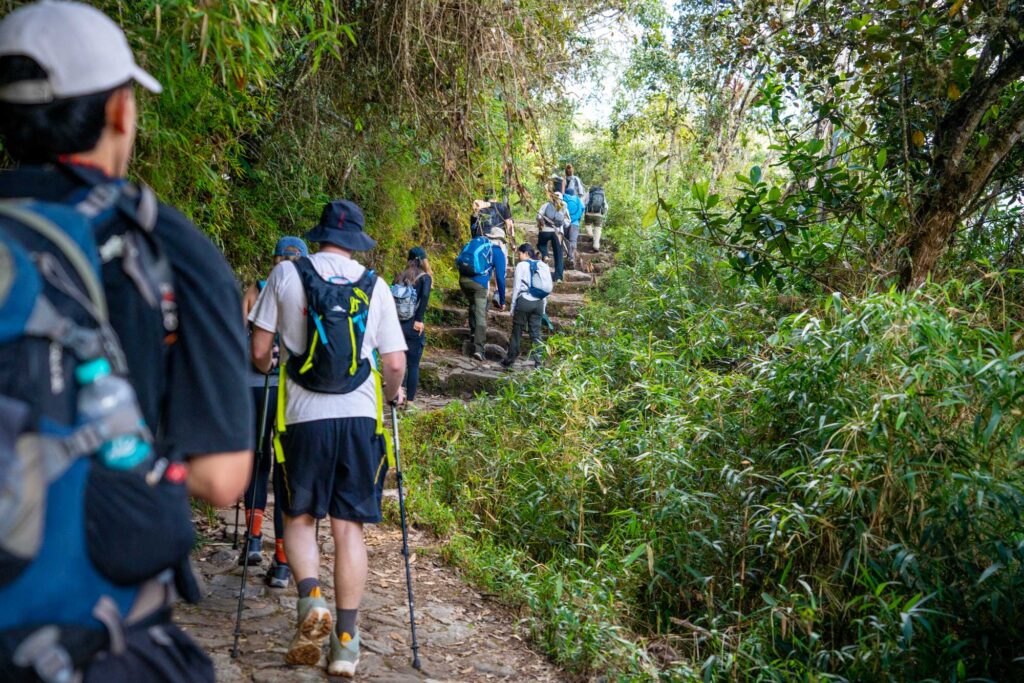
Once the checkpoint process is complete, the route begins through an environment of lush vegetation and humid weather. The scenery differs from the high, open areas of the Classic Inca Trail: here, green slopes, trees, ferns, orchids, and other cloud forest features predominate.
The starting point is at a lower altitude than the city of Cusco, but this does not mean the day is entirely easy. Most of the effort is concentrated in the long ascent leading toward the upper sections of the trail.
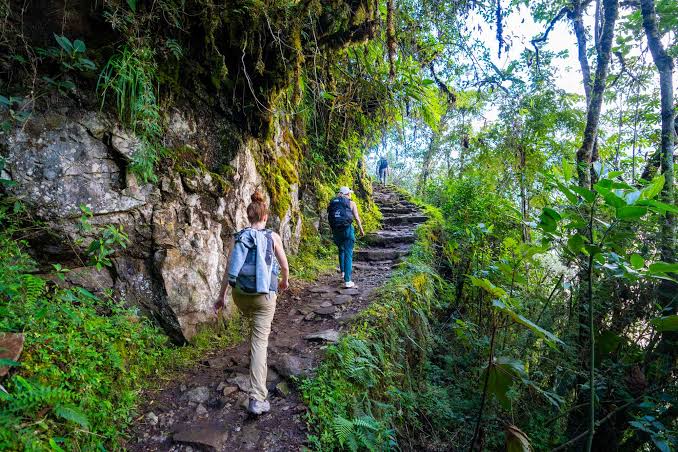
During the first hours, the route alternates between dirt paths, Inca stairways, and stone-paved sections. Some areas may be wet or slippery, especially after rain, so it is necessary to walk carefully and wear footwear with good grip.
The difficulty of the Short Inca Trail
The Short Inca Trail is often described as a moderate to challenging hike. It does not require climbing techniques or mountaineering equipment, but it does require suitable fitness to walk for several hours and tackle a steady ascent.
Its short duration may make it seem like an easy walk. However, much of the elevation gain is completed in a single day. The stairways, humidity, heat, and weight of your backpack can increase fatigue.
The route from the Km 104 sector to Intipunku can take around six hours, not including all breaks, guide explanations, and the final descent. The pace depends on each person’s preparation, weather conditions, and trail conditions.
The best approach is to maintain short, steady steps. Walking too fast during the first section can lead to exhaustion before reaching the steeper areas.
Chachabamba at the beginning of the route
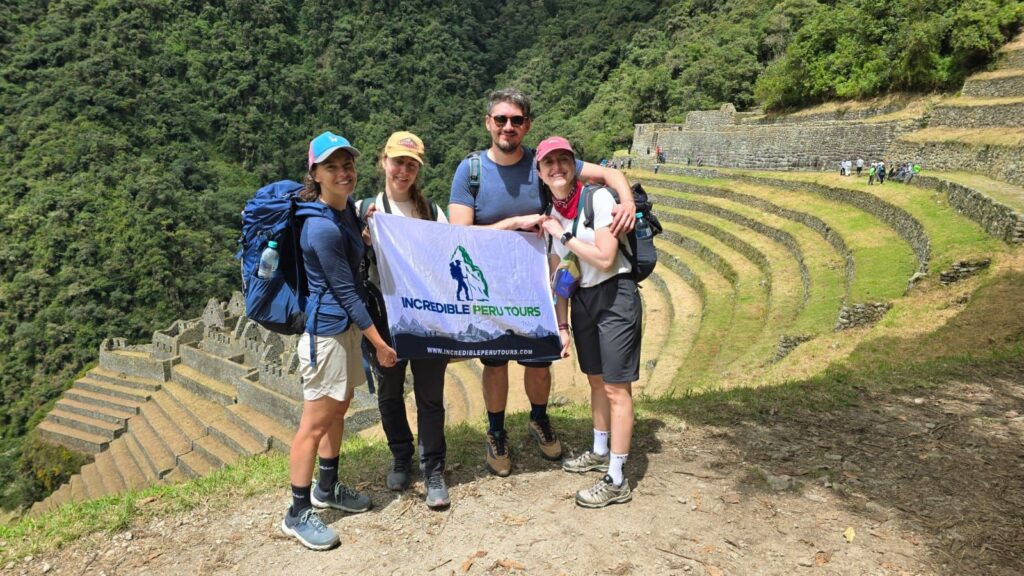
Very close to the access point is Chachabamba, an archaeological complex associated with the traditional start of the Short Inca Trail. Its structures include enclosures, walls, canals, and features related to water management.
Research suggests that the site may have had a ceremonial function linked to water and may also have served as a checkpoint for those heading toward Machu Picchu. This explanation is presented as an archaeological interpretation rather than a fully definitive conclusion.
The visit is usually brief, as a long portion of the hike still remains. The guide explains the main features of the complex before continuing uphill.
What the route is like
After Chachabamba, the trail begins gaining elevation along the hillside. As you continue, views open up over the Urubamba River valley, the mountains, and the railway line far below.
The trail crosses a lush cloud forest environment with abundant vegetation. The Machu Picchu Historic Sanctuary is home to orchids, bromeliads, ferns, and numerous bird species. Wildlife sightings depend on the season, weather, and the group’s noise level, so no sighting is guaranteed.
Although there are places where you can rest, it is not advisable to take overly long breaks without consulting the guide. The group must follow checkpoint schedules and move forward with enough time to complete the authorized route.
A shorter alternative, but not a rushed one
This route is suitable for travelers who want to experience the Inca Trail and reach Machu Picchu through the ancient entrance at Intipunku, but do not have four days to complete the classic trek.
It is often sold as a two-day, one-night program. The main hike takes place on the first day, while the night is spent in Machu Picchu Pueblo. A more detailed visit to the llaqta can take place the following day, depending on the program, ticket, and circuit included by the agency.
The length of the program should not be confused with the actual hours of hiking. The first day can be physically demanding and begin very early, as it includes ground transportation, the train journey, the checkpoint, and the hike.
What to pack in your daypack
Since the hike is completed without porters assigned to carry each passenger’s personal gear, it is best to bring a light daypack. Any unnecessary weight will be felt during the ascent.
For this day, it is recommended to bring:
- Original passport or identity document.
- Water and light snacks provided or authorized by the agency.
- Sunscreen, a hat, and sunglasses.
- Insect repellent.
- Rain poncho or waterproof jacket.
- A change of shirt and a light warm layer.
- Hiking footwear with good grip.
- Personal medications.
- Trekking poles with rubber tips.
- Toilet paper and hand sanitizer.
- Waterproof backpack cover.
- Camera or phone protected against moisture.
SERNANP recommends wearing comfortable clothing, sun protection, and weather-appropriate accessories, as well as staying on marked trails.
Weather and how to dress
Km 104 is located in a warm, humid area, but the temperature can change as altitude increases. During the ascent, you may feel warm from physical effort, while rain, mist, or wind can quickly lower the perceived temperature.
The best option is to dress in layers. A breathable shirt helps during the climb; a mid-layer provides warmth when temperatures drop; and a waterproof jacket protects against rain.
Even if the sky is cloudy, you should use sunscreen. The combination of humidity, sun exposure, and exertion can cause dehydration, so it is advisable to drink small amounts of water throughout the day.
Services and food
The agency usually provides a packed lunch or food to eat during the route. You should confirm what the service includes and notify the agency in advance of any allergies, dietary restrictions, or special needs.
It is not advisable to rely on purchasing items along the trail. Bring the water, food, and personal items indicated by the agency from the start. Waste must be kept in your backpack until you find an authorized disposal point.
Before boarding the train, check that you have not left your identity document, medications, or waterproof clothing in luggage that will travel directly to Machu Picchu Pueblo.
Recommended physical preparation
You do not need to be a professional athlete, but you should be accustomed to walking for several hours. Uphill hikes, using stairs, and leg-strengthening exercises can help you prepare.
It is also helpful to take a few walks with the same backpack and footwear you will use during the trip. Wearing new shoes on the day of the hike increases the risk of discomfort or blisters.
Although the starting point is approximately 2 150 meters high, it is advisable to spend a few days in Cusco or the Sacred Valley before the hike. This allows you to adapt to the surroundings and avoid starting the route immediately after a long journey.
Recommendations before departure
The night before, prepare your backpack and check your documents. Confirm the pickup time, departure station, permitted luggage, and the access point that will be used.
Have breakfast before boarding the train and avoid carrying an oversized backpack. Listen to the guide’s briefing, respect the group’s pace, and report any discomfort during the hike.
You should also check whether the itinerary still starts from Km 104 or whether an alternative access point will be used. Rain, landslides, and conservation work can lead to temporary changes.
Caring for the environment
The route is located within the Machu Picchu Historic Sanctuary, an area protected for its cultural and natural heritage. Visitors must walk only on authorized trails, follow the instructions of park rangers and guides, and avoid touching or climbing on archaeological structures.
Do not leave bottles, wrappers, or tissues on the trail. Do not remove plants, stones, or other natural elements either. SERNANP recommends reducing single-use plastics and carrying all waste to authorized disposal points.
The beginning of a special arrival
Km 104 represents much more than a railway stop. It is the point where the train journey transforms into a hike along ancient Inca trails and where a gradual approach to Machu Picchu begins.
Although the route is shorter than the Classic Inca Trail, it retains several of its main features: stone-paved paths, stairways, archaeological structures, cloud forest vegetation, and the final entrance through Intipunku.
For this reason, the Short Inca Trail is a suitable alternative for those who want to reach Machu Picchu on foot, have less time, and are prepared to complete a demanding uphill day. Booking in advance, carrying a light daypack, and coordinating with an authorized agency are essential for starting the route safely and in an organized manner.