


Having enough water during the Inca Trail is an important part of trekking preparation. The days involve several hours of hiking, long climbs, and altitude changes, so it is best not to wait until you are thirsty to think about where to get water.
Unlike an urban hike, there are no shops or sales points along the entire Inca Trail route. Opportunities to buy water are mainly concentrated in the first sections, while later on, the water supply depends largely on the organization of each operator.
For this reason, before starting the hike, it is advisable to know where you will be able to get water and from what point you will need to rely on your reusable bottle.
Can you buy water during the Inca Trail?
Yes, it is possible to find water for sale in some sections, especially at the beginning of the Classic Inca Trail.
Small communities and certain points near the start of the trail may have local vendors. However, their presence should not be considered permanent or guaranteed.
As the route continues into the mountains, archaeological sites, and less populated areas, purchasing opportunities decrease considerably.
Where to buy water before starting the Inca Trail
The best strategy is to start the trek with enough water for the first few hours of hiking.
Before reaching the entry point, travelers usually pass through Cusco, Ollantaytambo, or other towns where there are more options to prepare their gear.
Buying water in Cusco
Cusco has supermarkets, minimarkets, and small shops where it is easy to buy drinks before heading to the Inca Trail.
It is also a good time to get a reusable bottle or hydration system if you do not already have one.
Preparing everything in Cusco prevents you from having to rely on small rural shops during the first day.
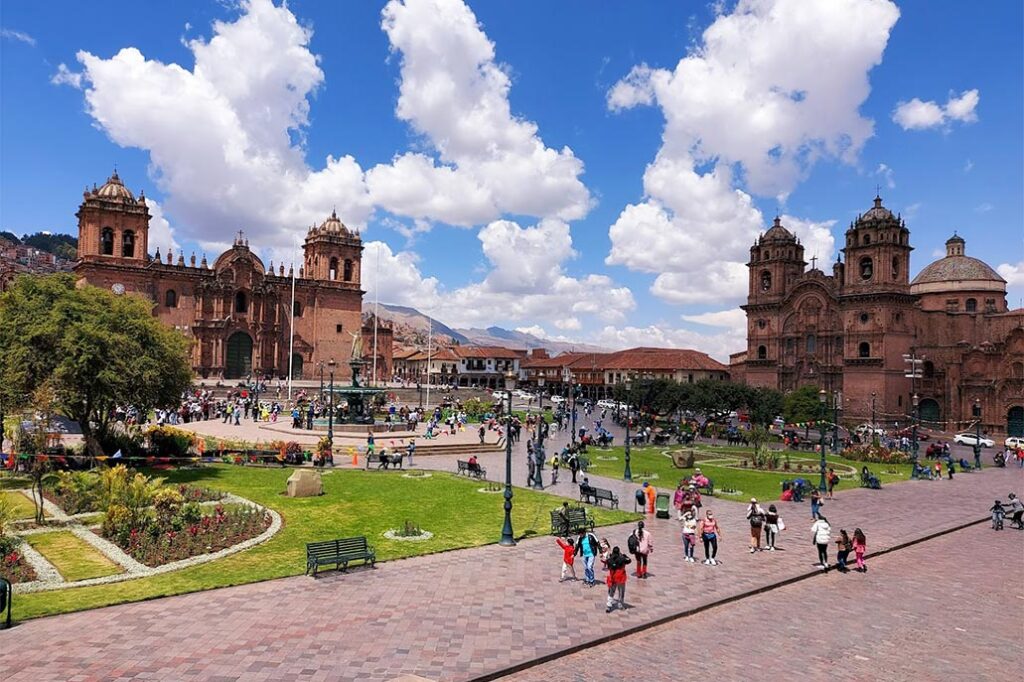
Buying water in Ollantaytambo
Many itineraries pass through Ollantaytambo before heading to the Inca Trail starting point.
If the travel schedule allows, this town can serve as the last urban place to check your backpack and purchase any drinks or personal items you may have missed.
It is best not to leave an essential purchase until the last minute, as each agency’s program may be different.
Can you buy water at Km 82?
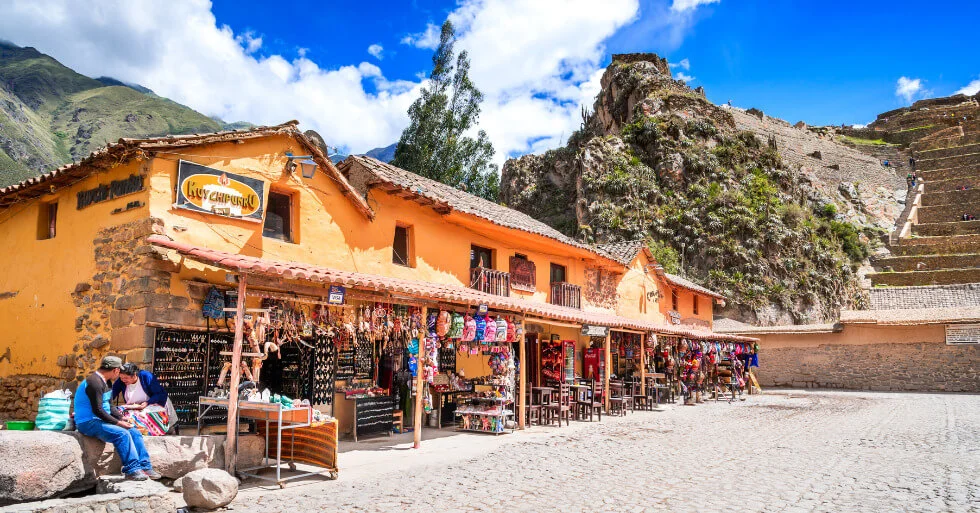
Km 82, also known as Piscacucho, is one of the main entry points to the Classic Inca Trail.
In the surrounding area, there may be opportunities to buy water before officially starting the hike. However, availability can vary, so it should not be your only supply option.
The most practical option is to arrive at Km 82 with your container already full and use any available sales point only as backup.
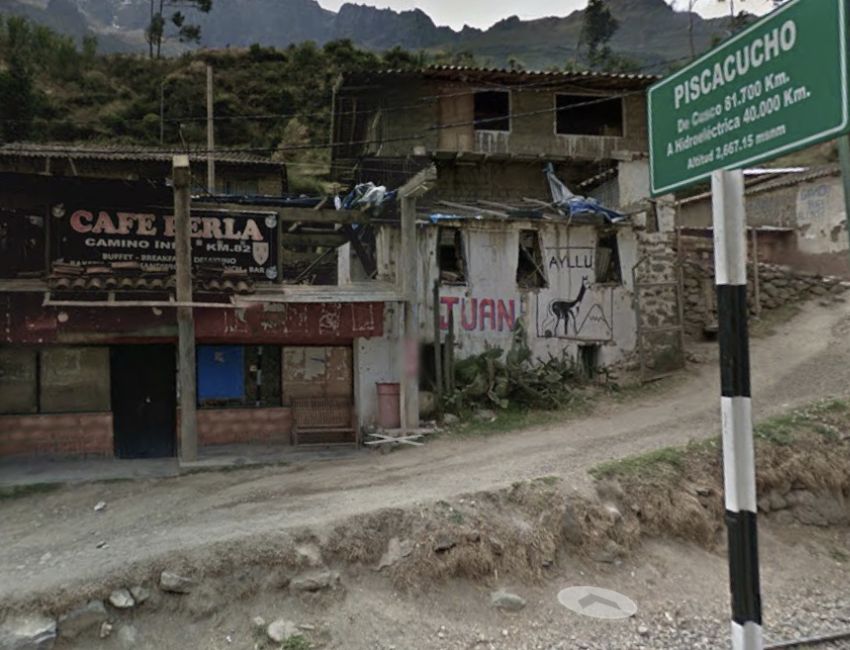
Buying water during the first day of the Inca Trail
The first day is usually the part of the route where there is still greater contact with small communities.
As the trail crosses rural areas, you may come across a few stalls or family-run businesses where hikers can buy drinks.
After leaving these areas behind, buying water becomes progressively more difficult.
Water in Wayllabamba
Wayllabamba is one of the best-known supply points during the first part of the Inca Trail.
As a community located along the classic route, some travelers find small sales points there where they can buy water before continuing to higher-altitude sections.
If your itinerary passes through Wayllabamba and you need additional water, check with your guide before continuing.
After Wayllabamba
From Wayllabamba, a steeper ascent begins toward areas such as Ayapata and Llulluchapampa.
At certain times, local vendors may be found along this section, but their presence varies.
Therefore, after leaving the first communities, it is best to assume that there will no longer be a shop available at every stage of the route.
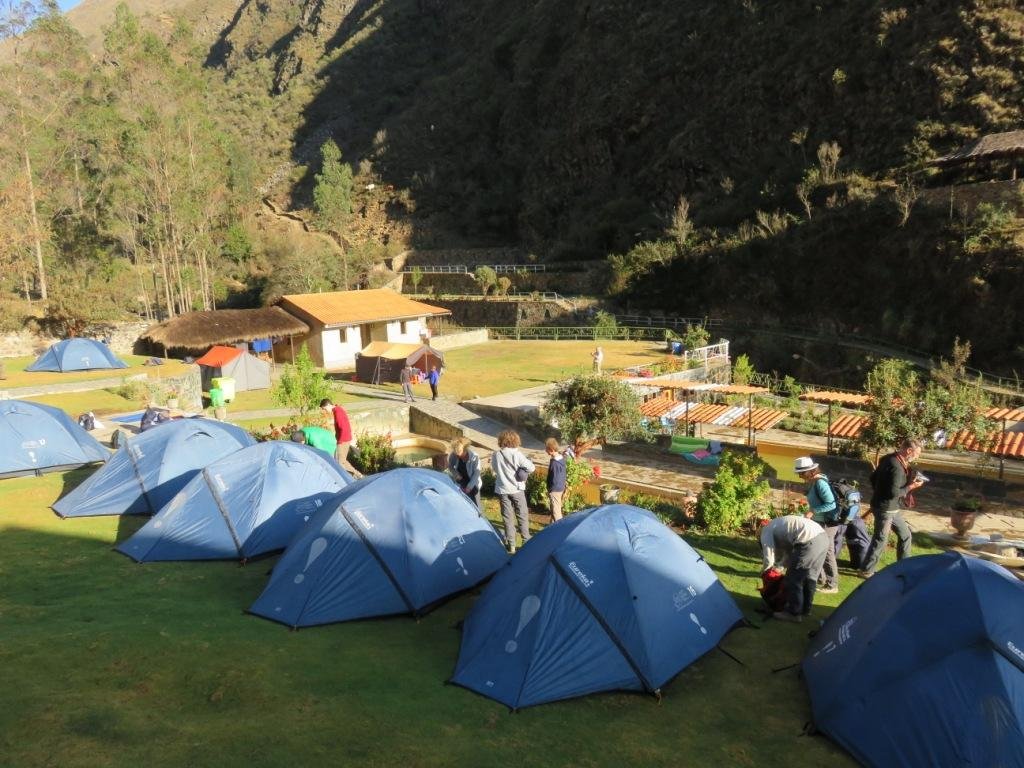
How far along the Inca Trail can you buy water?
There is no exact point that can be guaranteed as “the last water shop” for all groups.
Itineraries may change, campsites are not always the same, and small local vendors do not necessarily keep regular business hours.
As a general reference, purchasing options are concentrated in the first sections of the Inca Trail and decrease as you enter the mountain areas.
Before continuing toward the higher-altitude passes, ask your guide when you will have the next opportunity to refill your bottle.
How do you get water when there are no more shops?
Once the route moves away from communities, water arrangements change.
Many authorized operators prepare boiled, filtered, or treated water for their passengers during certain meals or at campsites.
The exact time when this service begins depends on each agency. Some companies offer water from the first campsite, while others start providing it later.
For this reason, before starting your trip, you should ask what type of water is included and from which day you will be able to refill your container.
Refilling a reusable bottle
A reusable bottle or hydration bladder allows you to carry water without continuously relying on disposable bottles.
When the trekking team provides prepared water, you can simply refill your container before starting the next section of the trail.
This option also helps reduce the amount of waste generated during the trip.
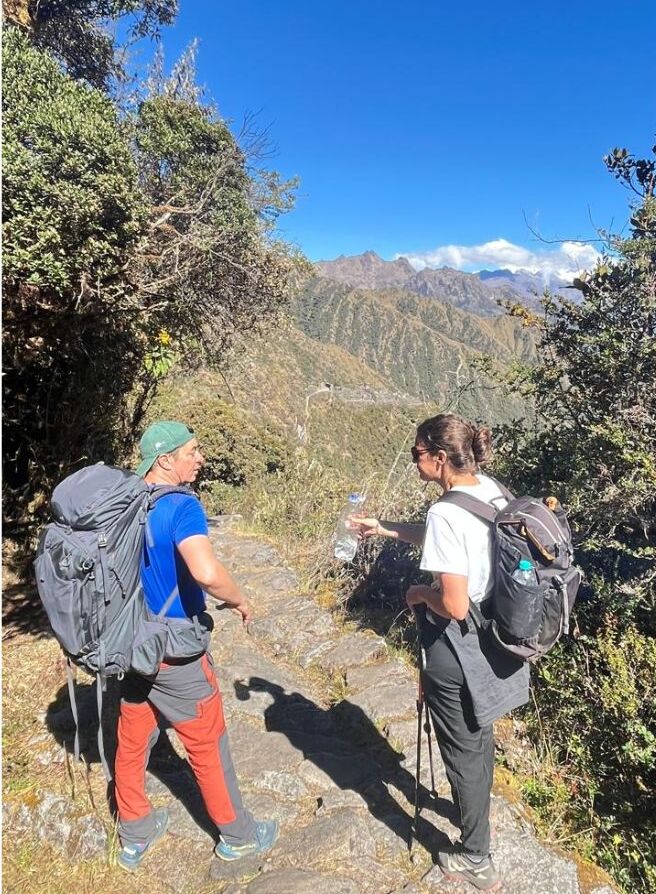
How much water capacity should you carry?
The amount needed depends on the weather, each person’s pace, the length of the day, and the refill points included by the agency.
As a practical reference, many operators recommend carrying a reusable bottle or hydration system with an approximate capacity of 1.5 to 2 liters.
This does not mean that you need to drink a fixed amount during each stage. The idea is to have enough capacity to hike for several hours between supply points.
Your guide can tell you each morning how long it will be until the next refill opportunity.
Reusable bottle or hydration bladder
Both options are useful, but they offer different experiences.
A reusable bottle makes it easy to monitor how much liquid remains and is simple to refill during meals.
A hydration bladder fits inside your backpack and allows you to drink through a hose while hiking, without needing to stop constantly.
The choice mainly depends on what feels most comfortable for you.
Can you drink directly from rivers or springs?
During the Inca Trail, you will find watercourses, small streams, and other natural sources.
Even if the water looks clear, it is not advisable to assume that it is safe to drink directly. There may be natural contamination, animals, or human activity upstream.
If you need to use water from a natural source for any reason, it must go through an appropriate treatment or filtration method before drinking it.
Under normal conditions, the best option is to use the water prepared by your operator and follow your guide’s instructions.
Should you bring plastic bottles on the Inca Trail?
The Inca Trail crosses the Historic Sanctuary of Machupicchu, a protected natural and cultural area where reducing waste and single-use plastic is encouraged.
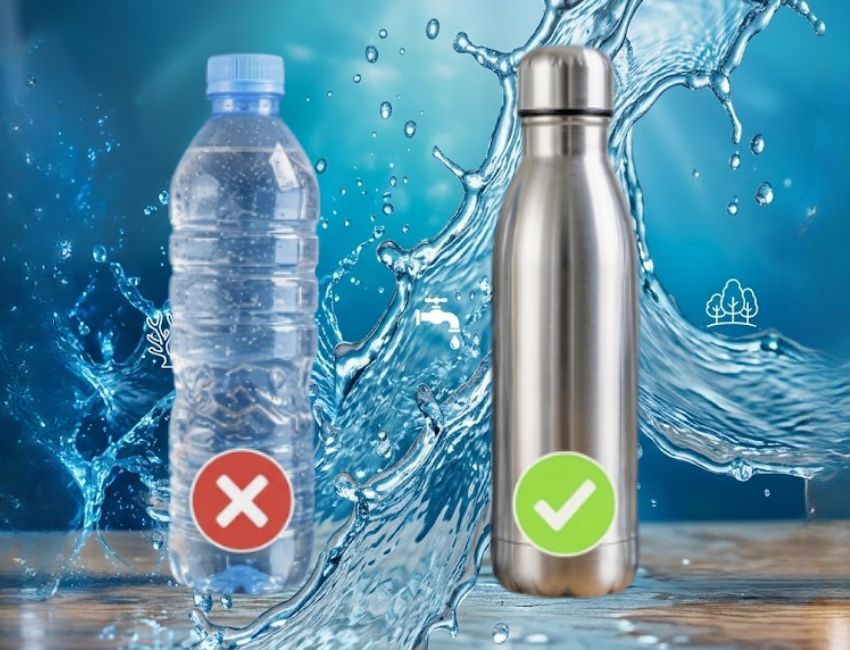
For this reason, a reusable bottle or hydration system is a much more suitable alternative for the trek.
In addition to generating less waste, it allows you to refill water throughout the different days without having to buy new containers.
Reduce waste during the hike
All waste generated during the Inca Trail must be handled properly.
Do not leave bottles, caps, wrappers, or other items on the trail, at campsites, or at archaeological sites.
An important part of visiting the Inca Trail responsibly is preserving the environment just as you found it.
Water during the 4-day Inca Trail
On the 4-day route, the first day offers the best opportunities to find small sales points.
Afterward, as the route enters higher-altitude sections, the water supply normally depends on the water organized by the agency.
Before leaving each morning, make sure to refill your container and ask how long you will hike until the next stop.
Water during the 5-day Inca Trail
The 5-day version distributes the hike differently, but it shares several sections with the Classic Inca Trail.
Therefore, the supply logic is similar: there are purchasing opportunities at the beginning, and afterward you mainly depend on the services prepared by the operator.
Having an additional day on the itinerary does not mean there will be shops during every day of the trek.
Tips to avoid running out of water on the Inca Trail
- Start the trek with your container full.
- Bring a reusable bottle or hydration system.
- Ask your guide where the next refill point will be.
- Do not rely exclusively on the small shops along the route.
- Refill your container before starting a long section.
- Do not drink water from natural sources without proper treatment.
- Avoid generating unnecessary waste during the hike.
Plan your water supply before hiking
Getting water during the Inca Trail is usually not difficult when the trip is well organized, but it does require planning.
The first inhabited areas may offer some purchasing opportunities, while in the more isolated sections, water is usually provided and prepared by the trekking team.
The key is to start each day with enough water, use a reusable container, and follow your guide’s instructions regarding refill points.
This way, you can focus on the hike, the scenery, and the archaeological sites without constantly worrying about finding a shop.