


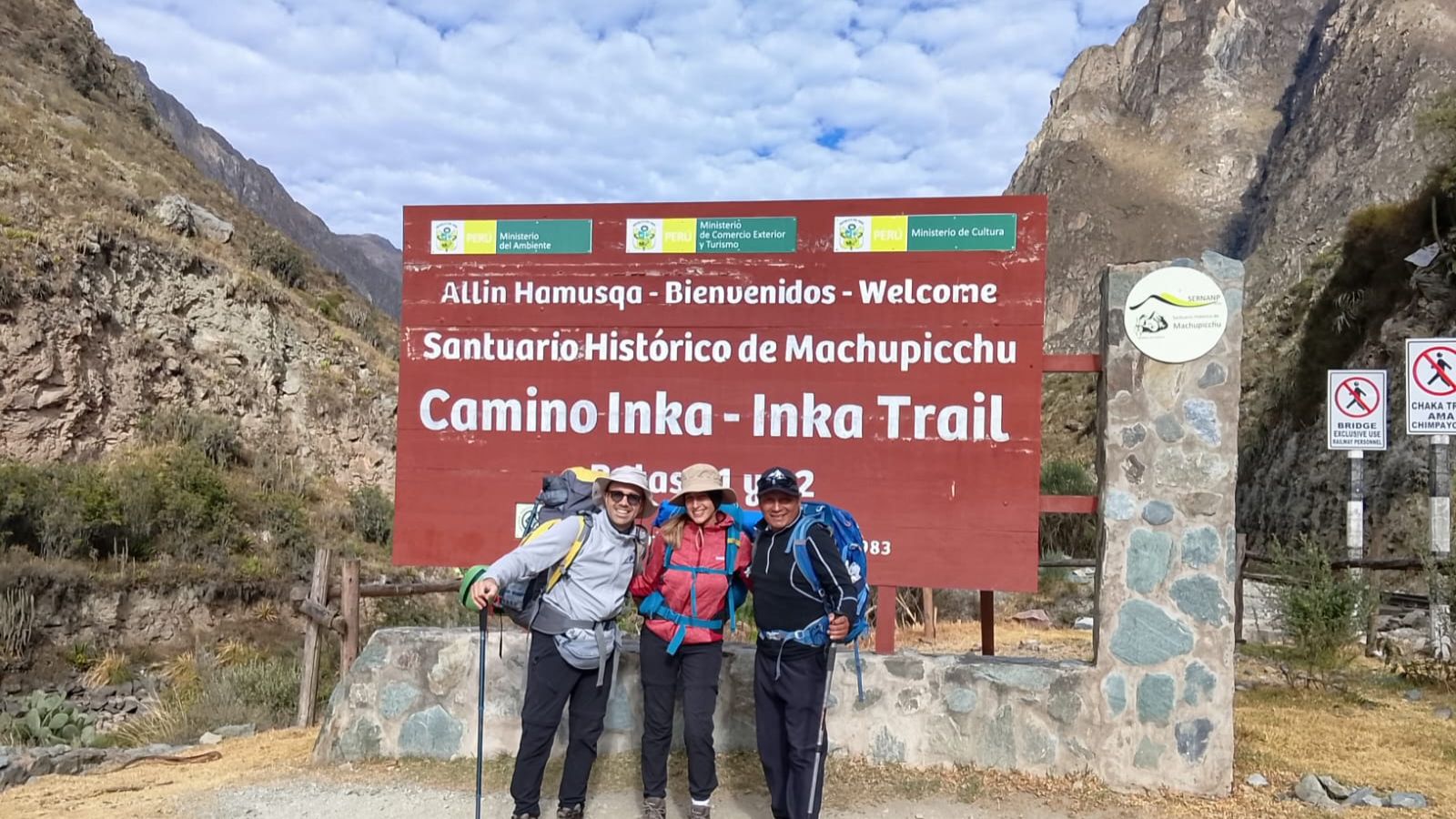
The Inca Trail is more than just a hike to Machu Picchu; it is a journey along a section of the Inca Empire’s road network that remains standing after more than five centuries. Over four days, you pass archaeological sites, ecosystems that change with altitude, and a living history that explains why this route, together with Machu Picchu, is a UNESCO World Heritage Site.
The Inca Trail as Part of the Qhapaq Ñan
The route you hike is a fragment of the Qhapaq Ñan, the vast Andean road system that connected the empire from Colombia to Chile and Argentina. This section linked different ceremonial and administrative centers with Machu Picchu.
A Trail Built to Last
The Incas paved the trail, carved steps into the rock, and built retaining walls and tunnels that are still used today. The engineering beneath your feet is why the trail has survived time and the humidity of the mountain jungle.
Archaeological Sites Along the Route
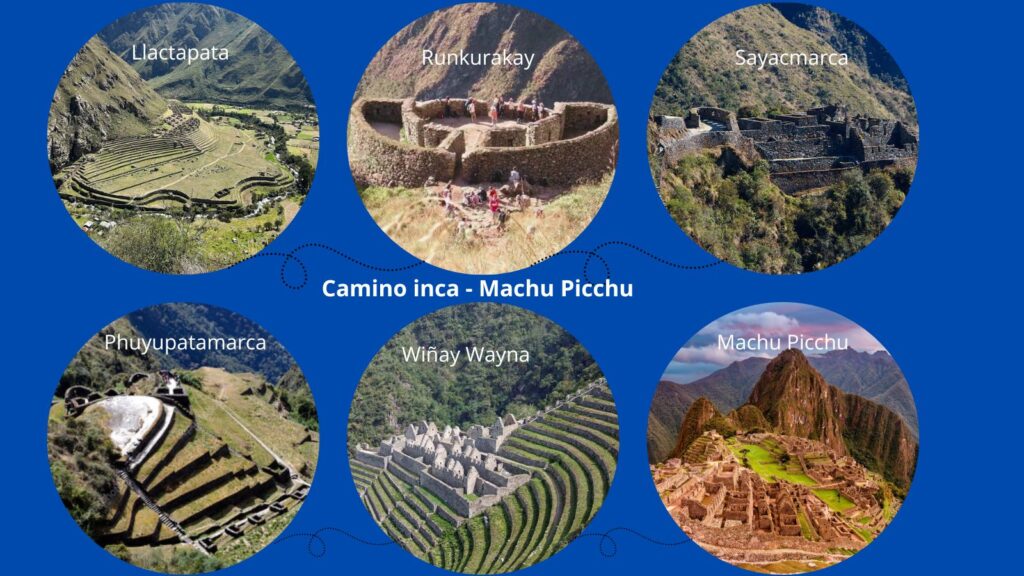
Throughout the trek, you pass several Inca complexes, each with a different purpose. They are not isolated ruins, but carefully planned stops along the route to Machu Picchu.
Sites You Pass
Llactapata
One of the first sites you see, an agricultural settlement with terraces that supplied food to the area.
Runkurakay
A circular structure that may have served as a tambo, a resting and checkpoint along the trail.
Sayacmarca
A complex built on a promontory, with enclosures, water channels, and a narrow entrance that was easy to defend.
Phuyupatamarca
Known as the town above the clouds, it stands out for its water fountains and stepped terraces with sweeping valley views.
Wiñay Wayna
One of the most impressive sites on the route, with agricultural terraces and ritual fountains. It is the last major stop before reaching the Sun Gate.
Arrival at Intipunku
The trek ends at Intipunku, the Sun Gate, the original entrance to Machu Picchu used by the Incas. From here, you get your first view of the citadel.
The Ecological Zones You Cross
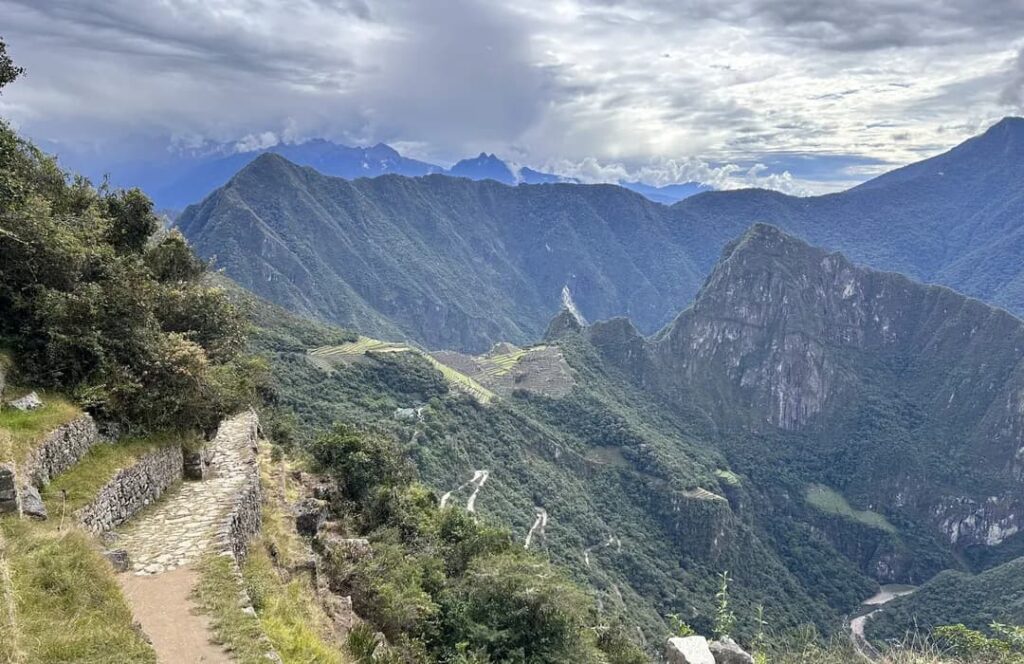
Within just a few kilometers, the Inca Trail crosses several ecosystems due to changes in altitude. This contrast explains the remarkable variety of flora and fauna concentrated along a short stretch.
From Puna to Cloud Forest
You begin in high, cold grassland areas and descend toward the cloud forest, a humid forest filled with vegetation. Each zone has different species adapted to its climate.
Biodiversity in the Historic Sanctuary
The Inca Trail lies within the Historic Sanctuary of Machu Picchu, a protected area that combines cultural and natural value. Its biodiversity is one of the reasons for its international recognition.
Characteristic Flora
Orchids
The sanctuary is home to hundreds of orchid species, many of them tiny. The cloud forest is their ideal habitat.
Queuña and Polylepis Forests
Native high-altitude trees adapted to the cold, forming small forests along the descent.
Wildlife You May See
Birds
The sanctuary is a renowned birdwatching destination. With some luck, you may spot the Andean cock-of-the-rock, Peru’s national bird, as well as hummingbirds and birds of prey.
Mammals
The spectacled bear, South America’s only bear, lives in the area alongside deer and viscachas. They are difficult to spot, but they are part of the ecosystem.
A Culture That Is Still Alive
The Andean culture that gave rise to the trail has not disappeared. The Porters who accompany you are mostly Quechua-speaking farmers from nearby communities, direct heirs to this tradition.
The Quechua Legacy
The Quechua language, site names, and practices such as using coca leaves connect the trek with a cultural heritage that remains present in the Cusco region.