


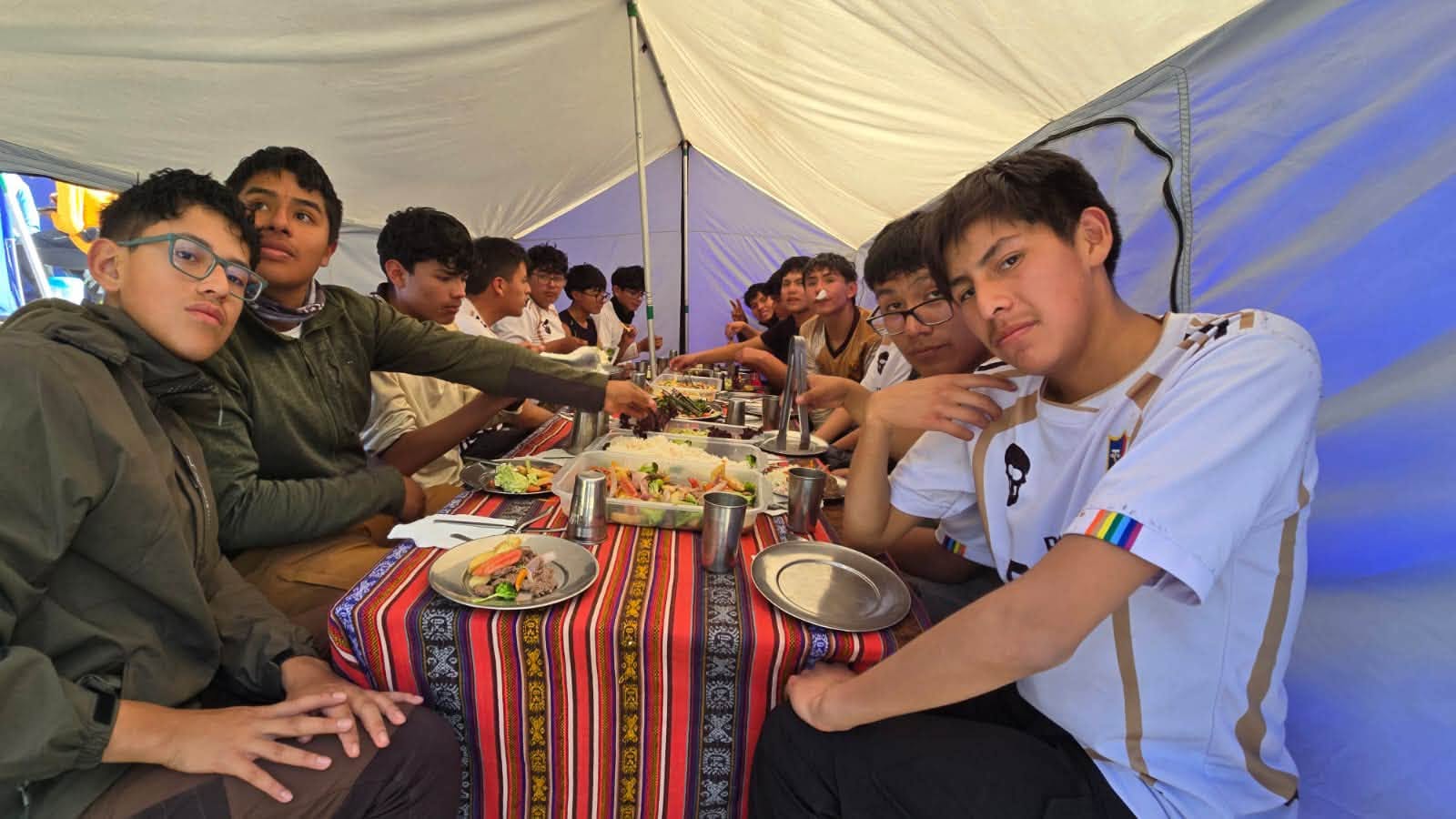
Eating well during the Inca Trail is not a luxury; it is part of your performance. You will burn thousands of calories each day climbing stone steps at high altitude, and the food you receive is designed to restore that energy. What surprises most people is the quality of the cooking: hot, varied dishes prepared right at camp by a member of the team.
How meals work on the trek
On the classic 4-day trek, all meals are included from breakfast on the first day through breakfast on the last day. A specialized cook travels with the group and works with the porters, who carry the food, gas and cooking equipment.
The kitchen team
The cook prepares everything on gas stoves inside a dining tent. The porters go ahead of the group to have the food ready when you arrive at the rest stop or campsite.
Meal schedule
A typical day includes breakfast, a hot lunch halfway along the route, afternoon tea upon arriving at camp, and a multi-course dinner. That tea break with cookies and hot drinks is one of the most anticipated moments of the day.
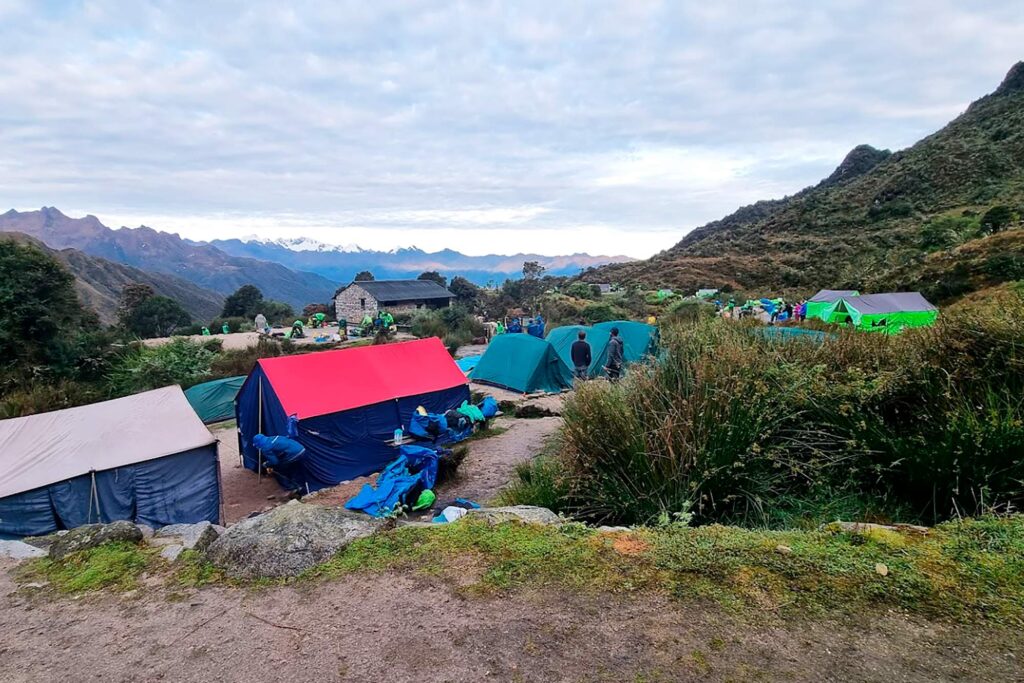
What you eat on the trail
The food combines Peruvian ingredients with dishes designed to provide energy and be easy to digest at high altitude.
Breakfast
Common options
- Bread, butter, jam and avocado
- Scrambled eggs or pancakes
- Hot oatmeal or quinoa
- Fruit, coffee, coca tea and herbal infusions
Lunch and dinner
Starters and soups
You almost always start with a hot soup, especially appreciated because of the cold and altitude. You may find vegetable creams, quinoa soup or light broths.
Main courses
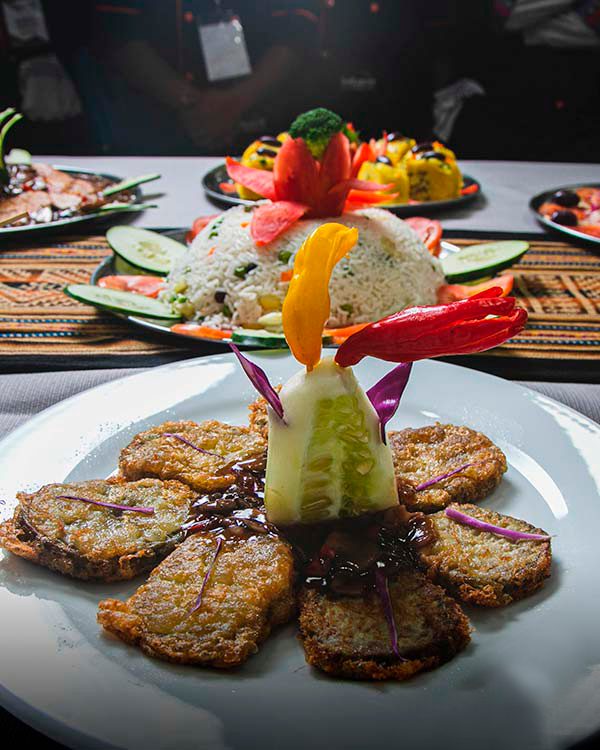
Generous portions of rice, potatoes in their Andean varieties, chicken, meat, trout, pasta and stir-fried vegetables are served. The dishes rotate each day to avoid repetition.
Special touches
Many teams surprise hikers with a cake baked at camp on the last night, something that technically should not be possible without an oven and has become a trek tradition.
Coca tea and altitude
Coca leaves are offered as an infusion throughout the trek. This traditional Andean remedy helps ease the effects of altitude and provides gentle relief from fatigue. It does not replace prior acclimatization, but it is a welcome companion during every break.
Special diets and dietary restrictions
Inca Trail cooking can accommodate most dietary needs if you let the agency know in advance.
What to mention when booking
- Vegetarian or vegan diet
- Allergies (nuts, gluten, lactose)
- Food intolerances
- Religious dietary restrictions
The sooner you notify the agency, the better the cook can plan shopping before departure, since there is nowhere to restock along the trail.
Hydration and personal snacks
Although meals are filling, it is a good idea to bring your own energy snacks for the stretches between stops.
Recommended snacks
- Cereal or energy bars
- Nuts and dried fruit
- Chocolate
- Candy or glucose for the highest pass
These snacks will keep you going on demanding climbs such as Warmiwañusca, at 4215 m above sea level, where your body craves quick sugar.
Tips for the kitchen team
At the end of the trek, it is customary to tip the cook and porters in recognition of their work. It is voluntary, but greatly appreciated. Bring cash in soles, as there is no other way to pay along the route.