


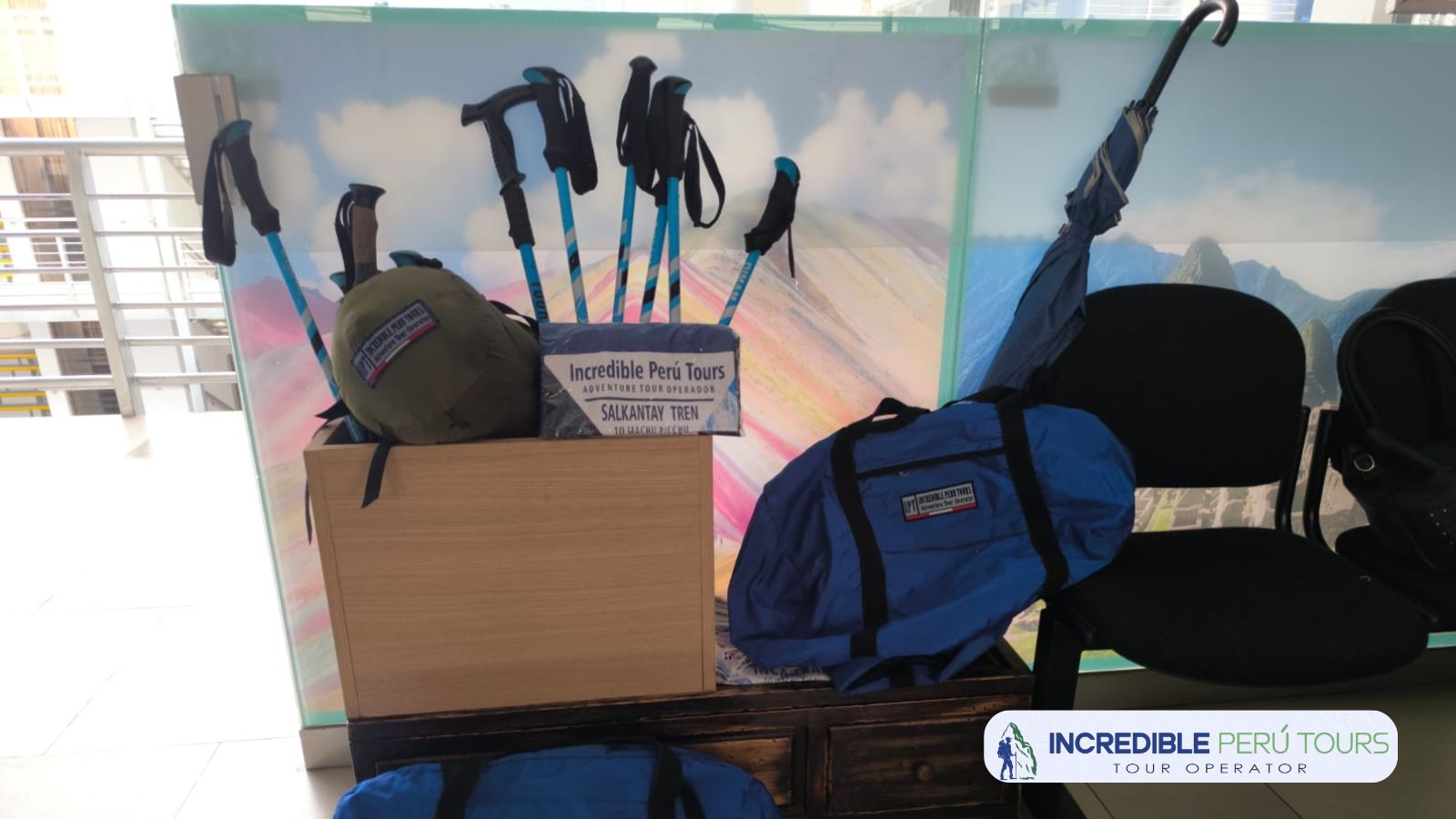
You don’t need to buy new gear to hike the Inca Trail. In Cusco, there are plenty of shops where you can rent anything you are missing, and several agencies offer certain items as part of their optional services. The key is knowing what is worth renting, what is better to bring yourself, and what is usually already included in the tour. Here you will see how rentals work and what to look for before deciding.
What to rent and what to bring yourself
The general rule is simple: items that are in direct contact with your body are best brought yourself, while bulky or occasional-use gear is best rented. Hiking boots, for example, should be well broken in and fitted to your feet, as wearing new footwear on the trail is an almost certain recipe for blisters.
On the other hand, items such as trekking poles, sleeping bags, and insulated jackets are great rental options because they take up space in your luggage, are only used during the trek, and do not require such a personal fit. Renting them saves you from carrying gear you may never use again.
Trekking poles
Trekking poles are among the most commonly rented items, and for good reason: they provide enormous support on ascents and, above all, on descents down stone steps, reducing the impact on your knees. Many agencies offer them directly as an optional service with the tour, so you do not have to look for them on your own.
For our tours, trekking pole rental for the entire route costs 10 dollars per pair. One important detail is that they must have rubber tips, as metal tips are restricted to protect the trail, so be sure to confirm that the poles meet this requirement before departure.
Sleeping bag
On the classic route, which includes overnight camping, a sleeping bag is essential due to the low nighttime temperatures, especially on the second night at higher altitude. Since it is a bulky item used exclusively for the trek, it is one of the best things to rent instead of buying and carrying it from your home country.
When renting a sleeping bag, check its temperature rating: it should be suitable for the cold early-morning temperatures at high altitude, not just mild weather. An inadequate sleeping bag can ruin your rest just before the most demanding day, so this is one area where quality matters more than price.
Check which sleeping pad your tour includes
Before renting an insulating pad or sleeping mat, check what is included in your package. Many tours already provide an inflatable sleeping pad for each participant, and premium versions may even offer air mattresses or camp beds, so you would not need to rent this item. Confirming this helps you avoid paying extra for something that is already included.
Warm and waterproof clothing
Insulated jackets and waterproof jackets or rain ponchos are also available for rent, although many travelers prefer to bring their own for comfort and hygiene. If you are traveling light or do not usually go trekking, renting a quality insulated jacket may be more practical than buying one you will only use once.
A rain poncho is especially recommended regardless of the season, as weather on the route is unpredictable and the cloud forest sections are often wet. Whether you bring your own or rent one, it is an item that should not be missing from your pack.
Where to rent equipment
You have two main options for getting the equipment. The first is through your own agency, which usually offers the most common items, such as trekking poles, as optional services. You can request them when booking or up to one day before departure at their Cusco office.
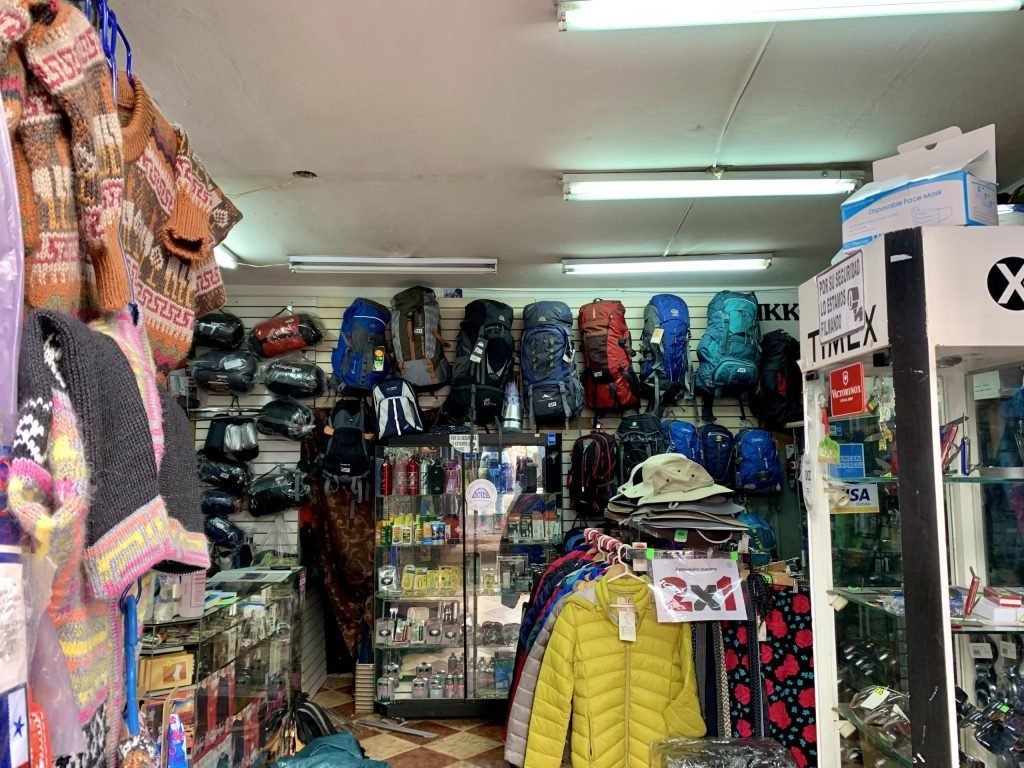
The second option is the many mountain gear shops in central Cusco, where you can rent everything from sleeping bags to jackets and backpacks. If you are missing something at the last minute, you can easily rent or buy it there, so there is no need to arrive in Peru with all your gear from home.
Always confirm what your tour includes before renting
The best advice to avoid overspending is to carefully review what your package includes before renting anything. Items such as the inflatable sleeping pad, tent, or even water bottle are often included, while premium versions add extras that further reduce what you need to rent on your own.
Once you know what your tour includes, the list of items you actually need to rent becomes much shorter. You can check what is included in the Classic Inca Trail 4 days or the Short Inca Trail 2 days to know exactly what you are missing and avoid unnecessary rentals.
Frequently asked questions
How much does it cost to rent trekking poles?
On our tours, trekking pole rental for the entire route costs 10 dollars per pair. They must have rubber tips, as metal tips are restricted to protect the trail.
Is it better to rent a sleeping bag or bring my own?
Because it is bulky and used exclusively for the trek, it is usually best to rent one in Cusco rather than carry it from your home country. Just make sure its temperature rating is suitable for cold nights at high altitude.
What equipment is best to bring myself?
Items that are in direct contact with your body, especially hiking boots, which should be well broken in and fitted to your feet. Wearing new footwear on the trail is a common cause of blisters.
Where can I rent equipment in Cusco?
You can rent through your agency, which offers the most common items as optional services, or at mountain gear shops in central Cusco, where you can find sleeping bags, jackets, and more for rent or purchase.
Do I need to rent a sleeping pad?
Usually not. Many tours already include an inflatable sleeping pad for each participant, while premium versions offer air mattresses or camp beds. It is best to check what your package includes before renting this item.