


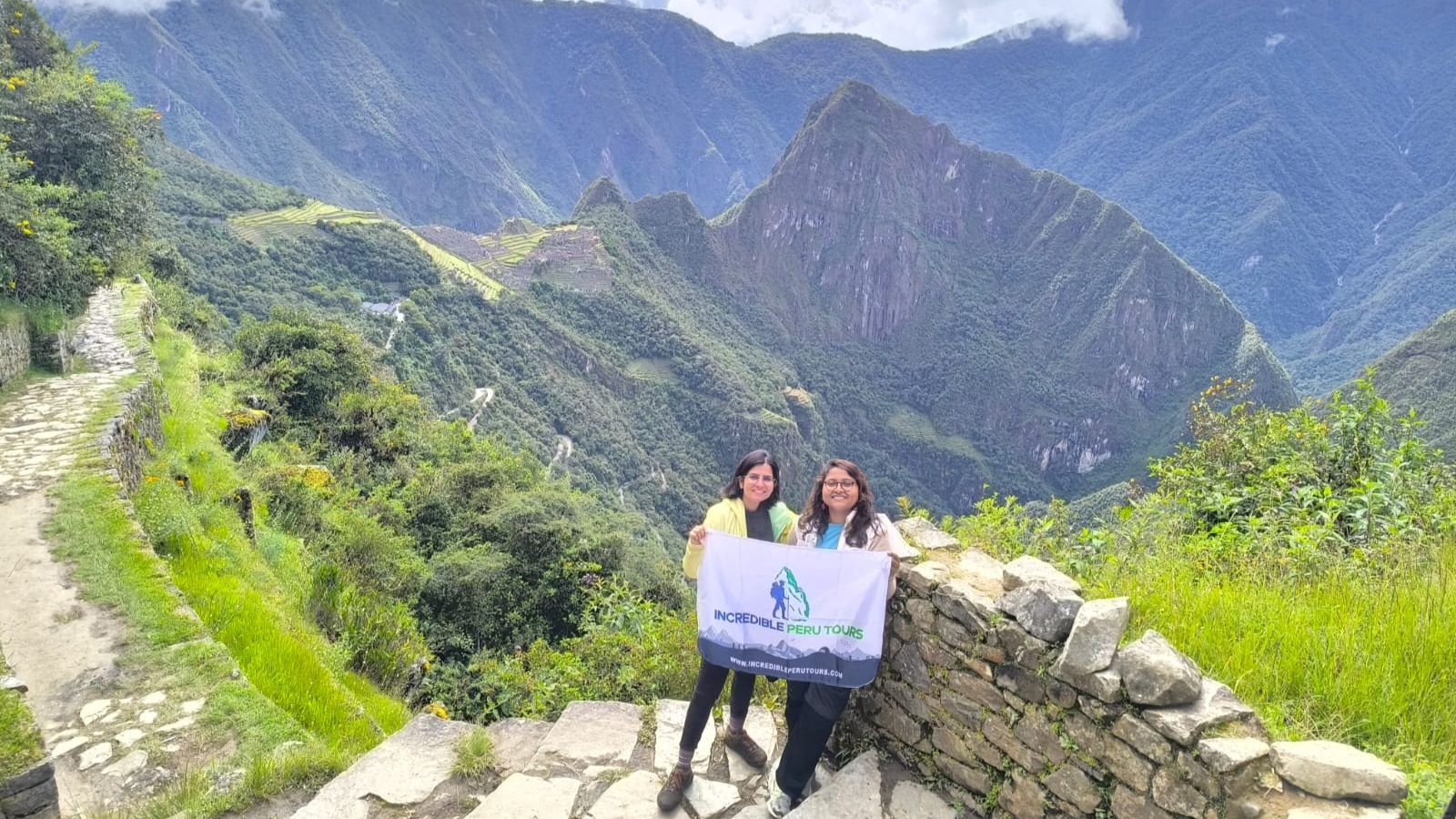
Hiking the Classic Inca Trail means covering around 43 kilometers over four days, at a pace that changes with each stage. Every day has its own challenges, landscapes, and archaeological sites, so knowing what to expect day by day helps you arrive with realistic expectations.
The route combines easier days with very demanding sections, especially on the second day. Below is an overview of how each stage typically unfolds, from the starting point to your arrival at Machu Picchu.
Before you begin: pickup day
The trek starts very early. Pickup from Cusco or the Sacred Valley is usually before dawn, as there is a road transfer to Km 82, the starting point of the Classic Inca Trail.
At this first checkpoint, permits and passports are checked. It is also when the group meets its guide, the porters, and the team that will accompany them throughout the four days.
Day one: entering the trail
The first day is usually the most manageable. The hike follows moderately difficult terrain, with gentle climbs that allow you to find your rhythm without excessive effort from the start.
Pace and terrain
The hiking hours on this first day are manageable and help you adapt to the group’s pace. The terrain alternates between flat sections and gentle slopes, giving you time to get used to your backpack and footwear.
It is a good time to set your own pace before the tougher stages. Saving energy on this day helps you better face the challenge that comes on the second day.
First archaeological sites
During the first day, you pass the trail’s first archaeological complexes, where the guide usually explains their role within the Inca system. These stops allow you to rest and understand the context of the trail.
The first night’s campsite is reached after completing this stage. It is the first time the group experiences sleeping in tents, with dinner prepared by the kitchen team.
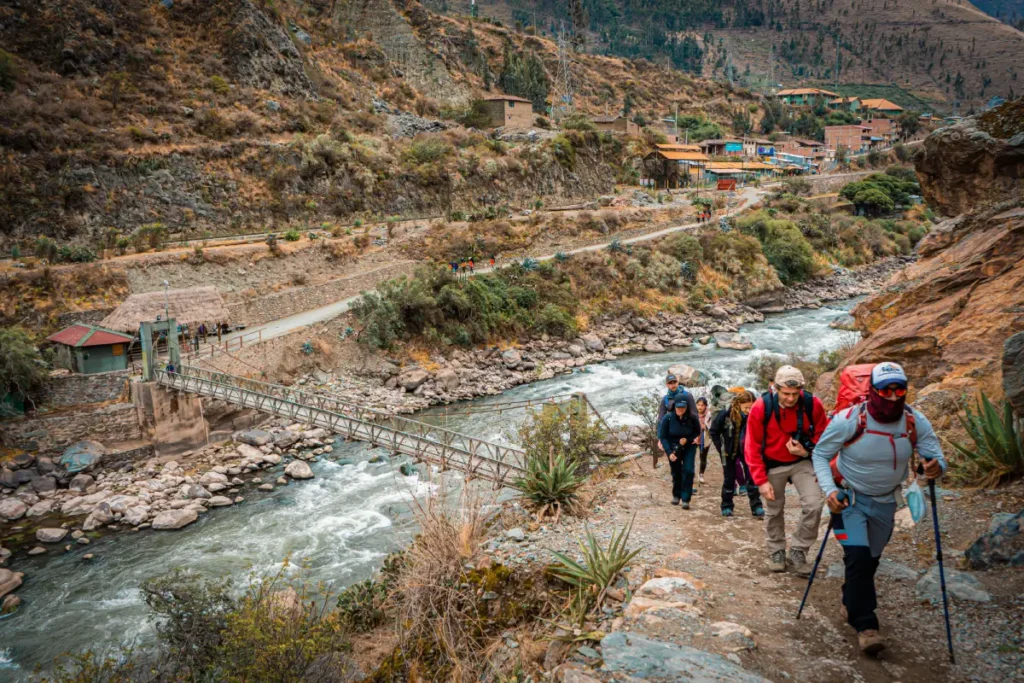
Day two: the most demanding day
The second day is the most difficult of the entire route. It includes the ascent to Dead Woman’s Pass, the highest point of the trek, located above 4,200 m a.s.l.
The ascent to Warmiwañusca
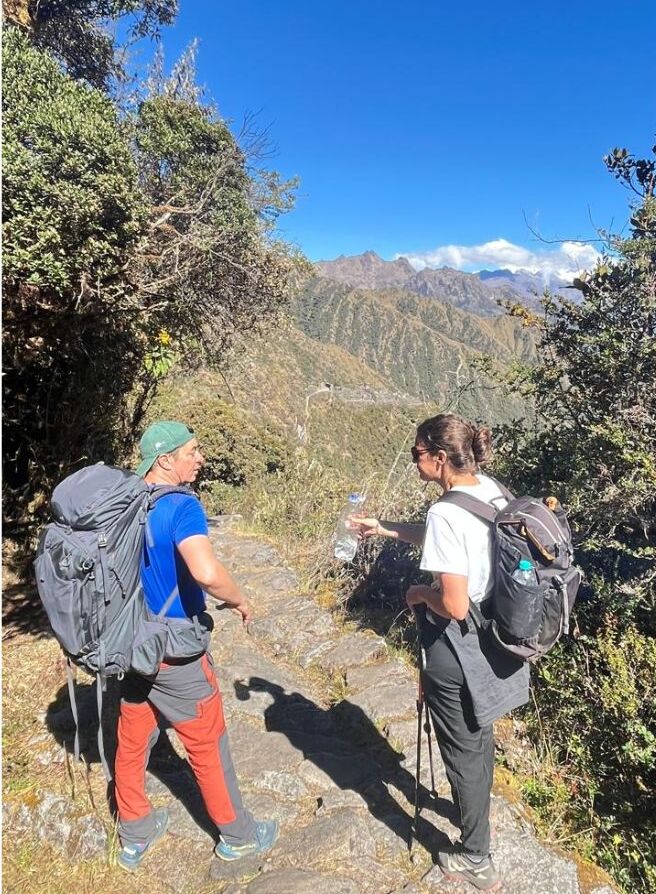
The climb to this pass is long and requires significant cardiovascular effort. At this altitude, the air contains less oxygen, so it is best to move at a slow, steady pace rather than push yourself too hard.
This is where prior acclimatization makes a difference. Those who spend a few days adapting to the altitude in Cusco usually handle this section more easily than those who arrive directly.
The descent afterward
After reaching the highest point, a long descent begins along stone steps. Although the cardiovascular effort decreases, this downhill section requires attention because it puts strain on the knees and quadriceps.
Using trekking poles helps distribute weight and protect your joints on this section. The second night’s campsite comes as a relief after the toughest day of the trek.
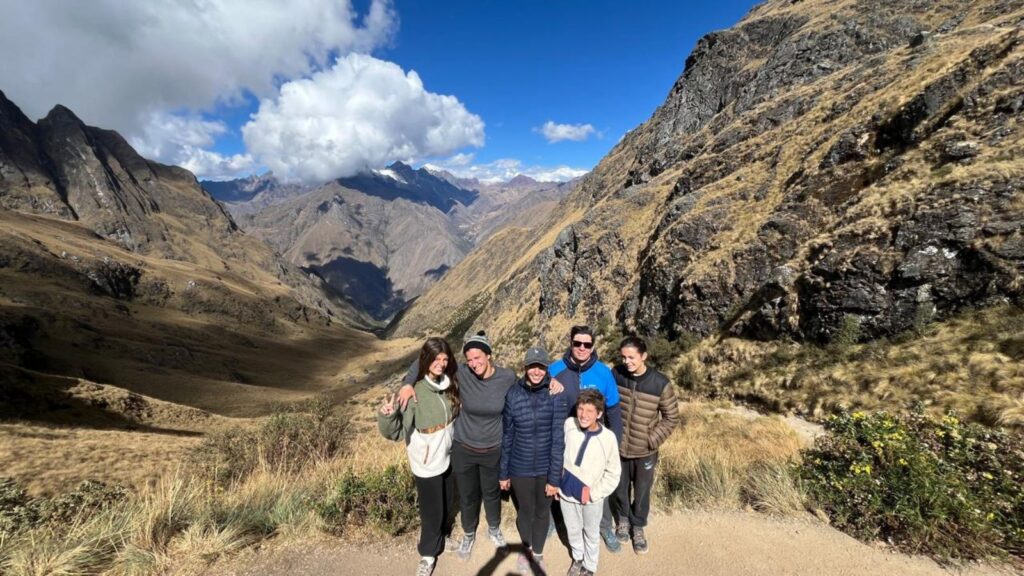
Day three: the longest day
The third day is usually the longest in terms of distance, although its profile is less extreme than the second day. It combines climbs, descents, and flatter sections, with several archaeological sites along the way. After crossing the highest pass on the previous day, the trail descends toward the cloud forest, where the vegetation becomes denser and the landscape changes completely.
The hike begins with an ascent to the route’s second pass, Runkurakay, at around 3,950 meters, from where the trail descends toward the valley. From there, you connect several Inca complexes separated by sections of original stone stairways and cloud forest.
Archaeological sites along the route
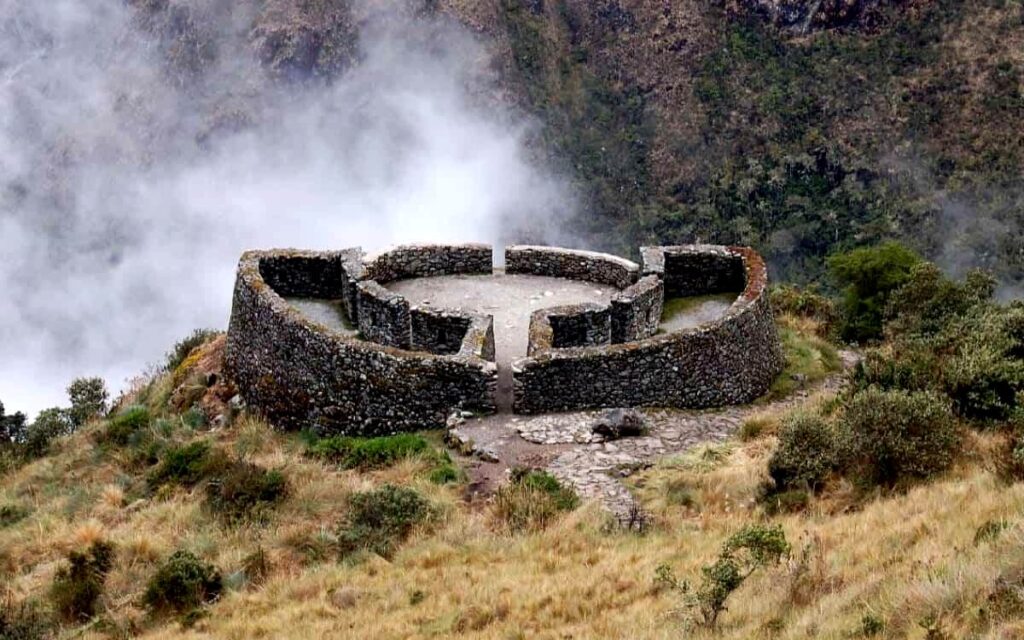
This stage features some of the trail’s most remarkable complexes. The first is Runkurakay, a small oval-shaped structure that served as a checkpoint and resting place for Inca travelers. Farther on is Sayacmarca, a complex built on a rocky outcrop, with buildings, terraces, and water channels reached by a steep stone staircase.
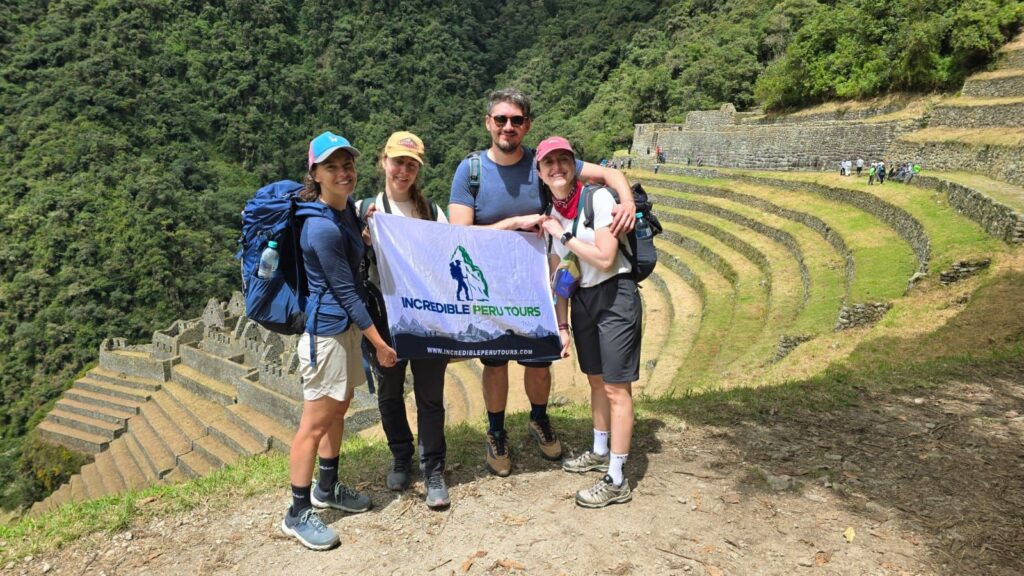
The route continues to Phuyupatamarca, known as the town above the clouds, one of the best-preserved sites on the trail, with terraces, ceremonial fountains that still function, and sweeping valley views when the sky is clear. On the final descent of the day, you reach Wiñay Wayna, the largest and most impressive complex on the route, with an extensive system of agricultural terraces and stepped structures along the hillside.
The guide usually stops at each one to explain its function, making this the day with the richest historical content. Stops at these sites also provide rest during a long day. The pace becomes more relaxed thanks to these breaks, which help make the hiking hours more manageable.
Arrival at the final campsite
The third night’s campsite is located near Wiñay Wayna, on the final stretch to Machu Picchu. It is the last rest before the early morning that begins arrival day, and it is also the closest point to the access checkpoint from which you set off at dawn toward the Sun Gate.
Many groups use this night to prepare their gear and coordinate the early departure for the following day. It is also usually the time to say goodbye and thank the porters and cooks, whose work ends here, as they do not continue to the citadel. Being so close to the finish creates a different atmosphere from previous nights, with a mix of accumulated fatigue and anticipation for the final arrival.
Day four: arrival at Machu Picchu
The final day begins before dawn. The goal is to hike the last stretch to the Sun Gate for your first elevated view of Machu Picchu.
The final stretch to the Sun Gate
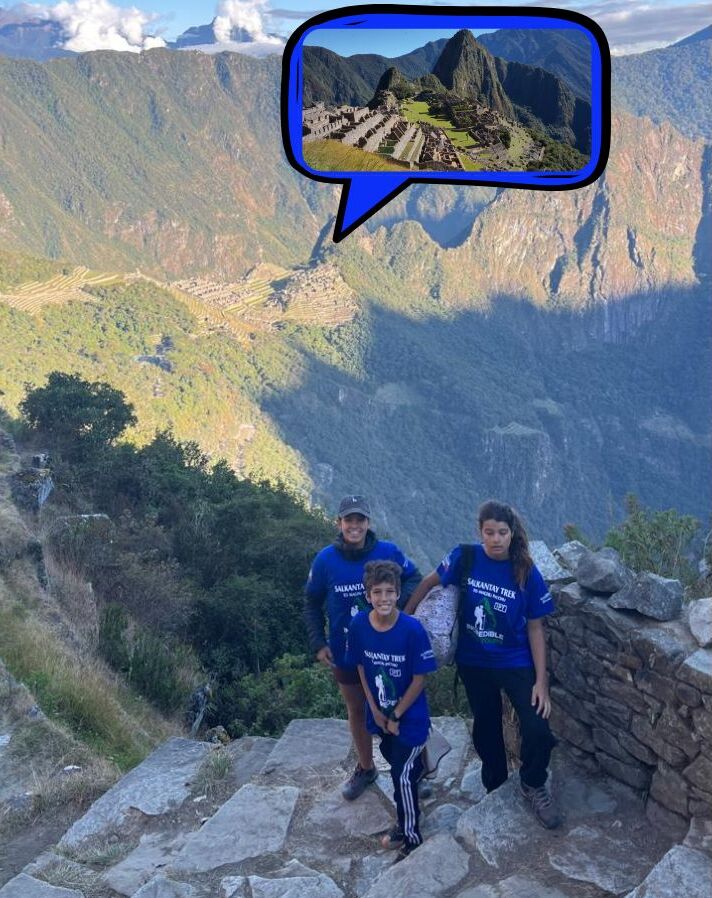
This day’s hike is short compared with the previous ones, but it is filled with anticipation of arrival. The trail leads to Inti Punku, where you see the citadel for the first time.
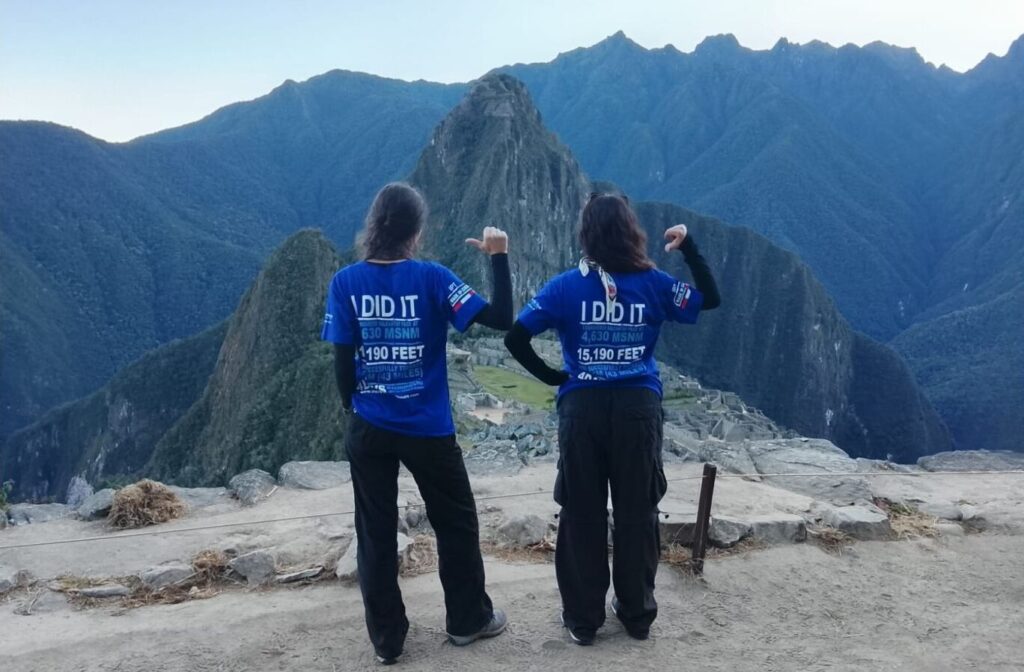
From the Sun Gate, you descend toward Machu Picchu along a path with views of the site throughout the journey. This final descent completes the four-day trek.
The guided tour of the citadel
Once at Machu Picchu, you take a guided tour through the site’s main sectors. After several days of hiking, exploring the citadel takes on a different meaning than during a conventional visit.
After the visit, you return by bus to Aguas Calientes and then by train to Cusco or the Sacred Valley. This concludes the complete Inca Trail experience.
How your body feels over the four days
The effort builds up as the days go by. The first day usually feels manageable, the second tests your endurance because of the altitude, and from the third day onward, fatigue becomes more noticeable, although your body also adapts to the pace.
Hiking at your own pace, staying well hydrated, and resting at each campsite help you manage the challenge. The feeling of arriving at Machu Picchu after the trek makes the effort of the previous days worthwhile.
Frequently asked questions
How many hours do you hike each day?
It varies depending on the stage and the group’s pace. The first day is usually shorter, the second and third days are the longest, and the fourth is brief until reaching Machu Picchu.
What is the most difficult day on the Inca Trail?
The second day is the most demanding because of the ascent to Dead Woman’s Pass, above 4,200 m a.s.l. It is the section that requires the greatest cardiovascular effort of the entire trek.
Where do you sleep during the trek?
You sleep at campsites located at the end of each day, in tents set up by the porter team. The Classic Inca Trail includes three nights of camping before arriving at Machu Picchu.
Do you hike at night at any point?
The final day usually starts before dawn to reach the Sun Gate early, so you hike in the first light of day. The rest of the stages take place during daylight hours.
What happens if I cannot keep up with the group’s pace?
Guides are used to managing different paces within the same group. You can move at your own pace, and it is best to tell the guide about any difficulty so they can adjust breaks as needed.