


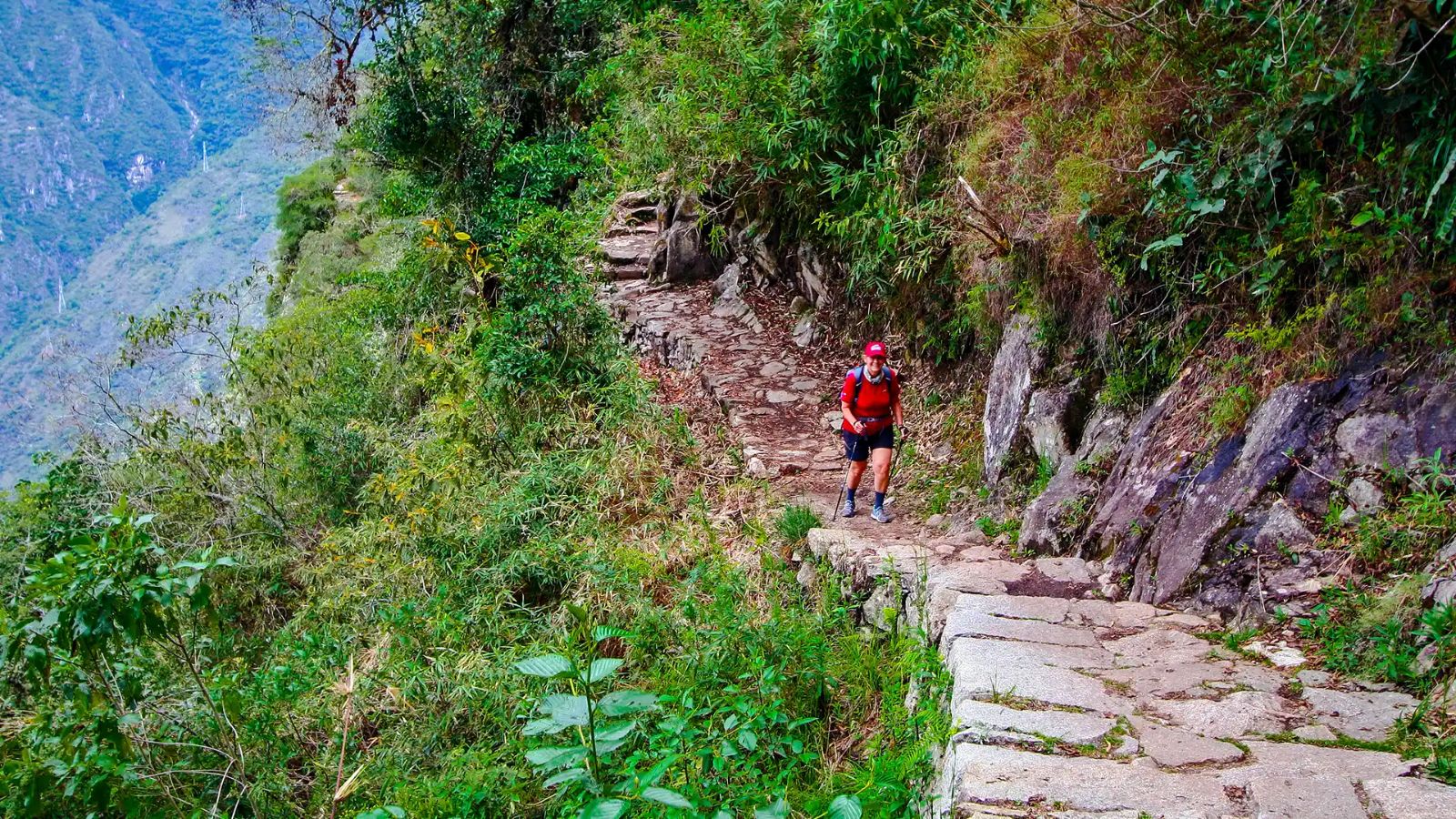
The Inca Trail and the Qhapaq Ñan are often used as if they were the same thing, but they are not. The Qhapaq Ñan is the complete road system of the Inca Empire, while the Inca Trail to Machu Picchu is only one section of it. Understanding this difference helps place the tourist route correctly within a much broader network.
The confusion is common because the name “Inca Trail” became popular to refer to the path leading to the citadel. However, this commercial use does not reflect the true scale of the system the Incas built throughout their territory.
What Is the Qhapaq Ñan?
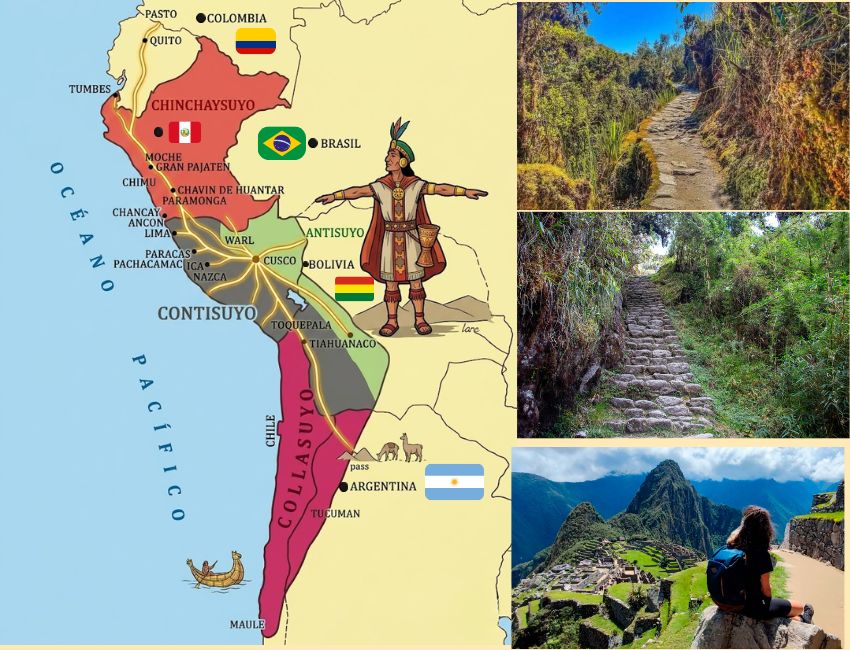
The Qhapaq Ñan is the road system that connected the Tahuantinsuyo, the territories that made up the Inca Empire. It stretched for thousands of kilometers and linked regions separated by vast distances, crossing the coast, highlands, and high-altitude areas.
It was not a single road, but a network with main routes and secondary branches. Its purpose included political control, the movement of goods and people, and communication between the empire’s centers of power, with Cusco as the starting point for routes to the four regions.
What Is the Inca Trail to Machu Picchu?
The Inca Trail traveled today as a tourist route is a specific section of the Qhapaq Ñan that ends at Machu Picchu. It preserves original construction along much of the route and passes several archaeological sites that were part of the same branch.
This trail connected the citadel with other points in the surrounding area and served functions related to Machu Picchu’s special status within the Inca organization. By hiking it, visitors follow a coherent part of the system rather than isolated pieces.
Main Differences Between the Two
The main difference is scale: the Qhapaq Ñan is the complete system, and the Inca Trail is one part of it. From there, other distinctions arise in terms of length, geographic reach, and current use.
Difference in Scale and Length
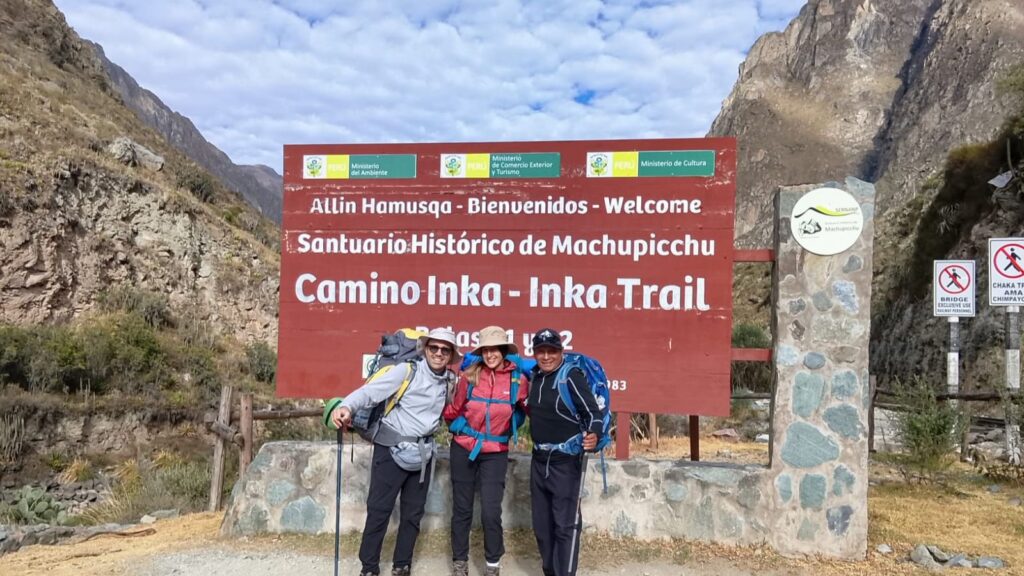
The Qhapaq Ñan covered thousands of kilometers and crossed territories that now belong to several South American countries. The Classic Inca Trail to Machu Picchu covers approximately 43 kilometers in total.
This difference in scale explains why they should not be treated as equivalents. The tourist section represents only a tiny fraction of the entire network that operated during the empire.
Difference in Function
The Qhapaq Ñan served multiple functions: administrative control, military mobilization, communication through chasquis, and the transport of goods between regions. It was the infrastructure that supported the functioning of the Inca state.
The section leading to Machu Picchu had a more limited use, connected to linking the citadel with its surroundings. Today, its function is different, as it is traveled as a tourist experience rather than as a route used by the state.
Difference in Current Use
A large part of the Qhapaq Ñan remains under study, conservation, or abandoned, and many of its sections do not receive visitors. The Inca Trail to Machu Picchu, by contrast, is the most traveled section and is subject to access regulations.
This difference means that, for most travelers, “Inca Trail” is associated only with the route to Machu Picchu. The rest of the system, which is much larger, remains outside the usual tourist circuit.
Comparison Table
| Aspect | Qhapaq Ñan | Inca Trail to Machu Picchu |
|---|---|---|
| Definition | Complete road system of the empire | One section of that system |
| Length | Thousands of kilometers | Approximately 43 kilometers |
| Geographic reach | Several South American countries | Area near Machu Picchu |
| Original function | Control, communication, and transport | Connection to the citadel |
| Current use | Study and conservation | Regulated tourist route |
Historical Relationship Between the Inca Trail and the Qhapaq Ñan
The section leading to Machu Picchu was not an independent construction, but rather a piece built using the same principles as the rest of the network: the same stone stairways, retaining walls, and drainage systems repeated at other points along the Qhapaq Ñan. Its archaeological sites served control, rest, or ceremonial functions also found on distant sections, confirming that it belonged to an integrated system rather than an isolated project.
That is why, when UNESCO recognized the Qhapaq Ñan as a World Heritage Site in 2014, the Inca Trail was included in that designation as part of the larger system that gives it meaning.
Why the Two Terms Are Confused
The confusion between the Inca Trail and the Qhapaq Ñan has a practical origin. The term “Inca Trail” became popular in tourism as the name for the route to Machu Picchu, and over time this use displaced the broader meaning of the system.
For a traveler, knowing the difference does not change the hiking experience, but it does provide context. Understanding that you are traveling along a section of a vast network gives a better sense of what the trail represents within Inca history.
Frequently Asked Questions
Are the Inca Trail and the Qhapaq Ñan the same thing?
No. The Qhapaq Ñan is the complete road system of the Inca Empire, and the Inca Trail to Machu Picchu is only one of its sections. They are confused because the name became popular as a reference to the tourist route.
How large was the Qhapaq Ñan?
It stretched for thousands of kilometers and crossed territories that now belong to several South American countries. It was one of the most extensive road networks in pre-Columbian America.
Is the Inca Trail to Machu Picchu a World Heritage Site?
Yes, as part of the Qhapaq Ñan, which was declared a UNESCO World Heritage Site in 2014. The recognition covered the entire network and the countries through which it extends.
Can you hike other sections of the Qhapaq Ñan?
Other sections exist in different countries, although most are not open as regular tourist routes. The trail to Machu Picchu is the most traveled section and has regulated access.
Why is only the Machu Picchu route called the Inca Trail?
Because of a use popularized by tourism. The name was applied to the route leading to the citadel and eventually displaced the broader meaning, which refers to the entire road system.